
Effective trimmer maintenance is critical for ensuring the longevity and mechanical precision of grooming electronics. This technical guide outlines professional protocols for device care, troubleshooting, and performance optimization to ensure that trimmer maintenance becomes a seamless part of routine grooming operations.
Device Functionality and Applications
Electric trimmers operate using a reciprocating blade mechanism. Understanding these components is the first step in effective trimmer maintenance.
Primary Applications
- Hair length reduction
- Precision detailing
- Contouring
Blade Configuration
- Zero-trim blades (~0.5 mm cutting length)
- Adjustable guard comb attachments
- Variable trimming ranges from 0.5 mm to 20 mm
Expert Tip:
For precision detailing around the moustache or neckline, utilize a small-profile precision blade attachment rather than the main blade to maintain control and visibility during grooming.
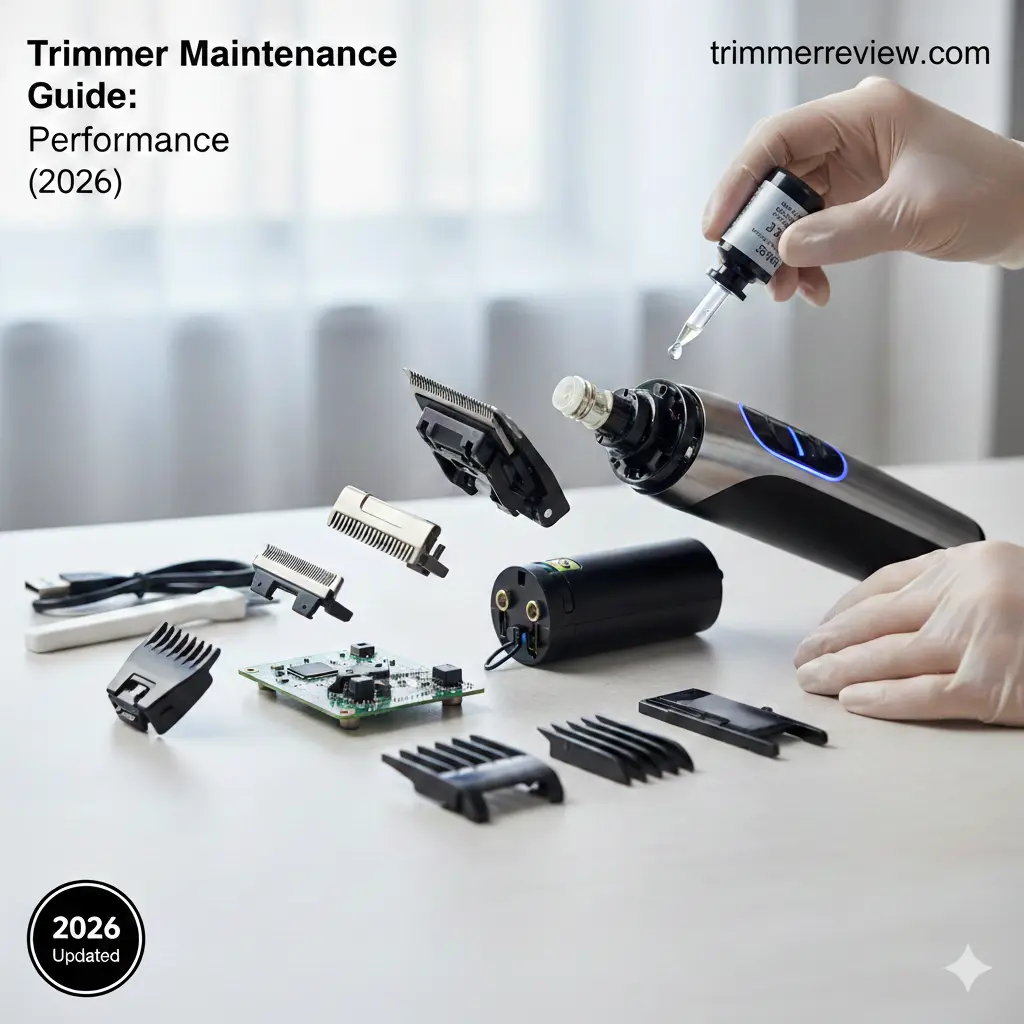
Quick Summary
Mastering trimmer maintenance begins with understanding the essential procedures required to keep a grooming device operating at peak efficiency. This quick summary outlines the core actions, including disconnecting power, preparing the appropriate tools, cleaning the cutting assembly, and performing necessary performance checks. Following these maintenance practices helps ensure safe operation, consistent cutting performance, and long-term mechanical reliability.
| Step | Action | Key Tip | Safety Reminder |
|---|---|---|---|
| 1 | Disconnect Power | Always isolate the trimmer from any charging source before maintenance | ⚠️ Avoid electric shock |
| 2 | Prepare Tools | Use a cleaning brush, microfiber cloth, and small screwdriver if required | Work on a clean, dry surface |
| 3 | Clean Blade Assembly | Remove the blade unit and brush away trapped hair and debris | Do not allow moisture near internal electronics |
| 4 | Inspect Components | Check the blade alignment and ensure no debris blocks the cutting teeth | Handle blades carefully to prevent injury |
| 5 | Battery Check | Ensure the battery is properly charged and charging contacts are clean | Avoid overcharging if the device lacks smart charging control |
| 6 | Lubrication | Apply a few drops of clipper oil along the blade teeth to reduce friction | Do not over-oil the blade assembly |
| 7 | Reassemble & Test | Secure the blade assembly and briefly power the trimmer to confirm smooth operation | Ensure all parts are firmly attached |
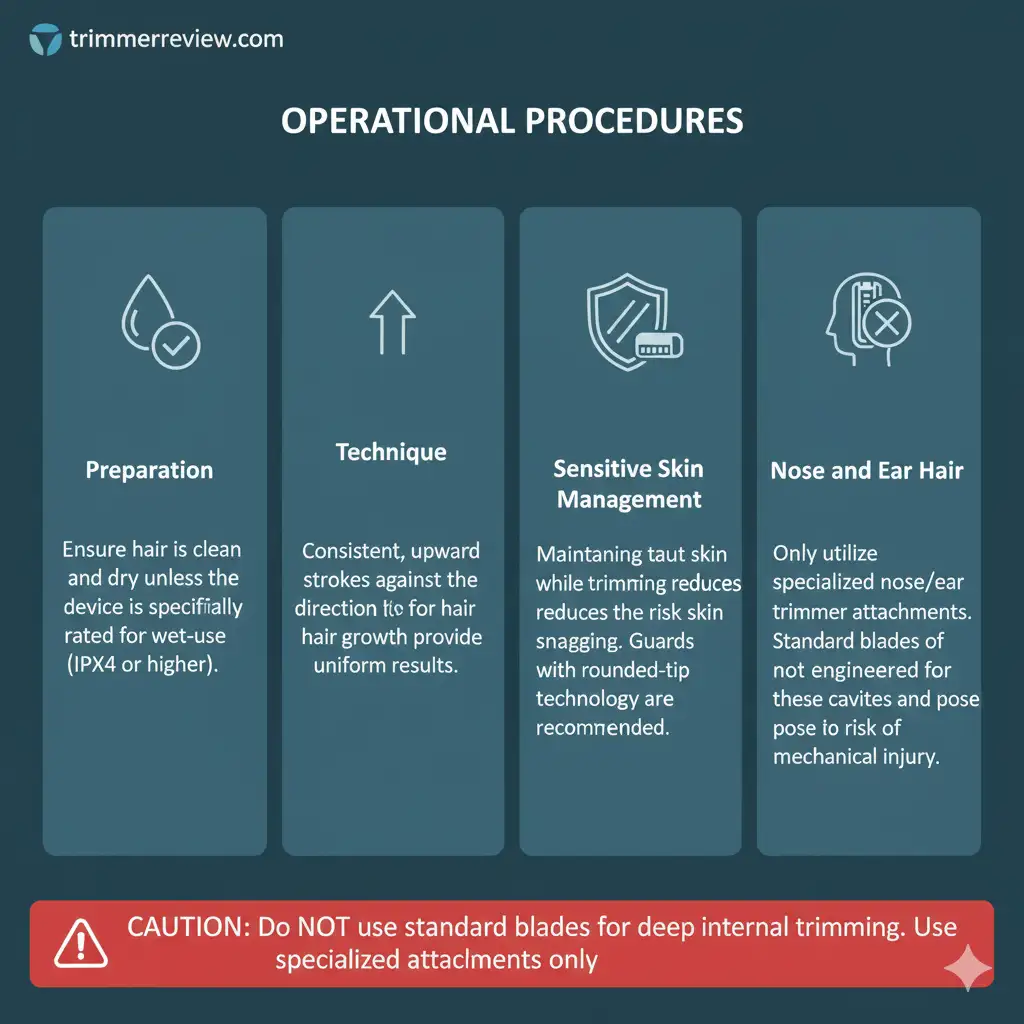
Operational Procedures
Technical accuracy during operation minimizes hardware stress and mitigates skin irritation.
- Preparation: Ensure hair is clean and dry unless the device is specifically rated for wet-use (IPX4 or higher).
- Technique: Consistent, upward strokes against the direction of hair growth provide uniform results.
- Sensitive Skin Management: Maintaining taut skin while trimming reduces the risk of skin snagging. Guards featuring rounded-tip technology are recommended for sensitive areas.
- Nose and Ear Hair: Only utilize specialized nose/ear trimmer attachments. Standard blades are not engineered for these cavities and pose a risk of mechanical injury.
Battery and Power Dynamics
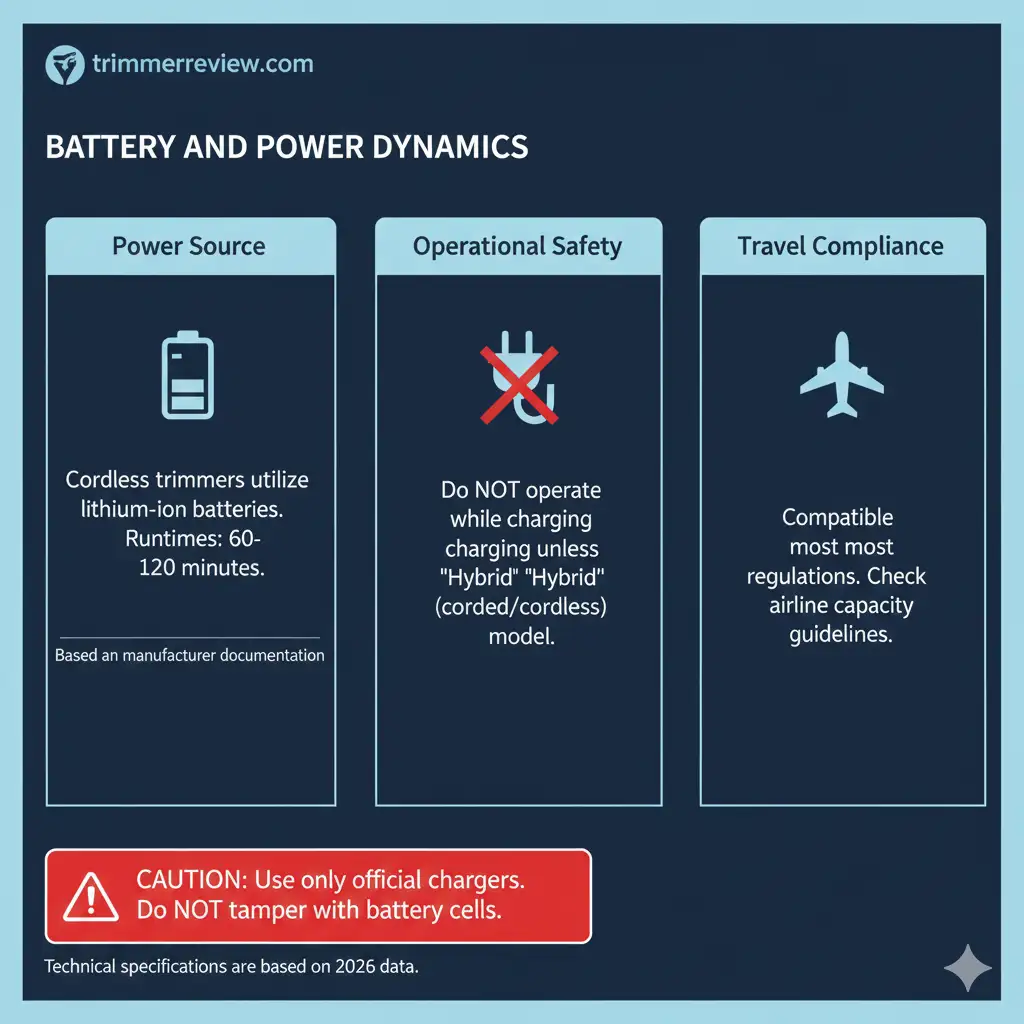
- Power Source: Cordless trimmers typically utilize lithium-ion batteries with operational runtimes between 60 and 120 minutes.
- Operational Safety: Device operation while connected to a power source is prohibited unless the manufacturer explicitly designates the model as a hybrid (corded/cordless) unit.
- Travel Compliance: Cordless units are compatible with most travel regulations, provided internal battery capacity meets airline guidelines.
Maintenance, Cleaning, and Troubleshooting
Routine grooming device care prevents motor strain and blade degradation.
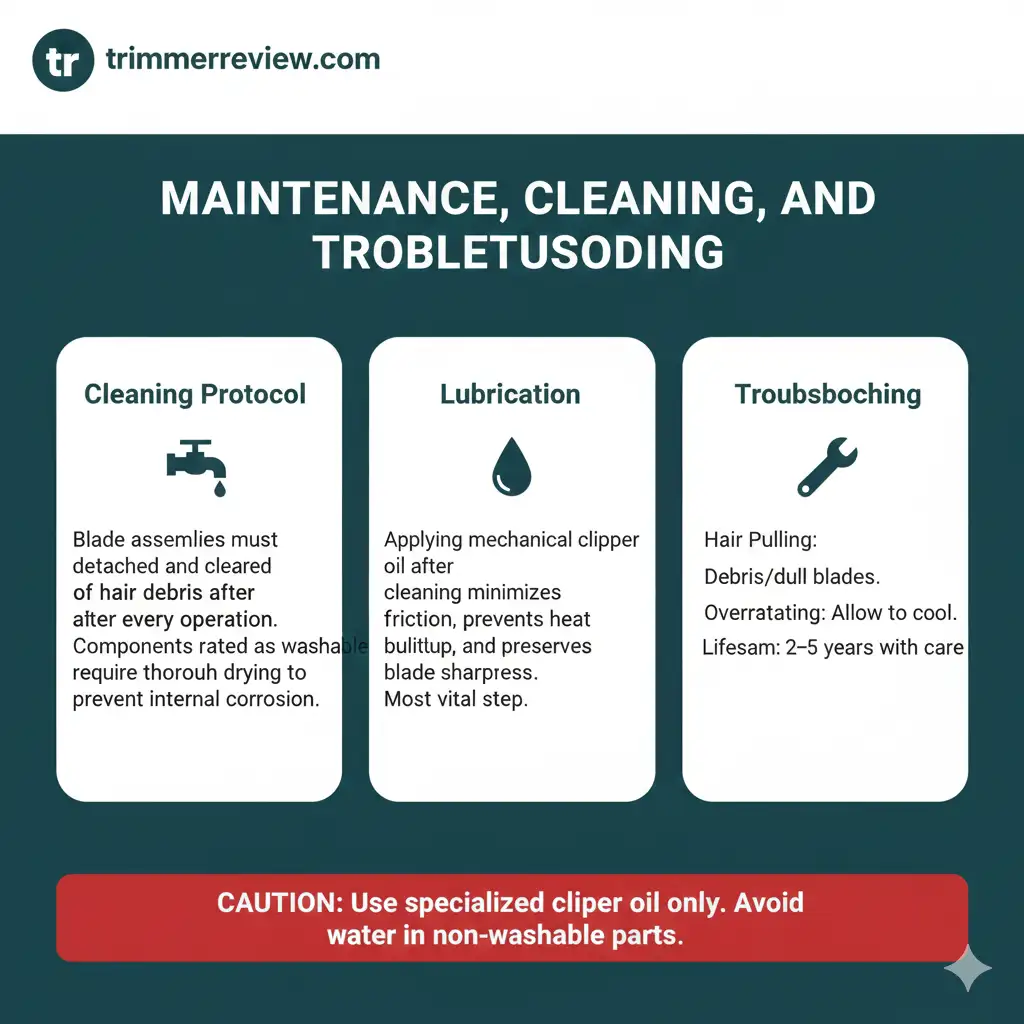
- Cleaning Protocol: Blade assemblies must be detached and cleared of hair debris after every operation. Components rated as washable require thorough drying to prevent internal corrosion.
- Lubrication: Applying mechanical clipper oil after cleaning minimizes friction, prevents heat buildup, and preserves blade sharpness. This is the most vital step in trimmer maintenance.
- Note: For a deeper cleaning process, see our guide: Deep Clean Trimmer: 5 Expert Ways (2026 Guide).
Troubleshooting
- Hair Pulling: Typically indicates debris accumulation or dull blades. Inspect the blade assembly, apply oil, or replace the blade unit if the edge has degraded.
- Overheating: Prolonged usage can cause the motor housing to reach elevated temperatures. Allow the device to idle for several minutes if heating is detected.
- Lifespan: With consistent lubrication and cleaning, high-quality grooming devices typically maintain peak operational efficiency for 2 to 5 years.
- Note: More advanced repair techniques are explained in: How to Fix a Philips Electric Shaver at Home.
Maintenance Frequency Table
Maintaining a consistent trimmer maintenance schedule is essential for preserving cutting precision and extending the lifespan of grooming devices. The following maintenance frequency table outlines the recommended intervals for cleaning, lubrication, deep maintenance, and blade replacement. Following these intervals helps reduce mechanical wear, prevent overheating, and ensure the trimmer continues to operate smoothly and efficiently over time.
| Maintenance Task | Recommended Frequency |
|---|---|
| Blade cleaning | After every use |
| Lubrication | Every 2–3 uses |
| Deep cleaning | Monthly |
| Blade replacement | 12–18 months |
Common Trimmer Maintenance Mistakes
- Using cooking oil instead of clipper oil
- Washing non-waterproof trimmers
- Skipping blade lubrication
- Storing the trimmer while still wet
- Using dull blades for extended periods
Visual Demonstration: Trimmer Maintenance Protocol
The following demonstration illustrates the correct lubrication process used during routine clipper care, including safe blade disassembly, debris removal, and precision oil application.
Video Credit: [Havells Beard Trimmer | Maintenance Tutorial] via YouTube.
Expert Tip: Proper lubrication is the most critical step in extending the operational lifespan of the motor assembly. Always utilize high-grade mechanical clipper oil to ensure optimal blade movement and minimize friction-induced heat reduction. Avoid using non-specialized lubricants, as these may cause carbon buildup on the cutting teeth.
References and External Documentation
This guide is based on widely accepted grooming device maintenance practices and information published by reputable manufacturers and consumer safety organizations. For deeper technical details, maintenance recommendations, and product documentation, you can explore the following trusted resources:
- Philips Support Center – Official troubleshooting, maintenance guides, and user manuals for grooming devices.
https://www.philips.co.in/support - Remington Product Care Guides – Helpful resources on cleaning and maintaining electric grooming tools.
https://www.remingtonproducts.com
- Consumer Product Safety Commission (CPSC) – Safety recommendations for using small electrical appliances.
https://www.cpsc.gov - Energy Star Appliance Tips – Practical guidance on maintaining small household electronics efficiently.
https://www.energystar.gov
These references provide additional technical insights, safety guidelines, and manufacturer-approved maintenance practices that help ensure grooming devices operate safely and efficiently over time.
Key Takeaways
- Clean trimmer blades after every use
- Apply clipper oil regularly to prevent friction
- Avoid moisture exposure in non-waterproof devices
- Inspect blade alignment to prevent hair pulling
- Proper maintenance can extend device life up to 5 years
Conclusion: Sustaining Device Performance
Establishing a consistent trimmer maintenance routine is the most effective strategy for preventing premature motor failure and blade degradation. By adhering to the cleaning, lubrication, and storage protocols outlined in this guide, grooming devices maintain optimal cutting efficiency for their entire projected lifespan. Prioritizing regular care minimizes the need for frequent replacements and ensures consistent results. For those seeking long-term reliability, establishing a routine based on these technical standards remains the industry best practice.
Related Guides & Expert Resources
The following guides and expert resources provide additional insights into professional trimmer maintenance, device troubleshooting, and long-term grooming equipment care. These references are designed to help readers understand proper cleaning procedures, lubrication techniques, and performance optimization methods used to maintain electric trimmers at peak efficiency. Exploring these resources can further strengthen routine trimmer maintenance practices and support consistent grooming results.
- Deep Clean Trimmer: 5 Expert Ways (2026 Guide)
- How to Fix a Philips Electric Shaver at Home in 2026: A Step-by-Step Guide
Frequently Asked Technical Questions
The following frequently asked questions address common concerns related to grooming device maintenance, device operation, and grooming safety. These technical clarifications help users understand proper cleaning routines, lubrication practices, and troubleshooting steps required to maintain optimal performance. By following these insights, users can ensure their grooming devices remain efficient, hygienic, and mechanically reliable over time.
Is trimming painful?
When a trimmer is properly maintained and the blades are sharp and lubricated, trimming should not cause discomfort. Pain usually occurs when blades are dull, clogged with hair debris, or lacking lubrication, which can cause hair pulling and skin irritation.
No, sharing devices presents hygiene risks and potential cross-contamination.
Why is oil necessary?
Trimmer oil reduces friction between the moving and stationary blades. Without lubrication, metal-to-metal contact generates heat and accelerates blade wear. Applying clipper oil allows the blade assembly to move smoothly, prevents overheating, and significantly extends the operational lifespan of the trimmer motor and cutting components.
How often should maintenance occur?
Perform cleaning after every use and lubrication prior to storage.
Can a trimmer overheat?
Prolonged use can cause motor heat; allow the device to idle for several minutes.
Why does a trimmer pull hair?
Debris buildup or dull blades are primary causes; inspect and clean.
Is trimming halal?
In most Islamic traditions, trimming body hair and maintaining personal hygiene are considered permissible and encouraged. Grooming practices such as beard trimming, hair removal, and maintaining cleanliness are generally viewed as part of personal care and hygiene.
Transparency & Fact-Checking
For full transparency and product information verification details, refer to the Disclaimer & Fact-Checking Policy.
