
Introduction: Understanding Excess Noise
- A Philips electric shaver making loud noise typically indicates mechanical resistance rather than immediate motor failure.
- Under normal conditions, the device produces a smooth, low-decibel hum. Grinding, rattling, or high-pitched buzzing sounds usually originate from blade misalignment, debris buildup, or battery voltage fluctuations within the shaving mechanism.
- Identifying the root cause helps maintain quieter operation, prolongs motor life, and prevents unnecessary replacements.
Why is the Philips electric shaver suddenly loud?
A Philips electric shaver making loud noise typically occurs when friction increases inside the shaving head or the motor rotation becomes unstable.
- debris trapped inside the shaving head
- misaligned rotary blades
- trapped moisture after washing
- unstable battery voltage
- worn internal bearings
Proper cleaning, blade alignment, and battery replacement typically restore normal quiet operation.

Common Noise Symptoms
Noise manifestations include:
- Grinding or scraping: Often caused by hair debris trapped in the blade system.
- Rattling or clicking: Usually linked to a misaligned drive shaft or protective guard.
- High-pitched buzzing: Can occur due to low battery voltage or worn internal bearings.
- Vibration or overheating: Indicates mechanical friction or motor stress.
Symptoms typically appear after heavy trimming sessions, following cleaning, or when battery power becomes depleted. Accurate symptom identification allows precise troubleshooting.
Common Mechanical Causes of Loud Shaver Noise
A Philips electric shaver making loud noise usually indicates increased mechanical resistance inside the shaving head. The most common causes include debris buildup in the blade housing, misaligned rotary blades, trapped moisture after cleaning, or unstable battery voltage. In most cases, proper cleaning, blade realignment, or battery replacement restores normal quiet operation.
Understanding Normal vs Abnormal Shaver Noise
| Sound Type | Description | Mechanical Meaning |
|---|---|---|
| Smooth hum | Low steady vibration | Normal motor rotation |
| Light buzzing | Slight vibration during thick hair cutting | Temporary load |
| Grinding sound | Rough metallic friction | Debris or blade misalignment |
| Loud rattling | Loose internal component | Drive shaft or head issue |
| High-pitched whine | Sharp continuous tone | Motor wear or bearing fatigue |
Typical Noise Levels When a Philips Electric Shaver Is Making Loud Noise
Electric shavers normally operate within a moderate acoustic range during daily grooming. However, when a Philips electric shaver begins making loud noise, the sound level may exceed the normal operating range due to debris buildup, blade misalignment, or increased motor resistance. Understanding typical noise levels helps distinguish between normal motor vibration and mechanical issues that require maintenance.
| Condition | Typical Sound Level | Meaning |
|---|---|---|
| Normal operation | 50–60 dB | Smooth motor rotation |
| Thick hair cutting | 60–65 dB | Temporary load |
| Debris buildup | 65–70 dB | Increased friction |
| Misaligned blades | 70+ dB | Mechanical imbalance |
| Motor wear | 70–75 dB | Bearing fatigue |
Root Causes: Why the Shaver Becomes Loud
In many cases, a Philips electric shaver making loud noise is linked to internal resistance within the blade assembly or motor drive mechanism.
- Debris or Hair Buildup
Fine clippings and skin oils accumulate in the blade housing, creating rotational drag and louder vibrations. - Misaligned Blades or Drive Shafts
Even minor shifts after drops or impact can disrupt blade rotation, causing rattling noises. - Voltage Fluctuations
Weak or depleted batteries reduce torque stability, resulting in pulsating or irregular noise. - Moisture Trapped Inside Housing
Water retained after cleaning increases friction and amplifies acoustic resonance. - Motor Wear (End-of-Life Scenario)
Older shavers may experience bearing degradation, leading to consistent high-pitched buzzing despite cleaning and battery replacement.
Incorrect Cutter–Guard Pairing
Philips rotary shaving heads use matched cutter and guard pairs. If these components are mixed during cleaning or reassembly, rotational imbalance may occur, producing rattling or loud operational noise.
Quick Noise Diagnosis Checklist
Before performing mechanical fixes, the following quick checks help identify the most common reasons behind a Philips electric shaver making loud noise during operation.
- Check whether the shaver head is properly locked into position.
- Inspect the blade housing for trapped hair or debris.
- Ensure the device is completely dry after washing.
- Confirm the battery level or replace depleted cells.
- Observe whether noise occurs only during dense hair trimming.
Quick Reference: Noise Symptoms, Causes & Fixes
Before reviewing the step-by-step fixes for a Philips electric shaver making loud noise, the table below summarizes common noise symptoms, their likely causes, and the recommended corrective actions.
| Noise Symptom | Possible Cause | Recommended Fix |
|---|---|---|
| Grinding or scraping | Debris or hair buildup in blade housing | Deep Immersion Clean |
| Rattling or clicking | Misaligned blades or drive shaft | Blade Alignment & Drive Shaft Check |
| High-pitched buzzing | Low battery voltage or worn bearings | Battery Verification or Mechanical Fatigue Assessment |
| Vibration or overheating | Trapped moisture or internal motor stress | Safe Drying Protocol & Mechanical Inspection |
5 Proven Fixes to Reduce Loud Noise in Philips Electric Shavers
- When a Philips electric shaver is making loud noise during operation, the cause is usually linked to debris buildup, blade misalignment, moisture retention, or unstable battery voltage. These mechanical factors increase friction within the shaving head and disrupt normal motor rotation.
- The following five fixes focus on restoring smooth blade movement and stabilizing motor performance. Each method is based on common maintenance practices recommended for Philips rotary and precision grooming systems. Applying these steps systematically can often eliminate the conditions responsible for a Philips electric shaver making loud noise and help restore normal acoustic performance.
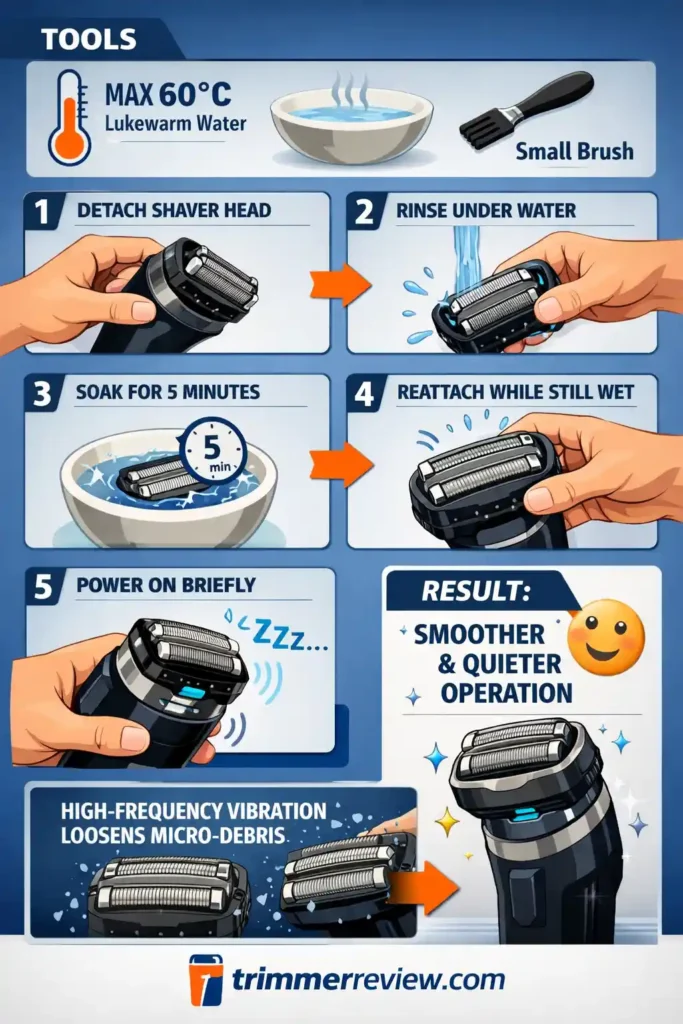
1. Deep Immersion Clean
- Tools: Lukewarm water (max 60°C), small brush.
- Process: Detach the shaver head, rinse under lukewarm water, soak for 5 minutes, reattach while still wet, and briefly power on.
- Mechanics: High-frequency motor vibration loosens compacted micro-debris.
- Expected Result: Reduced grinding noise and smoother operation.
Note: If debris buildup is severe, follow this deep cleaning guide for Philips electric shavers.
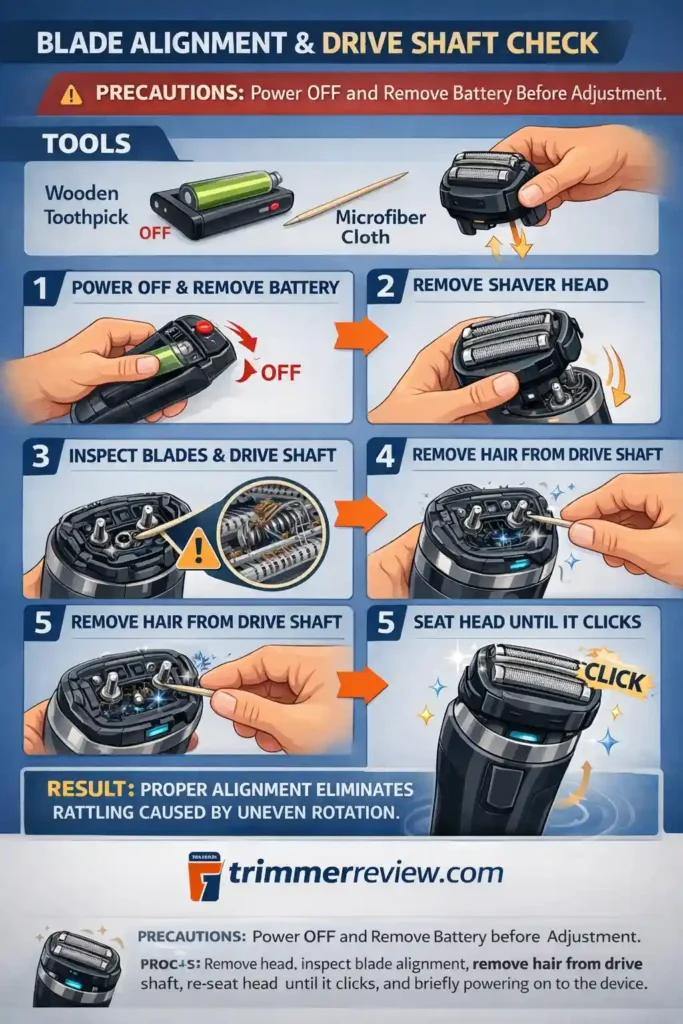
2. Blade Alignment & Drive Shaft Check
- Tools: Wooden toothpick, microfiber cloth.
- Process: Remove head, inspect blade alignment, remove hair from drive shaft, re-seat head until it clicks.
- Mechanics: Proper alignment eliminates rattling caused by uneven rotation.
- Precautions: Power OFF and remove battery before adjustment.
3. Safe Drying Protocol
- Tools: Lint-free cloth.
- Process: Shake off water, leave the head disassembled for 2–4 hours in a ventilated area.
- Mechanics: Prevents metallic scraping caused by trapped moisture.
- Important: Avoid heat sources like hair dryers to prevent plastic warping.

4. Battery Verification
- Process: For models with replaceable batteries, install fresh high-quality cells. For rechargeable models, ensure the device is fully charged or serviced if battery stability declines.
- Mechanics: Stable voltage ensures consistent motor RPM, reducing buzzing or pulsating noise.

5. Mechanical Fatigue Assessment
- Signs: Persistent noise after cleaning and battery replacement, excessive handle heat, faint burning odor.
- Recommendation: Consult Philips service or consider head replacement if bearings or motor are worn.
When to Replace the Shaver Head
Replace the shaving head if:
- loud noise persists after cleaning and blade alignment
- shaving performance decreases significantly
- blades feel rough during operation
- the device produces continuous high-pitched buzzing
Most Philips rotary shaving heads require replacement every 12–24 months depending on usage frequency.
Expected Noise Reduction After Each Fix
| Fix Applied | Typical Result | Time Required |
|---|---|---|
| Deep Immersion Clean | Grinding noise often reduced | 5–10 minutes |
| Blade Alignment | Rattling usually eliminated | 3–5 minutes |
| Safe Drying | Temporary buzzing disappears | 2–4 hours |
| Battery Replacement | Motor sound stabilizes | 1 minute |
| Head Replacement | Full acoustic restoration | Depends on part availability |
Preventive Maintenance Tips
Regular maintenance prevents situations where a Philips electric shaver is making loud noise due to trapped debris or blade misalignment.
| Task | Frequency |
|---|---|
| Rinse shaver head | After each use |
| Brush blade housing | Every 2–3 weeks |
| Replace batteries | As needed |
| Replace shaving heads | Every 12–24 months |
| Full inspection | Every 6 months |
Proper maintenance prolongs performance, reduces noise recurrence, and ensures hygienic operation.
Conclusion: Restoring Quiet Operation
- A Philips electric shaver making loud noise during operation is typically a symptom of debris buildup, blade misalignment, moisture retention, or unstable battery voltage.
- Systematic diagnosis prevents unnecessary expenses and extends the lifespan of grooming hardware. For additional guidance, refer to official Philips support documentation or professional appliance repair guidance.
Related Guides & Expert Resources
FAQs: Philips Electric Shaver Noise
Many users report a Philips electric shaver making loud noise after cleaning or when the battery charge becomes low.
Is loud noise dangerous?
Usually not. It indicates mechanical resistance. Remove battery if the shaver overheats.
Can lubrication fix noise?
Most Philips shavers are oil-free. Only use manufacturer-approved lubricants.
How long should a Philips shaver last?
With regular maintenance, optimal performance is typically maintained for 2–3 years.
Will replacement parts reduce noise?
Yes. New blades or heads often restore smooth operation if internal wear is causing persistent noise.
Can a damaged shaver head cause loud noise?
Yes. Bent or worn cutting blades can disrupt rotational balance, producing rattling or grinding sounds. Replacing the shaver head often restores normal acoustic performance.
Why does a shaver become louder after cleaning?
Water trapped inside the blade housing or drive shaft can temporarily increase friction and vibration. Allowing the shaver head to air-dry completely usually restores normal acoustic performance.
Is it normal for an electric shaver to become louder over time?
Yes. Over time, blade wear and internal friction may increase operational noise. Regular cleaning and timely blade replacement help maintain quieter performance.
Transparency & Fact-Checking
For full transparency and product information verification details, refer to the Disclaimer & Fact-Checking Policy.
