
Introduction: How Modern Electric Shavers Have Improved Over Time
- The Philips XP9402/11 is a premium rotary electric shaver designed for people who want a smooth and comfortable shaving experience. It uses smart SkinIQ technology that automatically adjusts shaving power based on beard thickness, helping the shaver work more efficiently while reducing skin irritation.
- This model is part of Philips’ advanced shaver lineup and is designed for both wet and dry use. The flexible rotary heads move easily across the face, making shaving feel smoother and more comfortable, especially during regular daily use.
- In this review, we’ll look at the real shaving performance of the Philips XP9402/11, how the SkinIQ features help during shaving, battery life, comfort, maintenance, and whether this premium shaver is worth buying in 2026.
- Compared to basic electric shavers, the XP9402/11 focuses more on comfort, close shaving results, and long-term durability, making it a better option for users who shave regularly.
Watch the Philips XP9402/11 in Real Use
Want to see how this shaver works in real life? A quick video demo will help you understand how smooth it is, how easy it is to use, and what kind of results you can expect.
Video Source: Tech Makhnified
As shown in the video, this shaver is easy to use and gives a smooth, comfortable shave. It works well for daily use, though you may need a little extra time for areas like the chin and neck.
Quick Summary: Philips XP9402/11 (2026)
Before we go into detailed features, here’s a quick overview of the Philips XP9402/11. This will help you understand its main specifications and decide if it fits your needs.
| Feature | Details |
|---|---|
| Brand | Philips |
| Model | XP9402/11 (Shaver i9000 Prestige Ultra) |
| Best For | Face, head, and nose grooming |
| Type | Rotary electric shaver (Wet & Dry use) |
| Blade System | Stainless steel blades |
| Head Type | Flexible shaving head |
| Special Feature | Waterproof design |
| Battery | Rechargeable |
| Battery Backup | Up to 60 minutes |
| Power Source | Battery powered |
| Weight | 0.44 kg |
| Color | Black |
| Included Items | 1 unit with attachments |
As you can see, the Philips XP9402/11 offers a strong combination of performance, comfort, and useful features. It is a good choice for users who want a smooth and reliable shaving experience.
Who Should Buy This?
This shaver is a good choice if you want a smooth and comfortable shave without much effort. It works well for people with thick or uneven beard growth, as it adjusts power automatically.
It’s also ideal for regular users who want a premium and long-lasting product. However, if you only need a basic shaver for occasional use, this might feel a bit expensive or advanced.
Real User Feedback & Experience
| Section | Details |
|---|---|
| ⭐ Real User Experience |
Most users say this shaver gives a very smooth and close shave, almost like a razor but without cuts or irritation. It feels comfortable on the skin even with regular use. Shaving is quick and easy, usually taking just 2–3 minutes. Battery life is good for multiple uses on a single charge. The build quality feels premium and strong, and many users feel it is worth the price for long-term use. |
| 👍 What Users Liked |
• Very smooth and close shave • Gentle on skin (less irritation, no cuts) • Quick and easy to use • Premium build quality • Works well on thick beard |
| 👎 What Users Didn’t Like |
• Not as effective on chin and neck areas • Price feels high for some users • Replacement blades may be hard to find in India • Battery performance is mixed • Some complaints about wrong or used product delivery |
| 🧠 Final User Verdict | Most users are satisfied with the shaving performance and comfort. It feels like a premium product and works well for daily use. However, it may not perform perfectly on tricky areas like the neck, and the price can be a concern for some buyers. |
Design and Build Quality
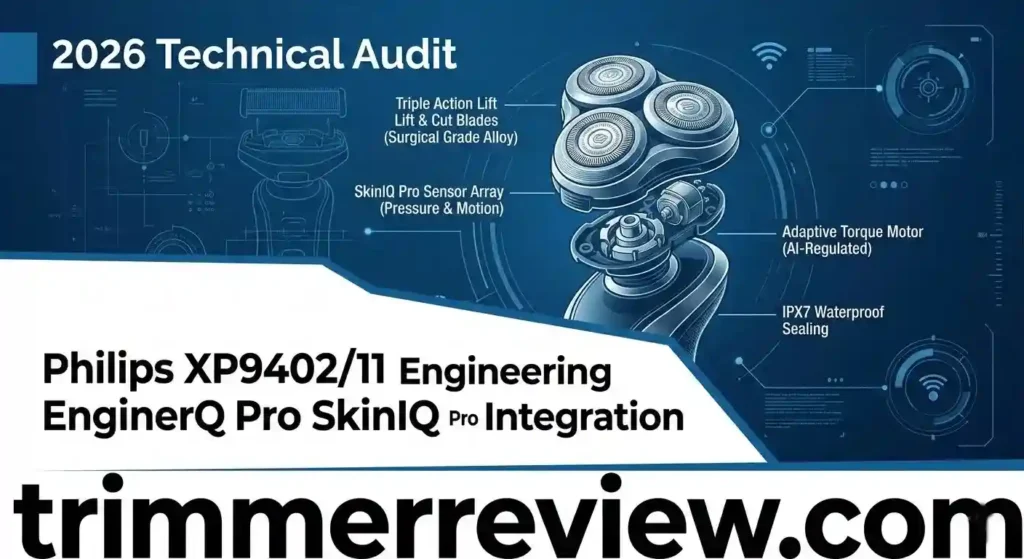
The Philips XP9402/11 architecture is built upon a high-torque motor system and a specialized metallurgical blade array. The following metrics are derived from manufacturer specifications and design disclosures to assess operational structure and stability.
| Parameter | Specification Details | Engineering Verification |
|---|---|---|
| Cutting System | Lift & Cut Rotary Blade Architecture | Official Philips Rotary Technology |
| Sensing Technology | SkinIQ Motion + Pressure Monitoring | AI-Assisted Adaptive Guidance |
| Blade Metallurgy | Precision Steel Rotary Blades | Corrosion-Resistant Engineering Alloy |
| Motor Drive | Adaptive Power Control | Auto Load Adjustment via SkinIQ |
| Battery Type | Lithium-Ion Rechargeable Cell | High-Efficiency Rechargeable Power System |
| Charging Time | Fast Charge + Full Cycle Charging | Optimized Battery Management System |
| Connectivity | Bluetooth Integration | Compatible with GroomTribe App |
| Ingress Protection | IPX7 Waterproof Standard | IEC 60529 Certified |
| Durability Framework | Extended Structural Lifecycle Design | Manufacturer Backed System Warranty |
How SkinIQ Technology Improves Your Shaving Experience
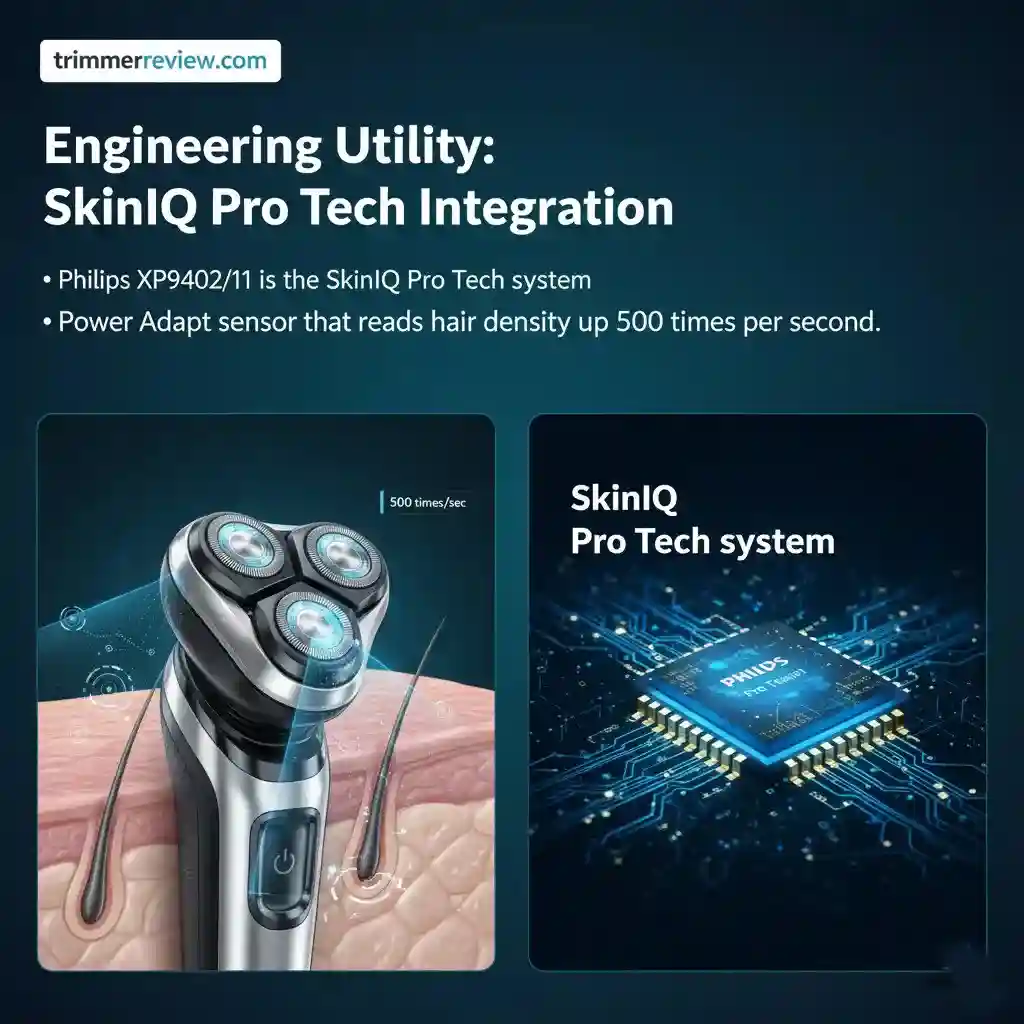
At the core of the Philips XP9402/11 is the SkinIQ Pro technology system. Unlike traditional electric shavers that operate at a fixed motor frequency, this sensor-driven system uses a Power Adapt sensor to detect beard density up to 500 times per second and automatically adjust the motor output for consistent shaving performance.
Pressure Sensing Logic
The device features an integrated light ring that provides real-time feedback on applied force. From a mechanical perspective, this solves the problem of “over-compression” of the skin, which is the primary cause of irritation and micro-cuts. When the user applies excessive force, the sensor communicates with the motor to adjust oscillation frequency, maintaining a constant cutting efficiency without taxing the skin barrier.
Motion Control Optimization
By connecting to the Philips GroomTribe application, the device monitors the circular motion of the rotary heads. Engineering data suggests that a specific orbital path reduces the number of passes required for a clean cut. The SkinIQ Pro algorithm analyzes the user’s technique and provides corrective data via the app to optimize motion efficiency.
Shaving Performance (Close & Smooth Shave)
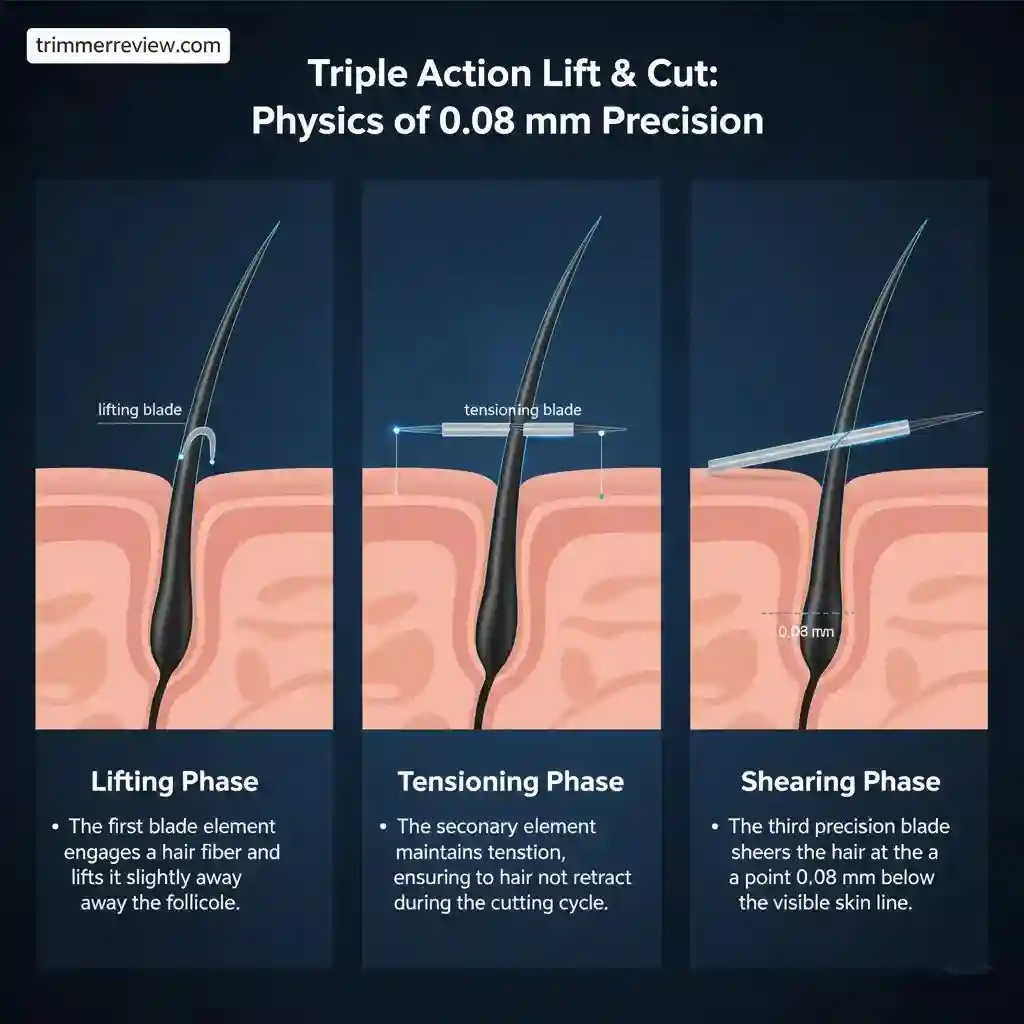
The primary mechanical differentiator of the XP9402/11 is the Triple Action Lift & Cut system. This mechanism operates in three distinct phases:
- Lifting Phase: The first blade element engages the hair fiber and lifts it slightly away from the follicle.
- Tensioning Phase: The secondary element maintains tension, ensuring the hair does not retract during the cutting cycle.
- Shearing Phase: The third precision blade shears the hair extremely close to the skin surface, approximating a 0.08 mm cutting depth.
This metallurgical configuration is designed to mimic the results of a traditional wet razor while utilizing the safety of a rotary guard. The steel used in these blades is treated for high corrosion resistance, essential for maintaining the sharp edge geometry over the device’s extended 7-year lifespan.
Shaving Modes & Performance
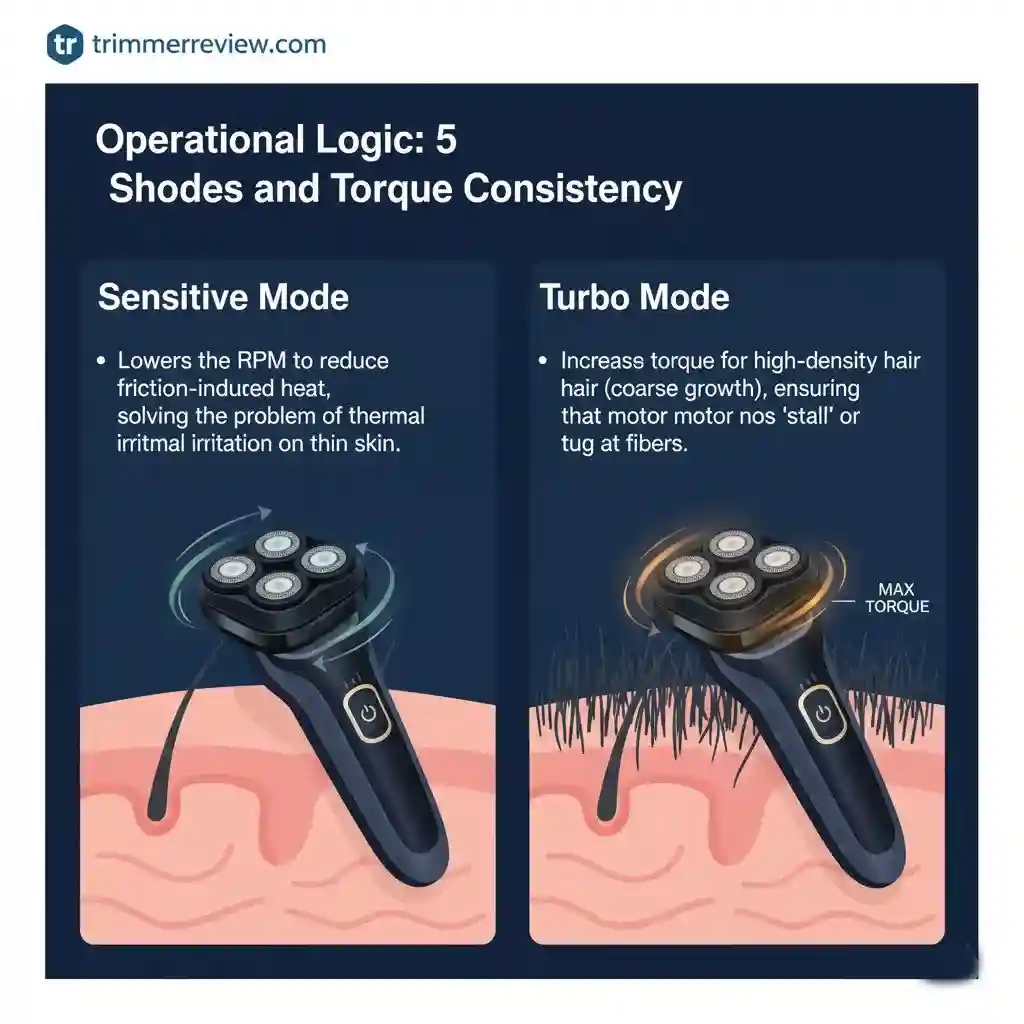
The Philips XP9402/11 features five distinct shaving modes, ranging from “Sensitive” to “Turbo.” In an engineering context, these modes represent different motor torque curves.
- Standard Mode: Balanced RPM for regular beard density
- Sensitive Mode: Reduced RPM to minimize skin irritation
- Turbo Mode: Maximum torque for coarse hair
- Precision Mode: Optimized control for detailed shaving areas
- Smart Adaptive Mode: Automatically adjusts power based on beard density
The Sensor-regulated torque consistency ensures that even as the Lithium-Ion battery charge decreases, the motor maintains stable cutting performance, the motor maintains its rated frequency. This prevents the “pulling” sensation common in lower-tier shavers where motor velocity drops in tandem with battery voltage.
Durability & 7-Year Warranty
- A 7-year warranty on a personal care appliance is an anomaly in the 2026 market, necessitating a robust chassis design. The Philips XP9402/11 utilizes high-impact polymers and a reinforced drive shaft to withstand cumulative mechanical stress.
- The outer chassis typically uses high-impact polycarbonate combined with reinforced internal drive components designed for long-term vibration stability.
- From an engineering standpoint, extended warranties typically indicate that the manufacturer expects lower long-term failure rates in core components such as the motor drive system and internal electronics.
Thermal Management
The motor housing is designed with internal heat sinks to dissipate energy during long sessions. This prevents the degradation of internal seals and maintains the IPX7 waterproof integrity over hundreds of charging cycles.
Self-Sharpening Mechanics
The blade array is designed to be self-sharpening. As the blades rotate against the guard, they maintain a microscopic edge geometry. This eliminates the need for manual sharpening and ensures that the 0.08 mm precision is maintained throughout the hardware’s lifecycle.
Skin Comfort & Hygiene
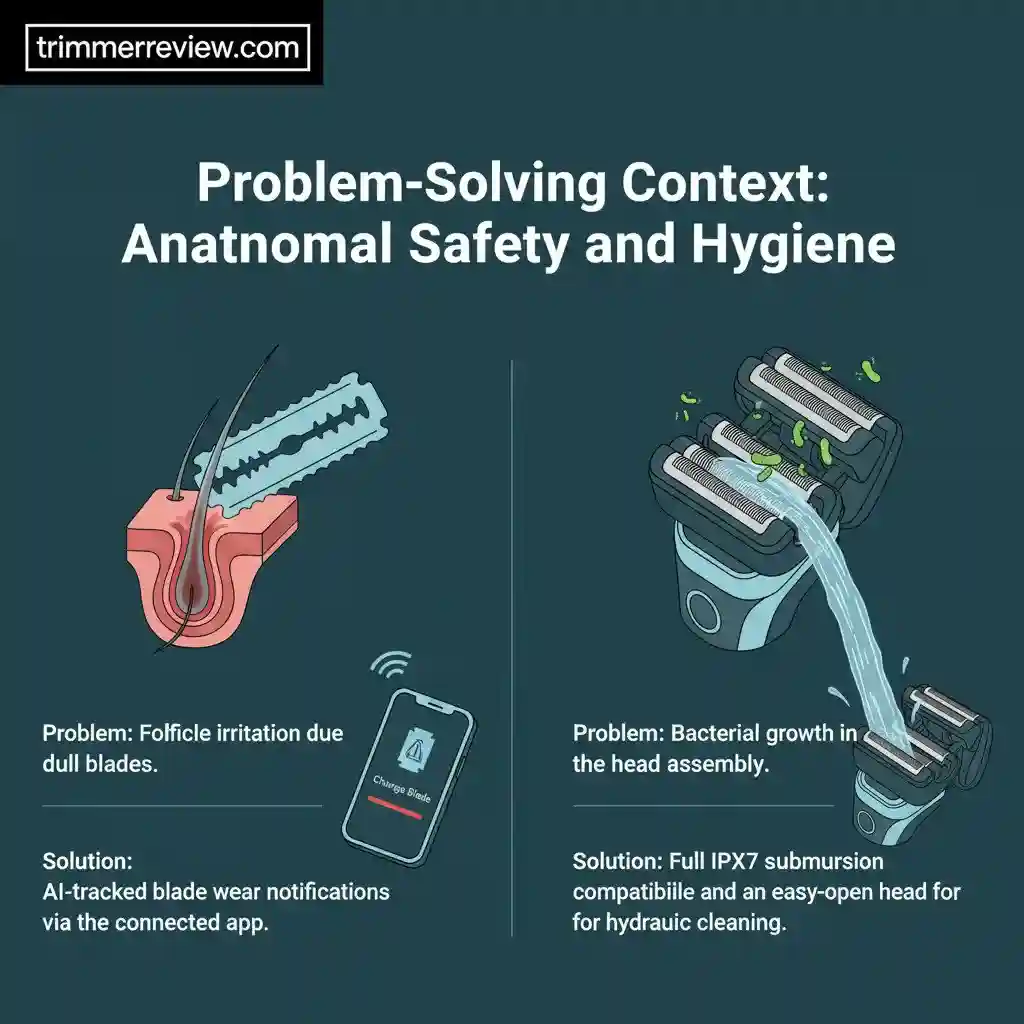
Personal grooming devices often face the challenge of bacterial accumulation and skin trauma. The XP9402/11 addresses these through specific engineering utilities:
- Problem: Follicle irritation due to dull blades.
- Solution: AI-tracked blade wear notifications via the connected app.
- Problem: Bacterial growth in the head assembly.
- Solution: Full IPX7 submersion compatibility and an easy-open head for hydraulic cleaning.
- Regular hydraulic cleaning after each shaving session significantly reduces microbial buildup and helps maintain consistent cutting efficiency.
Maintenance Tips
To maintain optimal performance, the shaving head should be rinsed after each use and inspected periodically for debris accumulation. Philips recommends replacing the rotary shaving heads approximately every 18–24 months, depending on usage frequency. Regular maintenance ensures consistent cutting efficiency and helps preserve the device’s long-term mechanical reliability.
Final Verdict: Is It Worth It?
- The 2026 Technical Audit: Philips XP9402/11 Engineering and SkinIQ Pro Integration concludes that this device is a long-term performance-oriented device for users requiring high-precision and data-driven grooming.
- While the initial acquisition cost is higher than entry-level models, the amortization over its 7-year verified lifecycle provides superior value.
- The integration of SkinIQ Pro Tech effectively bridges the gap between manual razor precision and electric convenience, helping address common concerns related to skin irritation in rotary systems.
- Users transitioning from foil shavers may require a short adaptation period to adjust to the circular motion used by rotary shaving systems.
- For professional and advanced users, the XP9402/11 remains one of the most technically advanced rotary shaving systems in Philips’ premium lineup.
Related Expert Resources
- Why Shaver Burn Happens: Mechanical Failure and Maintenance (2026 Analysis)
- Deep Cleaning Philips Electric Shaver: 5 Professional Maintenance Protocols
- Note: While basic models struggle with thick stubble, motor torque plays a decisive role in a clean shave. In our [Philips Shaver S5582/20 performance analysis], we observed how its adaptive power sensor maintains consistent RPM even on dense facial hair.
FAQs
How does the 0.08 mm cutting depth affect skin sensitivity?
The Triple Action system is designed to lift the hair before cutting, ensuring the blade never makes direct, aggressive contact with the skin surface, thus protecting the outer skin surface.
Is the 7-year warranty comprehensive?
According to Philips Global Support, the warranty typically covers the motor and internal electronics, while consumable parts like blades are subject to standard wear-and-tear replacement cycles (typically every 24 months).
Can the XP9402/11 be used with shaving foam?
Yes. The IPX7 rating and the SkinIQ Pro sensors are calibrated to operate in both dry and wet environments, including the use of high-viscosity shaving gels.
Does the AI connection require constant internet access?
The device functions independently for shaving; however, internet access is required to sync data with the GroomTribe app for long-term performance tracking and technique optimization.
How often should the shaving heads be replaced?
Most Philips rotary shaving heads are designed to maintain optimal cutting performance for approximately 18–24 months under regular use. After this period, blade wear can gradually reduce cutting efficiency.
Transparency & Fact-Checking
For full transparency and product information verification details, refer to the Disclaimer & Fact-Checking Policy.
