Introduction: Philips NT3650/16 vs Philips Norelco NT3600 Review
- The Philips NT3650/16 and Philips Norelco NT3600 are two popular nose trimmers designed for safe and easy grooming.
- In this guide, we’ll compare their safety, comfort, ease of use, and real-life performance — so you can quickly decide which one is better for you in 2026.
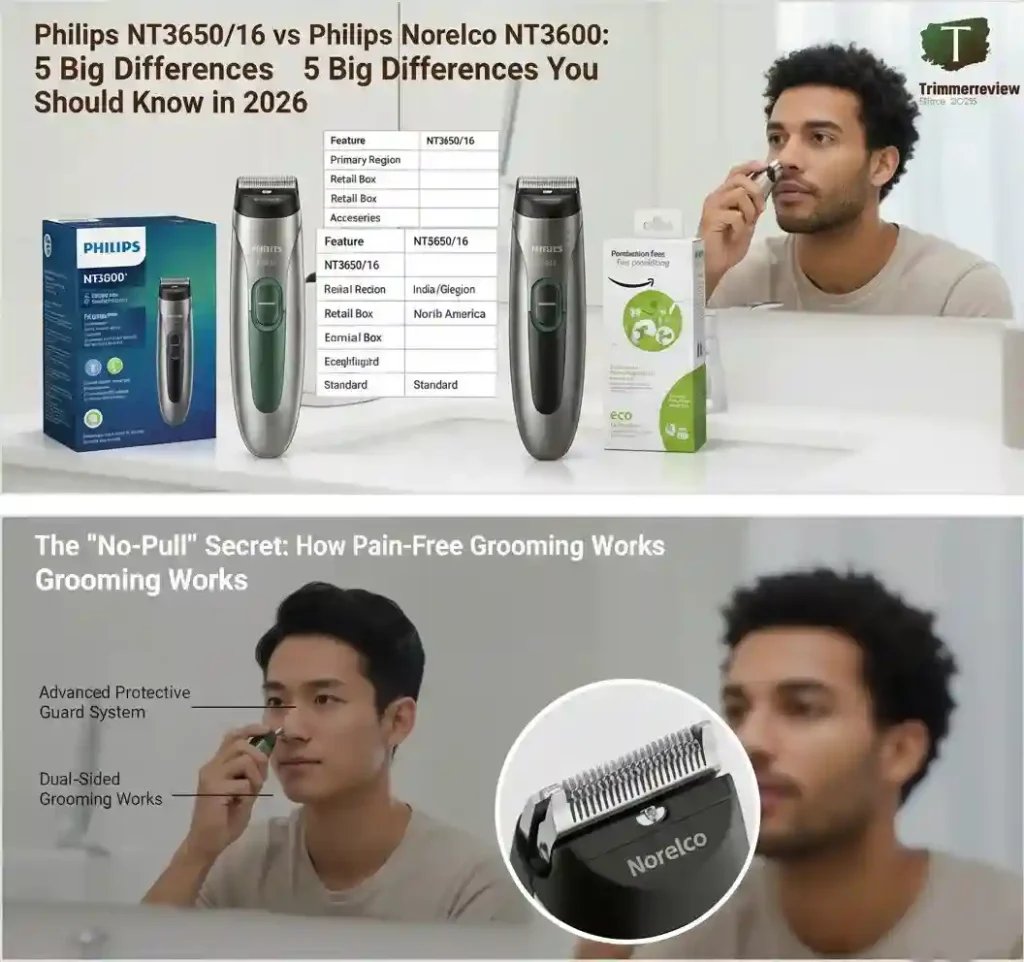
Philips NT3650/16 vs Norelco NT3600: Full Video Comparison (2026)
Why Nose and Ear Hair Grooming Matters
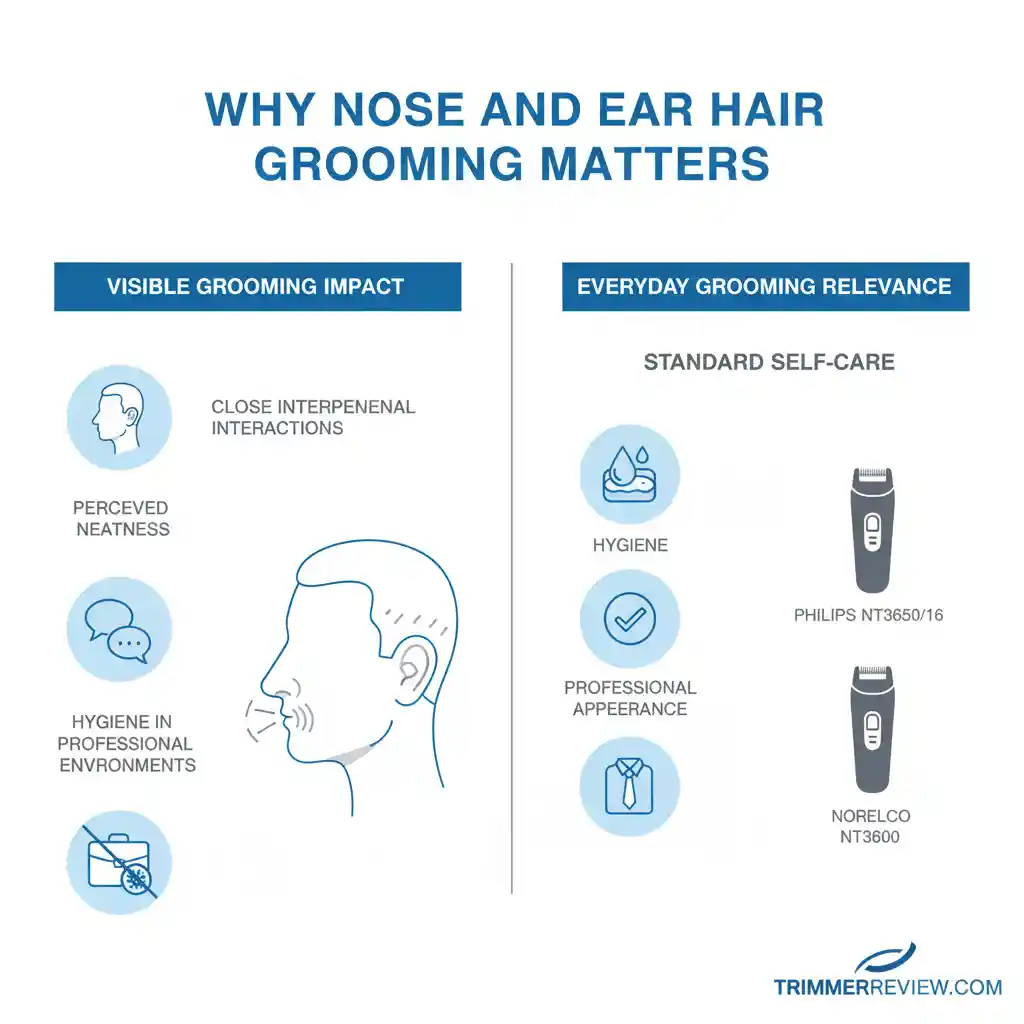
Visible Grooming Impact
External nasal and ear hair may become noticeable over time due to natural growth patterns. In certain contexts, unmanaged visible hair can be easily managed using tools like the Philips NT3650/16 vs Philips Norelco NT3600, ensuring a neat and professional appearance.
- Affect perceived personal neatness
- Become noticeable in close interpersonal interactions
- Create hygiene discomfort in professional environments
Routine external trimming helps maintain appearance consistency without interfering with the biological function of nasal and ear hair.
Everyday Grooming Relevance
External nasal and ear hair management supports a presentable appearance and is considered part of standard self-care rather than cosmetic enhancement. Both the Philips NT3650/16 vs the Norelco NT3600 aim to assist users in maintaining hygiene with minimal complexity.
Technical Analysis of Philips NT3650/16 vs Philips Norelco NT3600
Both trimmers are designed to trim hair safely without cutting your skin. They use a protective guard that keeps the blades slightly away from your skin, so you don’t feel pain or irritation while trimming. In real use, both feel smooth and are suitable for beginners.
Technical Specifications Comparison
| Feature | Philips NT3650/16 | Philips Norelco NT3600 |
|---|---|---|
| Model Number | NT3650/16 | NT3600/62 |
| Blade Type | Self-sharpening steel blades | Steel blades |
| Safety System | Skin-protection guard | Skin-protection guard |
| Power Source | 1 AA battery | 1 AA battery |
| Water Use | Fully washable (can rinse under water) | Washable (can rinse under water) |
| Where You Can Use It | Nose, ears, eyebrows | Nose, ears, eyebrows |
| Accessories | Combs, extra heads, pouch | Combs, trimming head |
| Maintenance | No oil needed | No oil needed |
| Safety Design | Built-in guard for safe trimming | Built-in guard for safe trimming |
Design, Components & Ergonomics
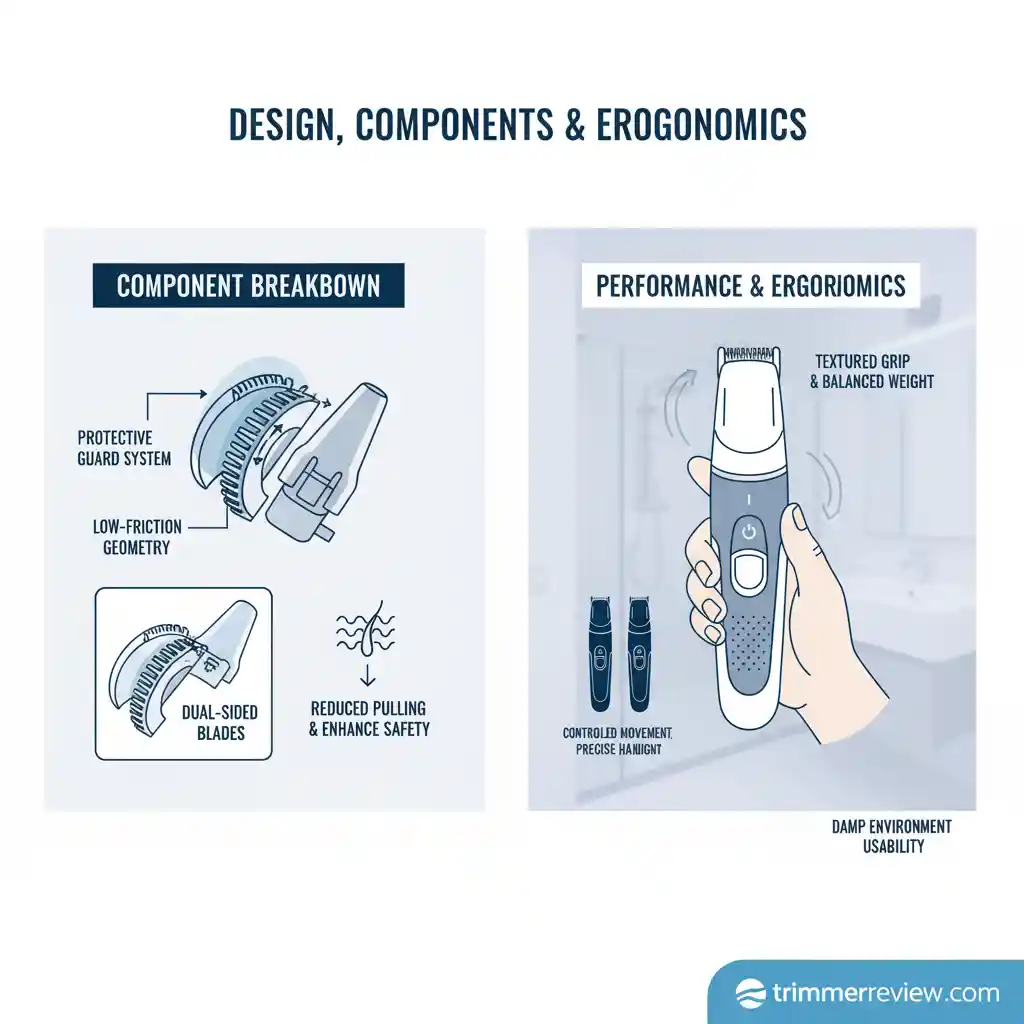
Component Breakdown
Both trimmers have a safety guard that keeps the blades away from your skin, so trimming feels safe and comfortable. The blades can cut hair from different angles, so you don’t have to go over the same area again and again. They are designed to trim smoothly, which helps reduce pulling and irritation.
Performance & Ergonomics
Both trimmers are easy to hold and don’t slip, even if your hands are wet. They feel comfortable to use and give you good control, making it easier to trim safely even in hard-to-see areas like inside the nose or ears.
Practical Usage and Grooming Context
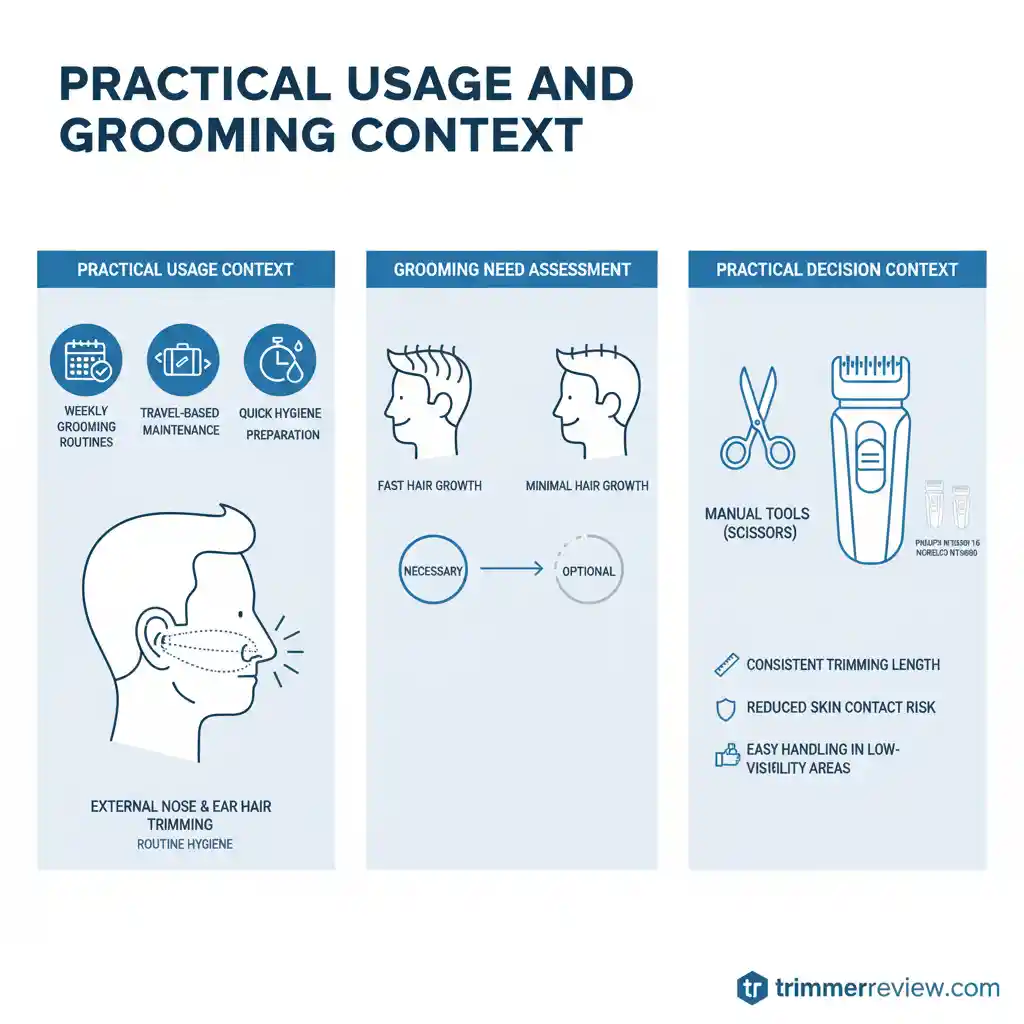
Practical Usage Context
Both devices are intended for managing visible external nasal and ear hair as part of routine hygiene maintenance. They are not designed for deep internal trimming, medical use, or dermatological procedures. Typical usage scenarios include:
- Weekly grooming routines
- Travel‑based maintenance
Quick hygiene preparation before social or professional interactions
Grooming Need Assessment
Routine trimming is not necessary for everyone. A guarded electric trimmer is generally relevant for individuals experiencing visibly fast external hair growth or those maintaining a professional appearance. It may not be essential for individuals with minimal visible nasal hair or those comfortable with traditional manual tools.
Practical Decision Context
In routine grooming practice, individuals may choose between manual tools such as scissors or dedicated trimming devices. A guarded electric trimmer offers:
- More consistent trimming length
- Reduced risk of accidental skin contact
- Easier handling in low‑visibility areas
Manual tools may remain suitable for occasional grooming needs or for users comfortable with precision manual control.
Maintenance, Hygiene, and Safe Grooming Practices
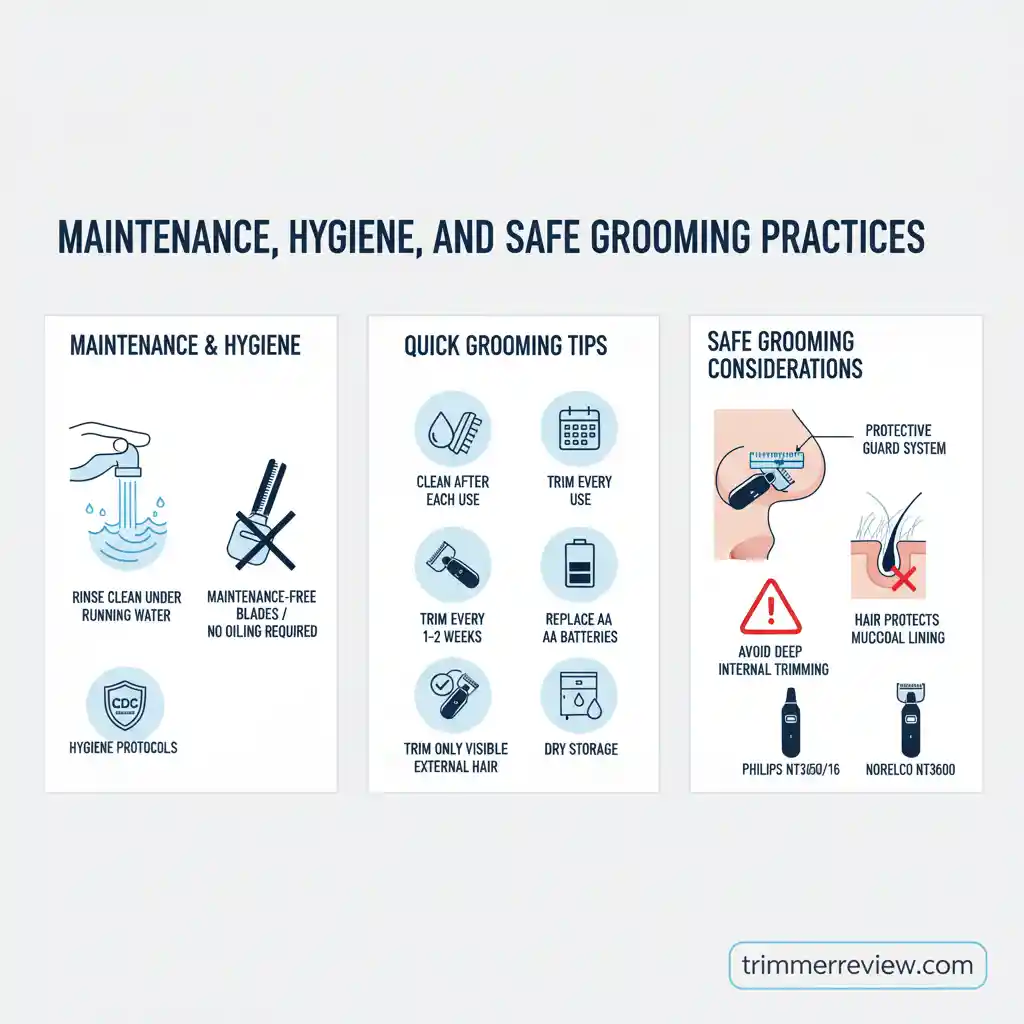
Maintenance & Hygiene
Both trimmers are classified as washable and compatible with rinse cleaning. Post‑grooming maintenance involves rinsing heads under running water. Because blades are engineered for maintenance‑free operation, lubrication is typically unnecessary. This aligns with general hygiene guidance such as that provided by the Centers for Disease Control and Prevention (CDC) for personal grooming and sanitation:
https://www.cdc.gov/handwashing/
Quick Grooming Tips
- Always clean the trimming head after each use.
- Use trimming tools every 1–2 weeks for hygiene balance.
- Store the device in a dry place to preserve blade and guard longevity.
- Replace AA batteries as needed to maintain stable performance.
- Trim only visible external hair to protect nasal mucosal lining.
Safe Grooming Consideration
Nasal and ear hair serve natural protective functions by filtering airborne particles and reducing particle entry.
For this reason:
- Only visible external hair should be trimmed.
- Deep internal trimming may irritate mucosal linings and disrupt natural filtration.
- Protective guard systems in both devices help reduce direct blade‑to‑skin contact.
Power System Analysis: Battery vs Rechargeable
- Battery‑Operated: Immediate usability, avoids aging concerns of internal cells, portable.
- Rechargeable Alternatives: Lower recurring cost but require charging downtime and might experience capacity degradation over long periods.
Long-Term Ownership Considerations
Legal battery systems support immediate usability and simplify travel logistics. Blade longevity depends on cleanliness and avoidance of abrasive materials. Rechargeable alternatives may reduce recurring battery expenses but introduce charging downtime and potential battery chemistry limitations.
Design Trade-offs and Limitations
Both models operate at fixed speed settings, which limits torque adjustments for varied hair densities. Reliance on disposable batteries creates recurring cost considerations. Simple mechanical designs prioritize durability over advanced customization.
Target Users and Suitability
These devices are suited for individuals who prioritize:
- Low‑maintenance grooming tools
- Portable battery‑powered operation
- Quick external hair management
They may be less suitable for users requiring adjustable speed control or integrated rechargeable systems.
Suitable for:
- Users preferring low‑maintenance designs
- Individuals needing travel‑friendly grooming solutions
- Routine external hair management
Less suitable for:
- Users requiring speed control customization
- Rechargeable power preference
- High‑frequency grooming needs
Pros & Cons: Philips NT3650/16 vs Philips Norelco NT3600
When evaluating the Philips NT3650/16 vs Philips Norelco NT3600, both the strengths and limitations of each model should be considered. Key advantages, including protective guard design, maintenance-free blades, and ergonomic handling, are weighed against factors such as fixed speed operation and recurring battery costs. Reviewing these pros and cons provides a clear understanding of which trimmer best suits grooming preferences and routine needs in 2026.
| Pros | Cons |
|---|---|
| Protective guard reduces irritation | Recurring battery replacement costs |
| Maintenance‑free blade design | Fixed speed operation |
| Fully washable for hygiene | External battery dependent |
User Reviews and Ratings Overview
Overall Rating: 3.8/5 ⭐ (10,000+ users)
👍 What People Liked
- Easy to use and beginner-friendly
- Safe trimming without cuts or pain
- Compact and travel-friendly
- Works well for nose hair
- Good value for money (for many users)
👎 What People Didn’t Like
- Takes time to trim properly
- Doesn’t remove all hair in one go
- Some users felt it’s overpriced
- A few said it gets slightly warm
- Not very effective for ear hair
Recommended Usage Frequency
For hygiene balance, trimming once every 1–2 weeks is generally sufficient. Over‑trimming is unnecessary, as nasal hair contributes to natural particle filtration. Routine external maintenance supports personal appearance and comfort.
Expert‑Level Conclusion
The Philips NT3650/16 vs Philips Norelco NT3600 comparison shows that both devices provide neutral, safe solutions for routine external nasal and ear hair grooming. While rechargeable alternatives offer certain conveniences, both models evaluated prioritize mechanical reliability, protective guard designs, and ease of hygiene maintenance. Selection between models may depend on specific usage preferences rather than functional superiority.
Related Guides & Expert Resources
For those looking for in-depth guidance on nose and ear hair grooming, these expert resources offer step-by-step instructions, detailed product comparisons, and maintenance tips. Guides such as Philips Nose Trimmer Series 3000 vs 5000 – Performance and Feature Comparison and How to Use a Nose Trimmer (Step-by-Step) provide practical advice to improve grooming routines and make informed decisions when selecting the most suitable trimmer in 2026.
- Philips Nose Trimmer Series 3000 vs 5000 – Performance and feature-set comparison.
- How to Use a Nose Trimmer (Step-by-Step) – Operational guide for optimal results.
- Note: Battery efficiency is often overlooked, but it’s the backbone of hardware longevity. In our exhaustive [Philips nose trimmer battery life test], we compared AA alkaline vs. rechargeable cells to see which one maintains peak motor torque for longer cycles.
Frequently Asked Questions (FAQs)
This FAQ section covers the most common questions regarding the Philips NT3650/16 vs Philips Norelco NT3600, including performance, maintenance, and practical usage. Topics range from suitability for women to battery operation and noise levels, offering clear guidance to help determine which trimmer best meets grooming needs in 2026.
Is Philips NT3650/16 better than Philips Norelco NT3600?
Both models have similar performance characteristics. The primary differences arise from regional specifications and included accessories.
Can women use this trimmer?
Yes. The protective guard system makes it suitable for anyone needing safe external nasal or ear hair trimming.
Does it require oiling?
No, the blades are self‑sharpening and designed to function without lubrication in normal use.
Is it loud?
Motor hum is typical for high‑torque trimming devices and generally not distractingly loud.
Is it suitable for travel?
Yes. Single AA battery operation and protective cap design make both models convenient for travel.
Transparency & Fact-Checking
For full transparency and product information verification details, refer to the Disclaimer & Fact-Checking Policy.
