
Introduction: Philips vs Wahl Nose Trimmer Overview
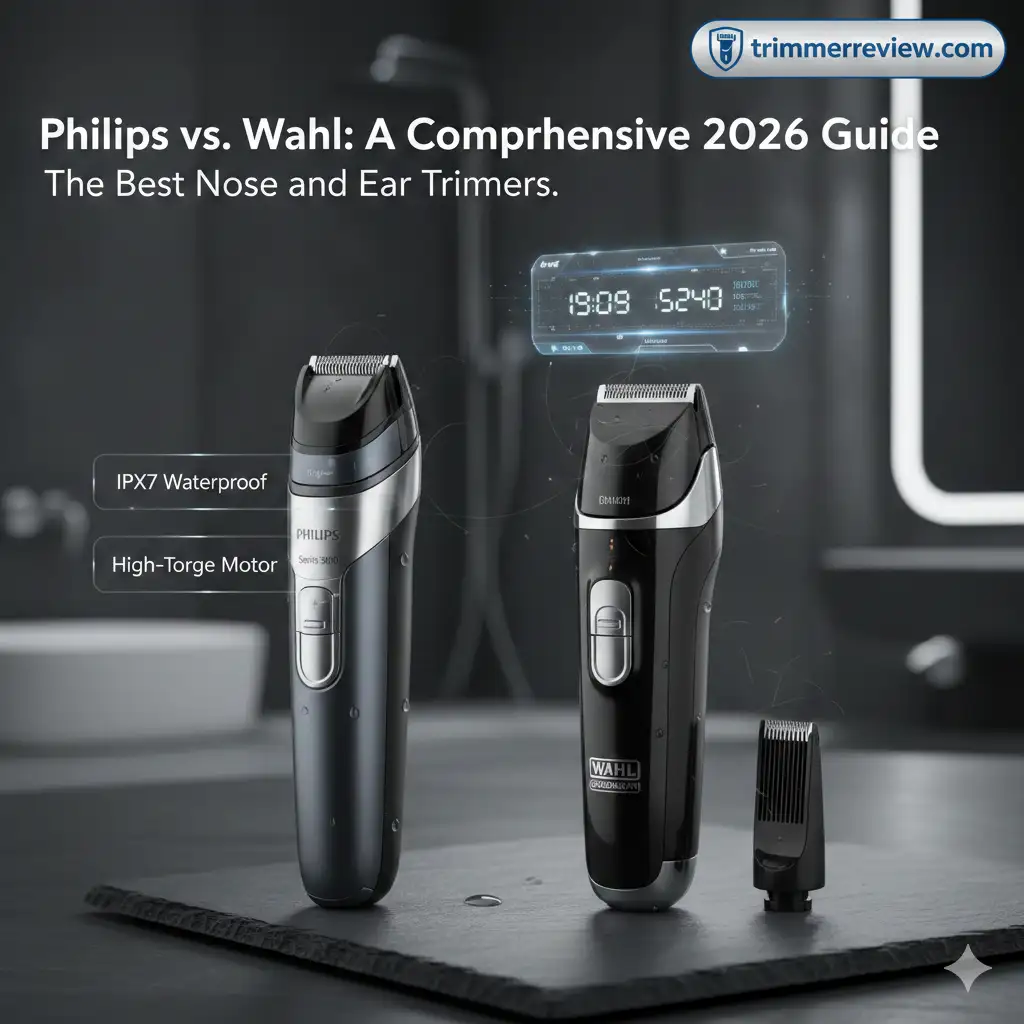
Grooming technology in 2026 emphasizes skin protection as much as cutting efficiency. When evaluating a Philips vs. Wahl nose trimmer purchase, users are choosing between two distinct engineering schools. Philips typically utilizes a horizontal guarded system, whereas Wahl often relies on vertical or rotary cutting heads. Understanding these differences helps buyers choose the right tool for their needs, whether they are beginners, professional barbers, or students seeking a reliable daily grooming tool.
A closer look at the engineering architecture of each device highlights how blade geometry, motor torque, and material composition influence trimming performance across different hair densities. This technical guide explores the hardware differences, maintenance requirements, and overall value of each brand to assist in an informed decision.
Quick Comparison Table
The quick comparison table below provides a simplified overview of the key engineering and usability differences between Philips and Wahl nose trimmers. While both brands are respected in the grooming industry, their design philosophies differ significantly. Philips focuses on guarded blade architecture and low-maintenance operation to prioritize skin safety, whereas Wahl emphasizes motor power and exposed cutting heads for faster trimming on dense hair. This summary allows readers to quickly understand the primary strengths of each brand before exploring the detailed technical analysis that follows.
| Feature | Philips | Wahl |
|---|---|---|
| Blade System | Guarded Linear | Rotary / Vertical |
| Safety | High | Moderate |
| Maintenance | Oil-free | Requires oil |
| Waterproof | IPX7 | Splash resistant |
| Best For | Sensitive skin | Thick hair |
Technical Specifications Overview
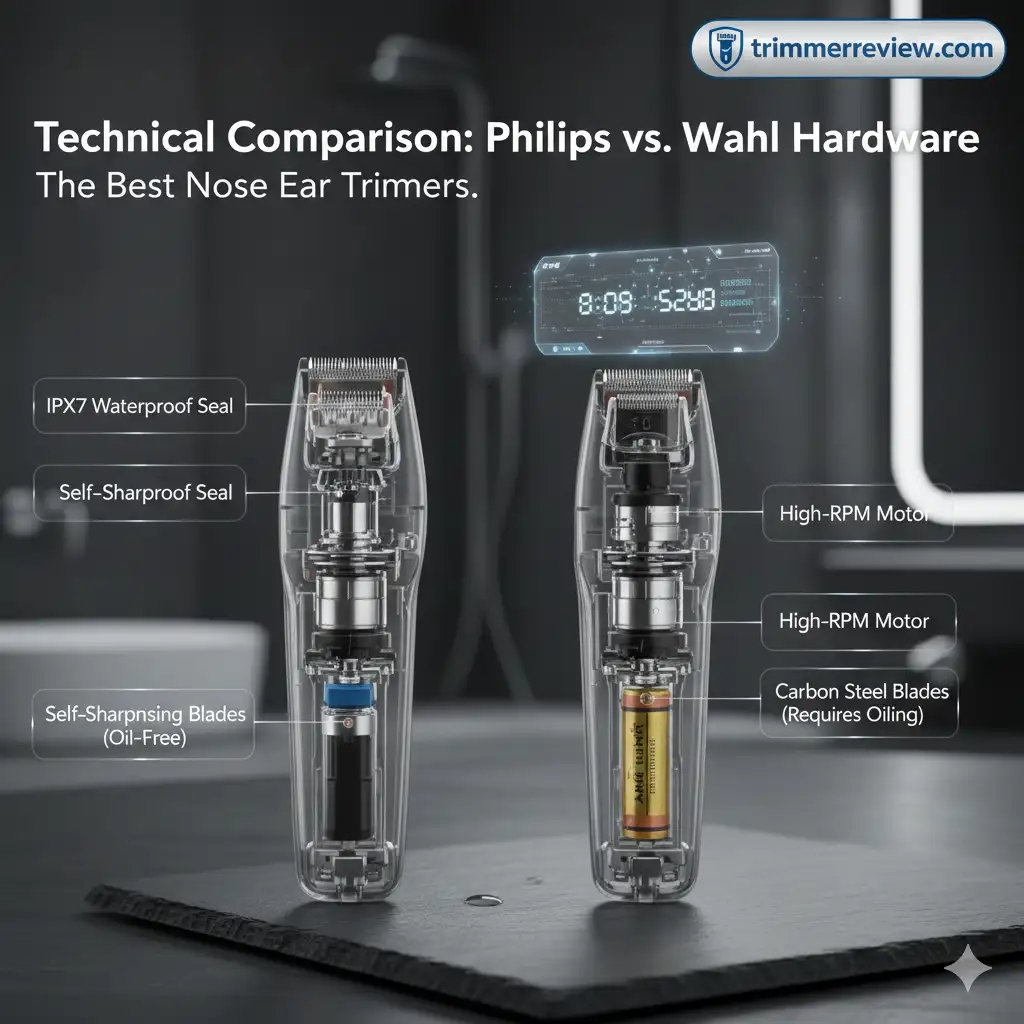
Analyzing the internal components of these devices reveals how they handle different hair densities. While Philips focuses on a “no-pull” guarded design, Wahl emphasizes raw motor power and versatility.
| Feature | Philips Series 3000 / 5000 | Wahl Groomsman / Lithium Series |
|---|---|---|
| Blade Geometry | Dual-sided linear blades with protective guard | Rotary or vertical exposed blades |
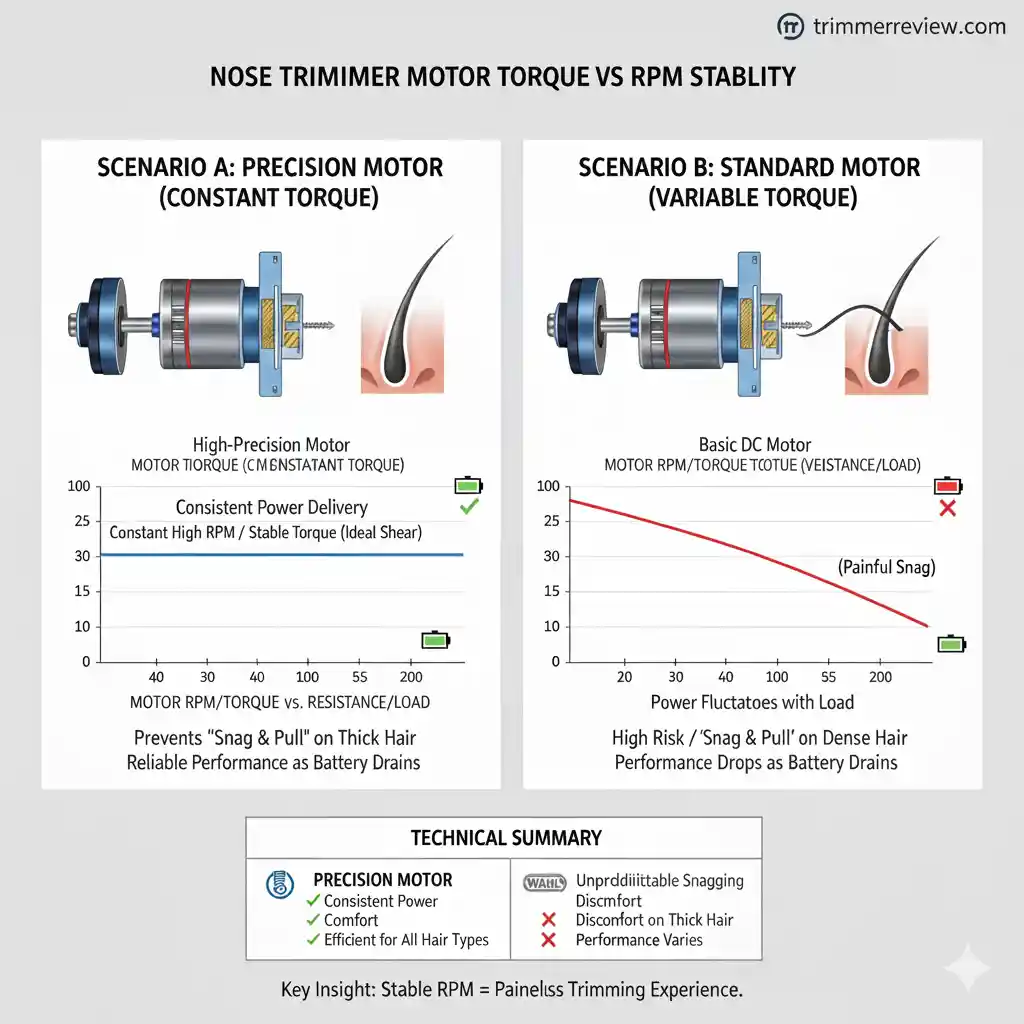
| Motor Drive | Constant-torque precision motor | High-RPM direct-drive motor |
| Material | Reinforced polymer body with stainless steel blades | Impact-resistant ABS housing with carbon steel blades |
| Waterproofing | IPX7 rated (fully washable) | Splash-proof design (head rinse only) |
| Power Source | AA battery (Lithium compatible) | AA battery or rechargeable Lithium-Ion |
| Maintenance | Oil-free blade system | Periodic lubrication recommended |
Note: While the NT3650 is widely regarded as a top-tier safety option—as explored in the Philips NT3650/16 Review (2026)—users seeking a more versatile multi-grooming setup may benefit from reviewing the Philips Nose Trimmer Series 3000 vs 5000 comparison to better understand the differences between these model ranges.
The Physics of Precision: Philips vs. Wahl Cutting Technology
Philips: The Guarded Approach
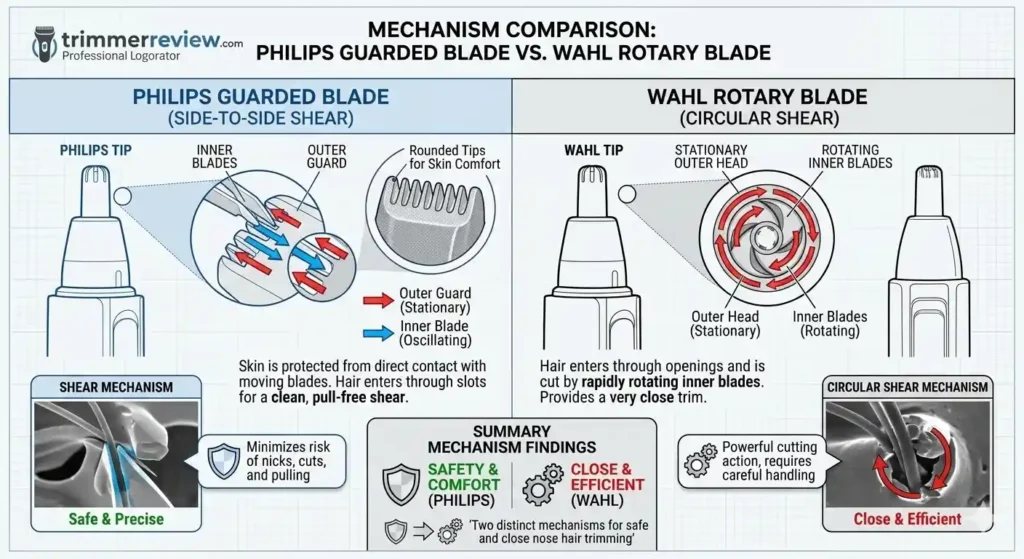
The core of the Philips vs. Wahl comparison for sensitive users is the Philips Protective Guard system. The blades are housed behind an ultra-thin mesh. This design ensures that the cutting edge never makes direct contact with the skin, reducing the likelihood of nicks and irritation when used correctly.
Wahl: The Power-First Approach
Wahl trimmers are often preferred by professionals for coarse hair. The rotary or vertical heads allow for 360-degree hair intake. According to international manufacturing standards like those found at IEC, the efficiency of a trimmer is determined by its motor’s ability to maintain RPM under load. Wahl excels here, though the lack of a mesh guard requires a more steady hand.
Performance Analysis: Real-World Usability
In a direct Philips vs. Wahl performance test, two different outcomes emerge based on the user’s skin type:
- Safety & Hygiene: Philips leads with an IPX7 rating, meaning it can be fully submerged. This is a critical feature for maintaining hygiene in humid bathroom environments.
- Cutting Speed: Wahl typically clears dense hair faster. For a barber or professional, the speed of the Wahl rotary head is an advantage for quick detailing.
- Versatility: Most Philips models include eyebrow combs, whereas Wahl often provides specialized detailing heads for sideburns and necklines.
Durability and Maintenance Report
Reliability in the Philips vs. Wahl comparison depends largely on maintenance habits:
- Philips: Designed for a “rinse and go” lifestyle. The blades are self-sharpening and require no oil.
- Wahl: Often uses high-carbon steel, which stays sharp longer but is prone to oxidation if not dried and oiled periodically. According to British Stainless Steel Association guidelines, maintaining a dry environment for non-washable components is vital to prevent corrosion.
Who Should Buy and Who Should Avoid?
The Philips Series is suitable for:
- Beginners: The safety guard greatly reduces the chance of accidental cuts.
- Sensitive Skin Users: Those prone to skin irritation or sensitivity.
- Students: Ideal for low-maintenance, budget-friendly grooming.
The Wahl Series is suitable for:
- Professional Barbers: High-torque motors for back-to-back use.
- Coarse Hair Profiles: Users who find guarded trimmers too slow.
- Multi-taskers: Those who need a trimmer for nose, ear, and brow detailing in one go.
Pros and Cons: Philips vs Wahl Final Comparison
Selecting between these two brands requires a trade-off between advanced safety features and raw cutting power. While technical specifications provide a foundation, the real-world performance depends on how these features translate into daily grooming habits. The following comparison highlights the practical hardware strengths and design limitations observed during the technical evaluation of both Philips vs. Wahl models.
| Brand | Technical Pros | Hardware Limitations |
|---|---|---|
| Philips | Zero-pull blade technology; IPX7 waterproof design; oil-free maintenance system. | Slightly slower on extremely dense hair; larger trimming head compared to compact rotary designs. |
| Wahl | High-RPM motor; compact trimming heads; excellent precision for detailing tasks. | Not fully waterproof; requires periodic blade oiling; produces slightly higher vibration. |
Key Takeaways
- Philips focuses on skin safety and hygiene
- Wahl prioritizes motor power and detailing
- Philips requires almost no maintenance
- Wahl performs better on coarse hair
Related Guides & Expert Resources
The following guides provide additional technical insights and practical grooming advice for readers who want a deeper understanding of Philips nose trimmer engineering and everyday maintenance practices. These resources explore detailed product reviews, model comparisons, and step-by-step usage techniques that help maintain optimal trimming performance and skin safety. Reviewing these expert guides can also assist in selecting the most suitable device based on individual grooming habits, hair density, and long-term durability expectations.
- Philips NT3650/16 Review (2026)
- Philips NT3650/16 vs Philips Norelco NT3600
- Philips Nose Trimmer Series 3000 vs 5000
- How to Use a Nose Trimmer (Step-by-Step)
Final Verdict: Philips vs. Wahl
Based on design, safety, and everyday usability, the choice becomes clearer for most users. For the average user prioritizing skin health and hygiene, Philips is the more reliable daily option in 2026. However, for those with coarse hair who prefer a powerful, traditional tool and don’t mind basic maintenance, Wahl remains a formidable contender.
Frequently Asked Questions
The following frequently asked questions address common concerns related to performance, maintenance, and everyday usability in the Philips vs. Wahl nose trimmer comparison. These answers summarize key technical differences such as blade design, motor behavior, and waterproof ratings. Reviewing these FAQs helps clarify practical considerations—including trimming safety, maintenance requirements, and battery performance—so readers can choose the most suitable device for their grooming routine.
Is Philips vs. Wahl better for ear hair?
The Philips linear head is generally safer for reaching the irregular contours of the outer ear without catching the skin.
Do Wahl trimmers require oil?
Yes, most Wahl models perform better with a drop of mineral oil every few months to reduce friction and heat.
Which brand has better battery life?
Both brands perform similarly on a single AA battery, though Wahl Lithium-Ion rechargeable models offer significantly more torque and longevity.
Can the Philips vs. Wahl trimmers be used in the shower?
Only Philips models with an IPX7 rating are safe for shower use. Most Wahl trimmers are “rinseable” only at the blade head.
Philips vs. Wahl: Which is quieter?
Philips precision motors generally produce a lower-frequency hum, while Wahl rotary motors have a higher-pitched sound profile.
Transparency & Fact-Checking
For full transparency and product information verification details, refer to the Disclaimer & Fact-Checking Policy.
