
The Grooming Dilemma: Selecting a Reliable Trimmer
- The search for a Philips vs Remington nose trimmer often stems from the need for a balance between skin safety and cutting efficiency. In 2026, the grooming market offers advanced solutions, yet the fundamental engineering between these two giants remains distinct. While one brand prioritizes a shielded cutting environment, the other focuses on versatile, open-blade architecture.
- Maintaining facial hygiene requires a device that operates without the risk of pulling or tugging sensitive nasal hairs. Whether the user is a professional barber, a student on a budget, or a grooming beginner, identifying the specific strengths within a Philips vs Remington nose trimmer comparison is the first step toward an irritation-free routine. Technical research suggests that the nasal mucosa is significantly more delicate than external facial skin, making the choice of blade technology a critical health decision.
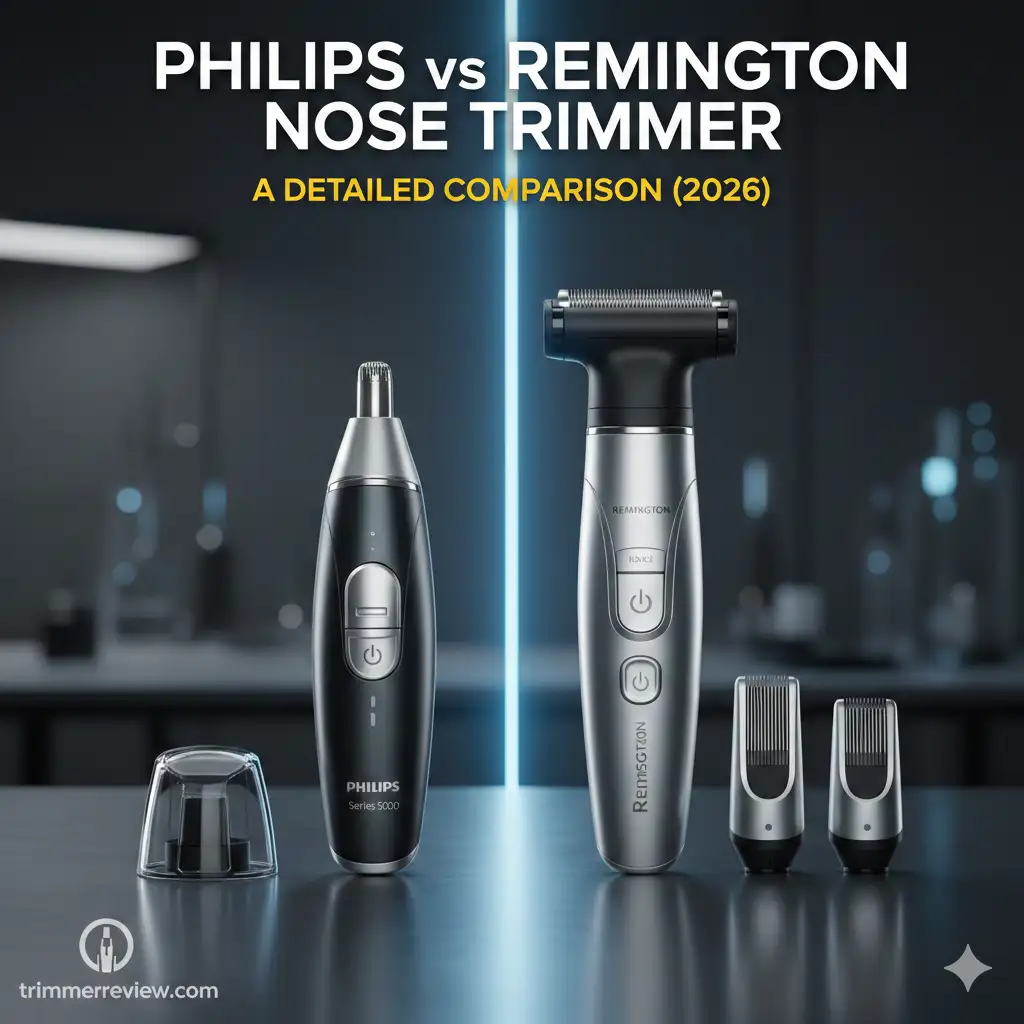
Quick Comparison
| Feature | Philips Nose Trimmer | Remington Nose Trimmer |
|---|---|---|
| Blade System | Protective Guard Rotary | Vertical Nano Blade |
| Skin Protection | Shielded Guard | Open Blade |
| Maintenance | No oil required | Occasional cleaning / oil |
| Attachments | Eyebrow combs | Multiple grooming heads |
| Primary Strength | Skin safety | Versatility |
Technical Specifications Overview
In technical assessments, comparing the internal hardware and operational capabilities of a Philips vs Remington nose trimmer provides a clear roadmap for selecting a high-performance device. The following data highlights the core mechanical differences—specifically motor torque and blade geometry—that define the long-term user experience for both brands.
| Feature | Philips Series (3000/5000) | Remington Nano Series |
|---|---|---|
| Blade System | Protective Guard (Shielded) | Antimicrobial Vertical Blades |
| Wet/Dry Usage | Fully washable | Fully washable |
| Maintenance | Oil-Free Steel Blades | Rinse-clean Technology |
| Motor Type | High-Torque Precision | High-Speed Oscillating |
| Included Attachments | Eyebrow Combs & Detailer | Rotary, Linear, & Detail Heads |
| Power Source | AA Battery (Lithium Compatible) | AA Battery |
Detailed Performance Analysis
In any Philips vs Remington nose trimmer evaluation, the Philips Protective Guard system serves as a primary highlight. This technology utilizes an ultra-thin foil guard that prevents the blades from making direct contact with the skin. Expert research indicates that this design virtually eliminates the risk of nicks and cuts, which is a significant advantage for beginners or individuals with high skin sensitivity.
In contrast to the rotary system, the Remington Nano Series utilizes a vertical blade system housed in antimicrobial materials. The Philips vs Remington nose trimmer data indicates that Remington offers more versatility for those requiring a tool that handles eyebrows, sideburns, and nose hair with equal precision. The integration of silver-ion housing in Remington models is a technical response to bacterial growth, a feature that professional barbers find particularly valuable for maintaining sterile equipment between clients.
Technical Analysis: Motor Efficiency and Blade Engineering
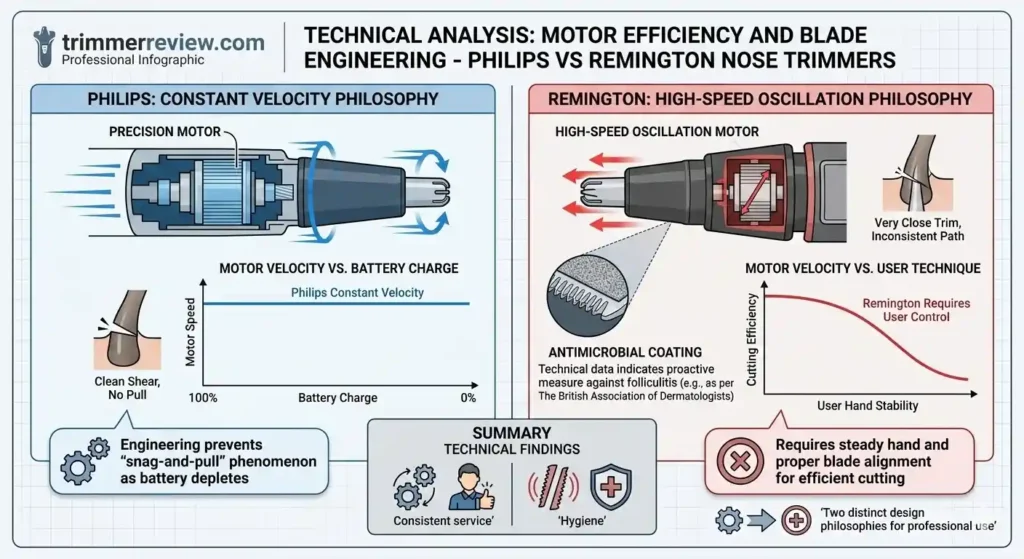
Technical research into the Philips vs Remington nose trimmer category reveals two distinct philosophies regarding motor torque. Philips utilizes a precision motor designed to maintain constant velocity. This engineering prevents the “snag-and-pull” phenomenon that often occurs when a battery begins to lose its charge. For professionals, this consistency is vital for providing a high-quality service without interruption.
Remington focuses on high-speed oscillation. While this allows for a very close trim, it requires a steady hand and proper blade alignment. Technical data provided by The British Association of Dermatologists indicates that the use of antimicrobial coatings—like those found on Remington blades—is a proactive measure against folliculitis in the nasal cavity.
Battery Performance and Sustainability: A 2026 Suitability
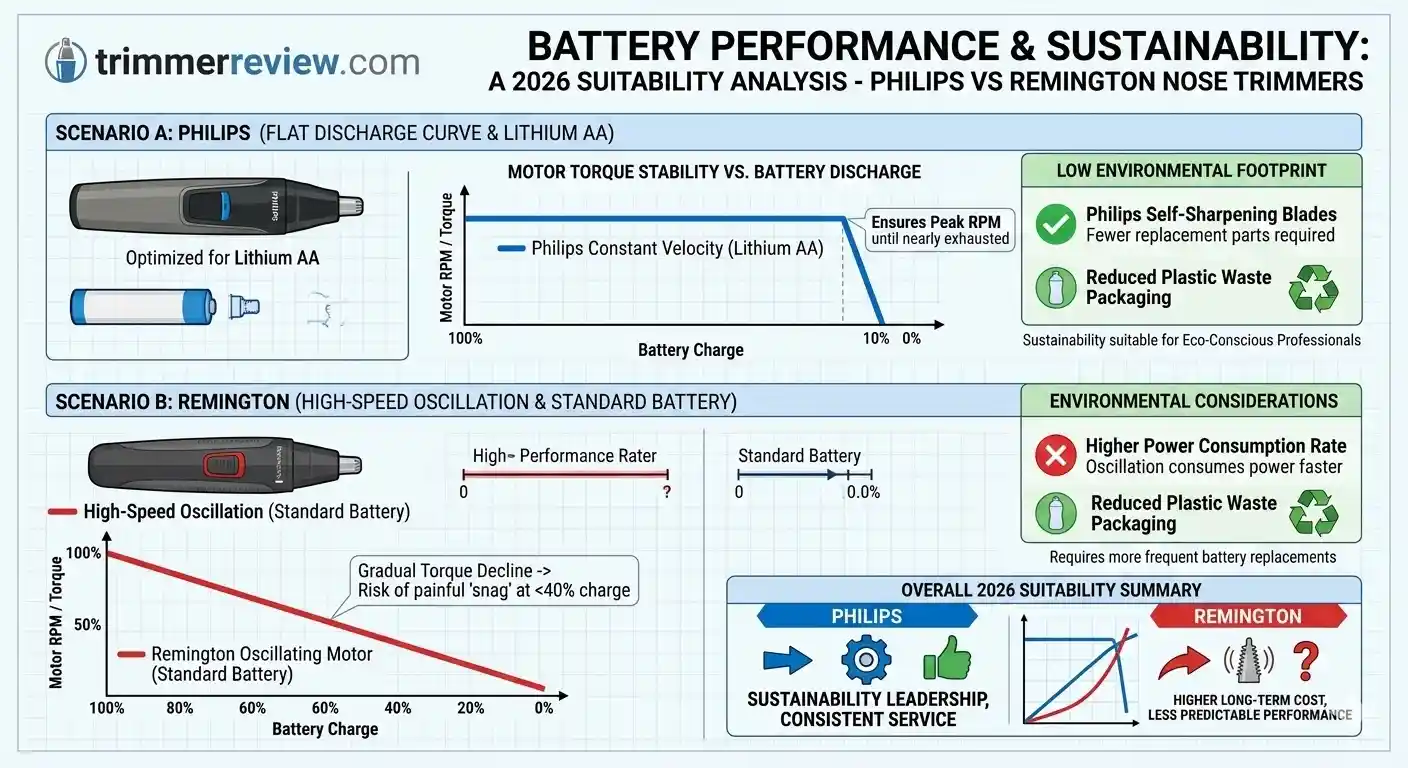
When evaluating a Philips vs Remington nose trimmer, the efficiency of the power source is often overlooked. Technical analysis suggests that the type of battery used significantly impacts motor torque stability. Philips models in 2026 are optimized for Lithium AA batteries, a behavior also examined in the Philips NT3650/16 review (2026), which provide a flat discharge curve. This ensures that the trimmer maintains peak RPM until the battery is nearly exhausted, preventing the painful “snag” that occurs with declining power.
Remington models, while also battery-operated, are designed with high-speed oscillation that consumes power at a slightly higher rate. From a sustainability standpoint, both brands have made strides in reducing plastic waste in their packaging. For students and eco-conscious professionals, the longevity of the Philips self-sharpening blades offers a lower environmental footprint, as fewer replacement parts are required over the device’s lifecycle.
Durability and Maintenance Benchmarks
Analyzing the long-term cost of ownership for a Philips vs Remington nose trimmer requires a close look at mechanical wear and blade longevity. Engineering durability is a key metric for both professional barbers and students who require a tool that maintains peak performance over several years. The data presented below evaluates the structural integrity and the required maintenance protocols that ensure these devices remain hygienic and functional under regular use.
| Aspect | Philips Series Performance | Remington Nano Performance |
|---|---|---|
| Blade Material | Self-Sharpening Stainless Steel | Nano-Coated Steel |
| Lubrication Needs | Zero Lubrication Required | Occasional Oiling Recommended |
| Washability | Fully Immersible | Head-only Washable |
| Expected Lifespan | 24–36 Months | 18–24 Months |
Impact on Skin Health: Expert Research
When analyzing Philips vs Remington nose trimmer outcomes, the impact on the mucosal lining of the nose remains a priority. Expert research suggests that rotary trimmers, such as those produced by Philips, are safer for individuals with irregular nasal structures. The protective guard acts as a physical barrier, ensuring that the cutting element remains at a safe distance from the blood-rich nasal membranes.
However, the Remington vertical trimmer provides closer access to the hair root. While this provides a cleaner look for a longer duration, it demands higher precision during use. For students and beginners, the shielded approach of Philips is often the recommended starting point to avoid accidental injury. For further information on skin safety, Healthline’s Grooming Resources provides extensive guides on maintaining a healthy skin barrier during hair removal.
Pros and Cons (Comparative Summary)
Every technical investment involves a trade-off between specialized safety features and multi-functional versatility. Selecting a Philips vs Remington nose trimmer depends heavily on whether the priority lies in a shielded, irritation-free experience or a comprehensive grooming kit with antimicrobial properties. The following summary provides an objective breakdown of the operational advantages and inherent limitations observed in both product lineups to assist in a well-informed procurement decision.
| Brand | Advantages (Pros) | Limitations (Cons) |
|---|---|---|
| Philips | Superior safety guard; quiet operation; no-oil blades. | Limited attachments in entry-level models. |
| Remington | Antimicrobial housing; multi-head versatility; affordable. | Exposed blades require more careful handling. |
Who Should Buy and Who Should Avoid?
While technical specifications provide a quantitative baseline, practical utility depends on individual grooming habits and skin physiology. The following breakdown categorizes which device aligns best with specific user profiles based on the 2026 performance metrics.
Beginner and Student Suitability
The Philips vs Remington nose trimmer choice for a first-time user should generally favor Philips. The safety-first engineering minimizes the learning curve. For students, the long-term durability of the Philips motor represents a better value over several years of use.
The Professional Barber Requirement
Professionals often prefer the Remington series due to the variety of specialized heads. The ability to switch from a nose trimmer to a detailer for the neck or eyebrows makes it a versatile tool in a high-volume barbershop. However, the Philips vs Remington nose trimmer comparison for heavy-duty use shows that Philips motors often run cooler during back-to-back sessions.
- Select Philips if: Maximum skin protection and low maintenance are the primary requirements.
- Avoid Philips if: A single device for comprehensive facial detailing (beard/sideburns) is needed.
- Select Remington if: A multi-functional tool with hygiene-conscious antimicrobial features is preferred.
- Avoid Remington if: The user has a history of nasal sensitivity or frequent nicks.
Key Takeaways
- Philips offers superior skin protection
- Remington provides multi-tool versatility
- Philips requires less maintenance
- Remington suits professional barbers better
Related Guides & Expert Resources
Expert grooming decisions often benefit from examining individual device analyses and practical usage guides. The following resources provide deeper technical insights into blade architecture, motor efficiency, and safe trimming techniques across different Philips models. By reviewing these related guides, readers can better understand the engineering differences between series generations and learn the correct operational methods for maintaining consistent grooming performance and skin safety.
- Philips NT3650/16 Review (2026)
- Philips NT3650/16 vs Philips Norelco NT3600
- Philips Nose Trimmer Series 3000 vs 5000
- How to Use a Nose Trimmer (Step-by-Step)
Final Verdict for 2026
In the Philips vs Remington nose trimmer comparison for 2026, the debate concludes with a clear distinction: Philips is the benchmark for safety and refined engineering, while Remington leads in versatility and hygiene-focused features for the budget-conscious user. Both devices meet the high standards of 2026 grooming technology, but the final choice depends on the specific sensitivity of the skin and the variety of grooming tasks required.
Frequently Asked Questions (FAQs)
The following frequently asked questions address common concerns regarding the Philips vs Remington nose trimmer comparison. These answers are based on technical research related to blade safety design, motor performance stability, and long-term maintenance requirements. Reviewing these FAQs can help clarify practical considerations such as device durability, hygiene standards, and optimal usage practices for maintaining safe and efficient grooming results.
Which is more effective for coarse hair in a Philips vs Remington nose trimmer comparison?
For coarse hair, the Remington vertical blades often provide a faster initial cut. However, the Philips high-torque motor is less likely to stall, providing a more comfortable, pull-free experience over time.
Are these devices waterproof?
Most Philips models are fully waterproof and can be rinsed under a tap. Remington models are generally showerproof, but the entire body should not be submerged for extended periods.
How often should the blades be replaced?
In the Philips vs Remington nose trimmer category, Philips blades are designed to be self-sharpening and rarely need replacement. Remington blades may require replacement or sharpening after 18 months of regular use.
Does the antimicrobial coating on Remington wear off?
The silver-ion antimicrobial agents are typically embedded in the material of the trimmer head, providing long-term protection against bacterial build-up.
Transparency & Fact-Checking
For full transparency and product information verification details, refer to the Disclaimer & Fact-Checking Policy.
