Introduction: Philips NT3650 vs Manual Nose Hair Scissors
- A technical evaluation of the Philips NT3650 vs. Manual Nose Hair Scissors indicates that mechanical safety and hygiene maintenance are the primary variables in 2026.
- Nasal hair trimming helps maintain personal hygiene while preserving the nose’s natural filtration function.
- Historically, manual scissors were the standard instrument; however, advanced rotary systems like the Philips NT3650 have introduced significant engineering shifts in grooming protocols.
- This analysis prioritizes skin protection and the mitigation of painful nicks or bacterial cross-contamination over mere operational speed. For frequent travelers and grooming-conscious individuals, selecting the appropriate instrument is a critical decision regarding long-term nasal health and the prevention of vestibular irritation.
Why Nose Hair Grooming Matters
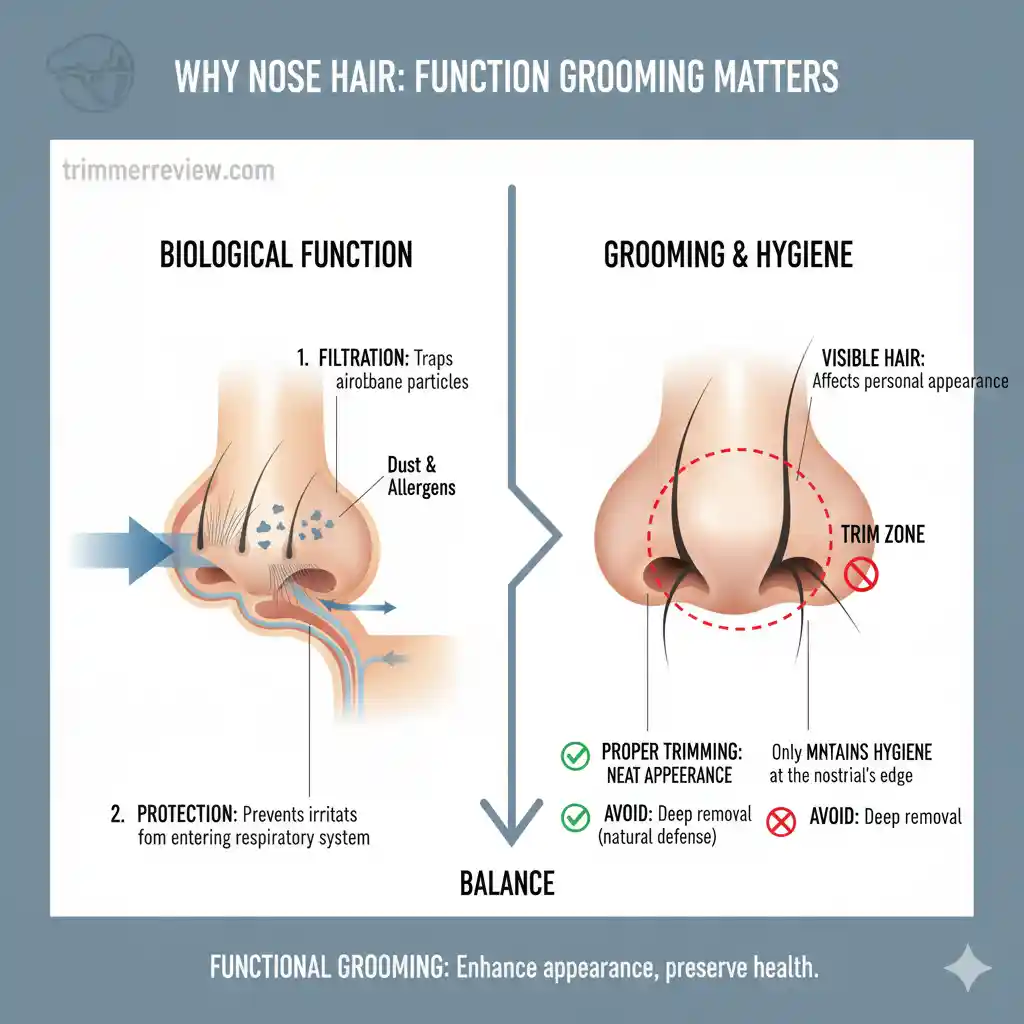
Nose hair plays an important biological role by helping filter dust, allergens, and small airborne particles before they enter the respiratory system. However, when nasal hair grows beyond the edge of the nostril, it can become visible and affect personal grooming standards. In the context of Philips NT3650 vs Manual Nose Hair Scissors, understanding why regular trimming matters helps users choose a method that maintains hygiene while preserving the nose’s natural protective function. Proper grooming focuses on trimming only the visible hair rather than removing it completely, ensuring both comfort and cleanliness.
Visible Grooming Impact
Unmanaged nasal or ear hair can affect personal appearance and hygiene. Visible hair in these areas may influence social and professional perception. Regular trimming ensures a neat appearance without interfering with natural biological functions, making it an essential part of consistent self-care.
Everyday Grooming Relevance
Trimming nasal and ear hair is a functional, not cosmetic, practice. It supports presentable grooming and hygiene standards, allowing individuals to maintain a neat appearance without altering natural hair growth patterns.
Technical Analysis
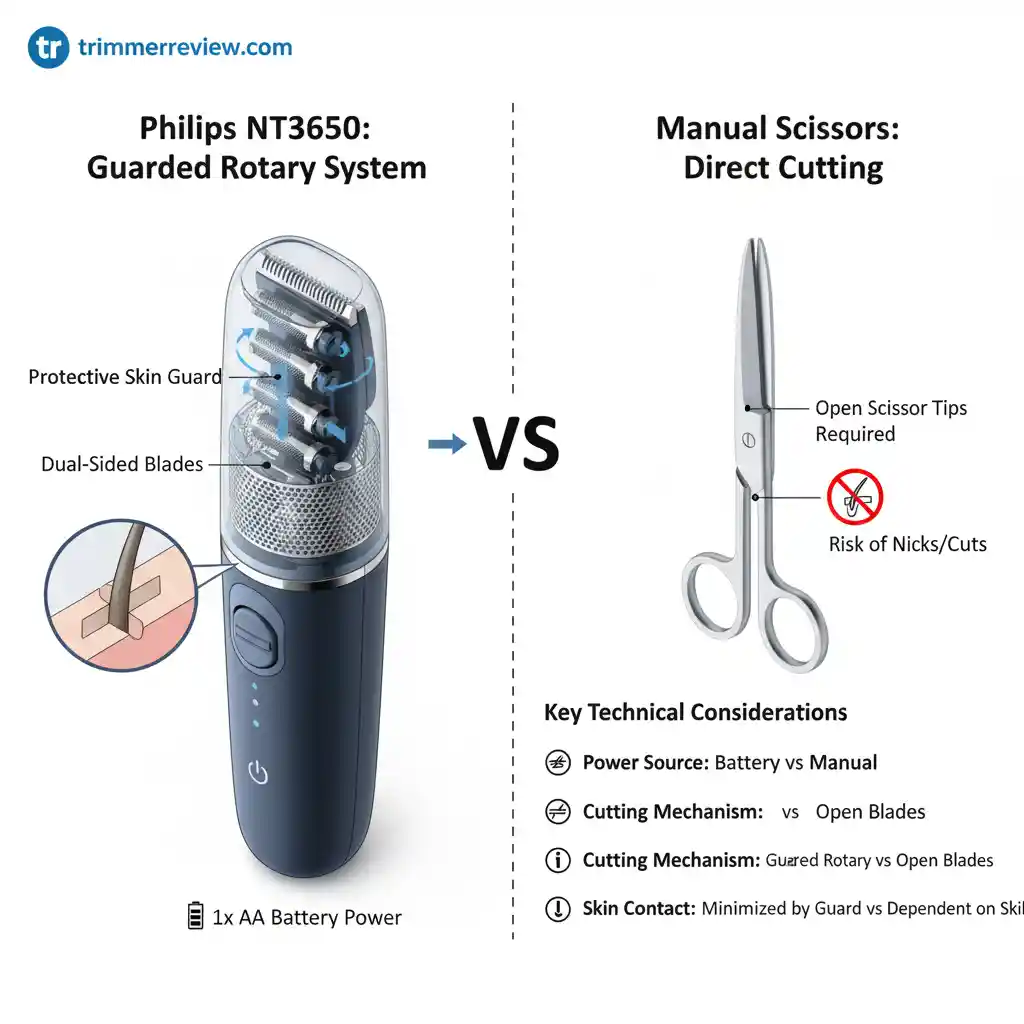
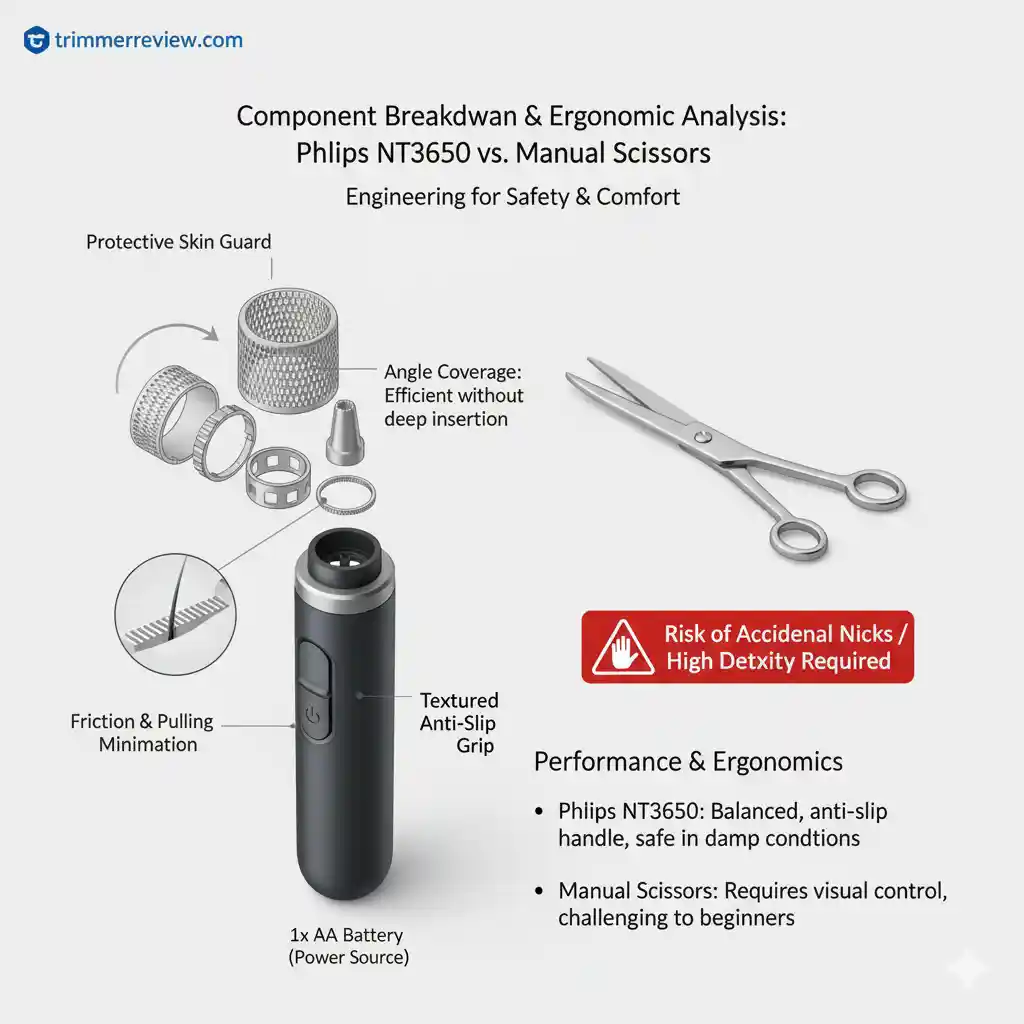
The Philips NT3650 operates on a battery-based motor system, with a dual-sided rotary cutting mechanism protected by a skin guard. This ensures minimal skin contact while efficiently trimming hair. Manual scissors, by contrast, offer direct cutting but lack protective features. Key technical considerations include:
- Power Source: Battery (Philips NT3650) vs manual operation (scissors)
- Blade Oscillation & Cutting Mechanism: Guarded dual-sided blades vs open scissor tips
- Skin Contact Minimization: Protective guard vs manual precision required
- Optional Schematic: Many reviews, including Philips ‘ official support, provide diagrams showing the cutting guard mechanism.
Technical Specifications
Understanding the core specifications helps clarify how each grooming tool operates in practical use. In the Philips NT3650 vs Manual Nose Hair Scissors comparison, technical specifications highlight important differences such as blade construction, cutting mechanism, power source, and maintenance requirements. These details provide a clearer view of how the NT3650’s guarded rotary system contrasts with the simple manual design of safety scissors, helping users evaluate safety, efficiency, and long-term usability.
| Feature | Philips NT3650/16 | Manual Nose Hair Scissors |
|---|---|---|
| Model Designation | NT3650/16 | Standard safety scissors |
| Blade Construction | Self-sharpening stainless steel blades | Stainless steel with rounded safety tips |
| Cutting Mechanism | Dual-sided rotary blades protected by guard | Manual snipping with open blades |
| Power Source | 1× AA battery (included) | Manual operation (no power) |
| Ingress Protection | IPX7 rated, fully washable and shower-safe | Not applicable |
| Operational Areas | Nose, ears, and eyebrows | Nose and ears (typical use) |
| Included Hardware | Trimming head, protective guard, eyebrow combs, storage pouch | Scissors only |
| Maintenance Protocol | Rinse with water and air dry; no oil required | Wipe clean after use |
| Safety Certification | IEC IPX7 waterproof rating (manufacturer verified) | None (manual grooming tool) |
Component Breakdown & Physical Design
Component Breakdown & Physical Analysis
The Philips NT3650 features:
- Protective Guard: Prevents blade-to-skin contact.
- Blade Assembly: Dual-sided rotary blades for multi-directional trimming.
- Angle Coverage: Cuts efficiently without deep insertion.
- Friction & Pulling Minimization: Smooth blade movement ensures no tugging.
Manual scissors rely on precision handling and steady hands, with risk of accidental nicks, especially in low visibility areas.
Performance & Ergonomics
The NT3650 is ergonomically designed with a textured grip, balanced weight, and anti-slip handle for safe use in damp environments. Manual scissors require high dexterity and visual control, making them harder for beginners or users with shaky hands.
Practical Usage & Typical Scenarios
Different grooming situations often influence which tool feels more practical for daily use. Some users prefer quick, routine trimming as part of their weekly hygiene routine, while others may only trim occasionally before professional or social events. Factors such as ease of handling, visibility inside the nostril area, and comfort during trimming can affect the overall experience. Understanding these typical scenarios helps determine which type of grooming tool is more convenient for individual habits and comfort levels.
Practical Usage Context
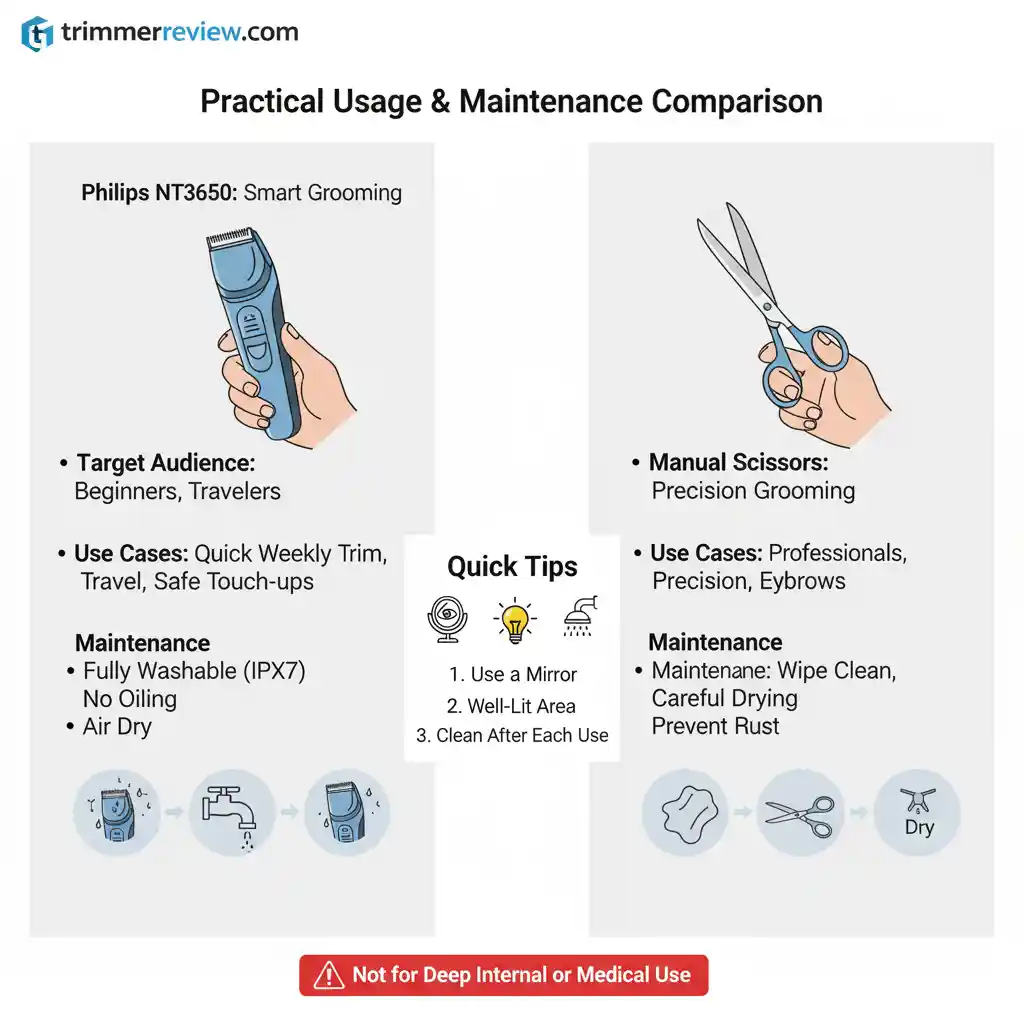
Both tools are intended for external trimming only. Use cases include:
- Quick weekly maintenance
- Travel-friendly grooming
- Safe touch-ups before professional or social events
They are not recommended for deep internal hair removal or medical purposes.
Target Audience Profile
- Philips NT3650: Beginners, travelers, low-maintenance users
- Manual Scissors: Professionals needing precision, users avoiding electronics
Maintenance & Hygiene
Proper maintenance plays an important role in keeping grooming tools safe and hygienic over time. In the Philips NT3650 vs Manual Nose Hair Scissors comparison, cleaning practices and hygiene standards help determine long-term usability and safety. Regularly removing trimmed hair, rinsing washable components, and ensuring tools are fully dry after use can reduce the risk of bacterial buildup. Consistent maintenance not only improves hygiene but also helps preserve the performance and durability of grooming equipment.
Cleaning the Philips NT3650
The Philips NT3650 is fully washable, IPX7-rated, and requires no blade lubrication due to self-sharpening technology. Manual scissors require careful cleaning and drying to prevent rust or bacterial growth at the hinge.
Quick Tips
- Trim in a well-lit area
- Use a mirror for better visibility
- Clean the trimmer/scissors after each use
Safety Considerations
Nasal and ear hair serve a biological filtration function. External trimming should preserve natural defense while preventing discomfort. The NT3650 protective guard reduces skin contact, while scissors rely entirely on user caution.
Long-Term Ownership & Durability
Long-Term Ownership Logic
- Philips NT3650: Requires AA batteries; blades are self-sharpening and durable if cleaned regularly.
- Manual Scissors: No recurring cost but may dull over time; cleaning prevents rust.
Design Trade-offs & Limitations
- NT3650: Fixed speed, recurring battery cost, limited advanced features
- Scissors: Full control but higher risk of cuts and slower trimming
Comparison Analysis: Battery vs Rechargeable
While discussing Philips NT3650 vs Manual Nose Hair Scissors, it’s also important to understand how battery-powered trimmers compare to rechargeable grooming tools.
| Feature | Battery (Philips NT3650) | Rechargeable (Generic Trimmer) |
|---|---|---|
| Immediate Use | Ready with replaceable AA battery | Must be charged before use |
| Performance Stability | Consistent torque throughout battery life | Torque may drop as battery discharges |
| Recurring Cost | Requires AA replacements (recurring expense) | Lower long-term cost after purchase |
| Portability | Highly portable without charging downtime | Portable but dependent on charge status |
Although the Philips NT3650 uses a replaceable AA battery, some users might also consider rechargeable trimming tools. The table below highlights how a battery‑powered tool compares with typical rechargeable alternatives in terms of readiness, performance stability, cost, and portability.
Who Should Choose Each Tool
Different grooming tools suit different user preferences, experience levels, and comfort requirements. Some individuals prefer powered devices that simplify routine trimming, while others favor manual tools that provide more direct control during precise grooming. Factors such as ease of handling, maintenance effort, travel convenience, and personal grooming habits can influence which option feels more practical. Understanding these considerations helps users select the tool that best fits their routine and confidence level during use.
Suitability Overview
- Suitable: Fast, low-maintenance, battery-operated trimming
- Less suitable: Users wanting adjustable speed, frequent trimming, or silent operation
Grooming Need Assessment
External hair trimming is situational, mainly for hygiene and neatness. Ideal for fast-growing hair or professional appearances but not universally essential.
Practical Decision Context
- Benefits of NT3650: Consistent hair length, safe in low visibility, less pulling
- Benefits of Scissors: Low cost, precision for mustache or eyebrow work, no batteries required
Pros & Cons
Evaluating the advantages and limitations of each grooming tool helps provide a clearer comparison. In the Philips NT3650 vs Manual Nose Hair Scissors analysis, the Pros & Cons section highlights practical factors such as safety design, ease of use, maintenance requirements, and long-term convenience. Understanding these strengths and trade-offs allows readers to weigh performance, comfort, and usability before deciding which grooming method better fits their personal routine.
| Pros | Cons |
|---|---|
| Protective guard prevents irritation (blades do not touch skin)[oaicite:4]{index=4} | Recurring battery replacements (AA battery required) :contentReference[oaicite:5]{index=5} |
| Maintenance‑free blade design (no oiling needed) :contentReference[oaicite:6]{index=6} | Fixed speed operation (no adjustable torque) |
| Fully washable for easy cleaning :contentReference[oaicite:7]{index=7} | External battery dependent (needs AA battery inside) |
User Feedback & Real-World Experience
Many users report:
- NT3650: Safe, fast, easy cleaning
- Scissors: Precise but requires skill and care
Expert Conclusion
The Philips NT3650 vs Manual Nose Hair Scissors debate shows the NT3650 is designed with a stronger focus on safety, hygiene, and convenience, while scissors offer precision for skilled users. Both tools have their place depending on user experience, context, and grooming priorities.
Documentation & Sources
This section provides supporting references and background materials used during the preparation of this guide. Product specifications, safety information, and operational details are reviewed using publicly available manufacturer documentation and reliable technical resources. These sources help ensure that the information presented in this article remains accurate, transparent, and consistent with current product documentation and general grooming safety practices.
Important Documentation Notice
- Specs verified as of 03-03-2026
- Regional availability and pricing may vary
- Always follow manufacturer guidelines
Related Guides & Expert Resources
- Philips Official Grooming Support – Specifications, user manuals
- Comparison reviews for Series 3000 vs Series 5000 trimmers for long-term performance
Recommended Usage Frequency
- Trim every 1–2 weeks
- Avoid over-trimming to preserve natural filtration
FAQ: Common Questions
This section addresses some of the most frequently asked questions users have when choosing between different nose-grooming tools. In the context of Philips NT3650 vs Manual Nose Hair Scissors, readers often want quick answers about safety, maintenance, usability, and overall practicality. The following questions provide concise explanations to help clarify common concerns and support informed grooming decisions.
Is the NT3650 better than other manual scissors?
For safety and hygiene, yes; for precision detailing, scissors may still be preferred.
Can women use the Philips NT3650?
Yes, the NT3650 is suitable for anyone who needs safe trimming of external nose, ear, or eyebrow hair. The Philips NT3650 vs Manual Nose Hair Scissors comparison applies equally regardless of gender, as both tools serve the same grooming purpose.
Does it require oiling?
No, self-sharpening blades reduce maintenance.
Is it loud?
Minimal motor noise, suitable for home use.
Is it suitable for travel?
Yes, battery operation ensures portability.
How often should I trim nasal hair?
Most users trim every 1–2 weeks to maintain hygiene without interfering with natural filtration. In the context of Philips NT3650 vs Manual Nose Hair Scissors, both tools are designed for light, external maintenance rather than deep or medical use.
Transparency & Fact-Checking
For full transparency and product information verification details, refer to the Disclaimer & Fact-Checking Policy.
