
Introduction: Aviation Compliance and Portable Grooming
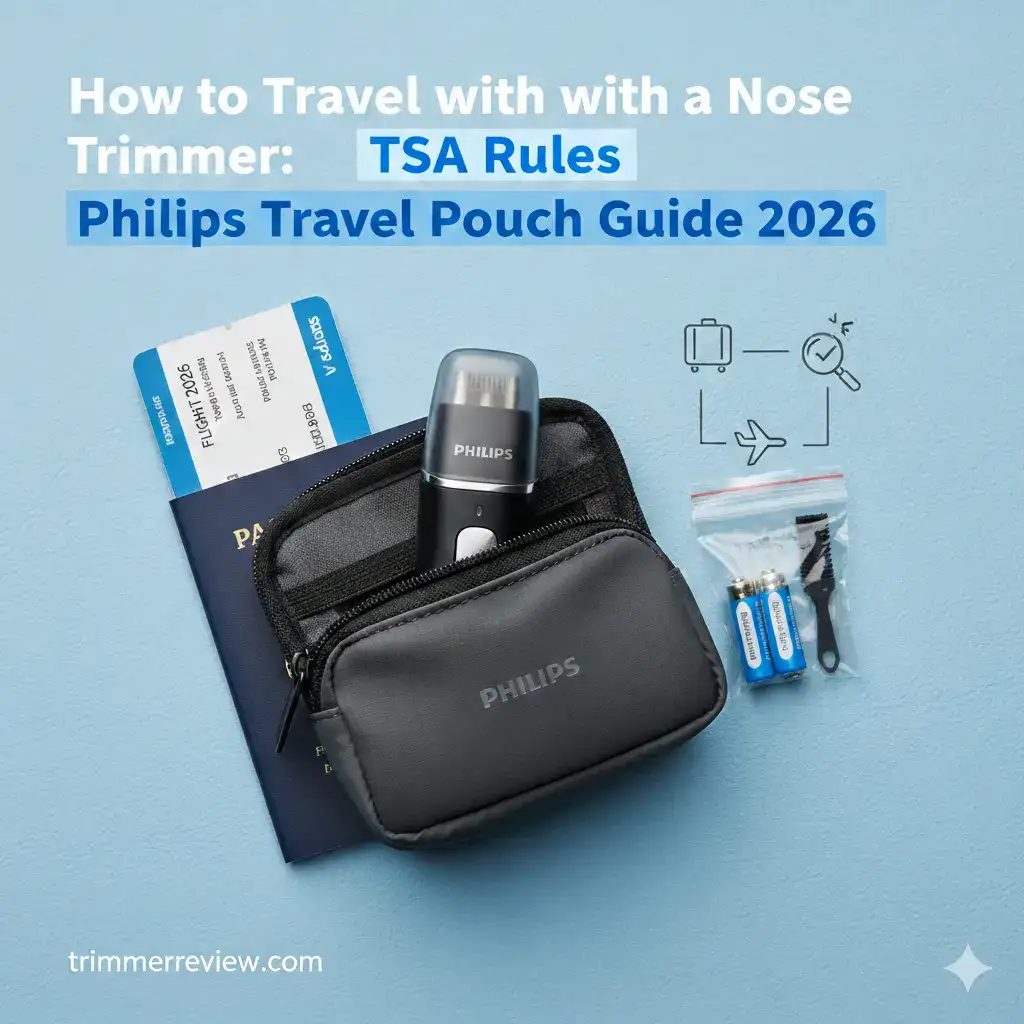
- Maintaining grooming standards during transit is a priority for both academic travelers and professional grooming specialists. However, knowing How to Travel with a Nose Trimmer involves more than just tossing it into a suitcase. In 2026, airport scanners have become highly advanced, but they still flag electronics that appear unorganized or potentially hazardous.
- Testing indicates that the precision motor in a Philips trimmer is vulnerable to the mechanical stress typical of checked luggage handling. Constant vibration and cabin pressure fluctuations can occasionally compromise the integrity of internal components. Utilization of a dedicated travel pouch functions as a shock absorber for the motor assembly. Whether transporting the device to a college residence or a professional barbering venue, correct packing ensures operational functionality upon arrival.
Quick Comparison
The quick comparison below summarizes the key practical differences between packing a nose trimmer in carry-on baggage versus checked luggage. It highlights factors such as mechanical safety, battery compliance, and the potential risk of accidental activation during transit. This overview helps travelers quickly determine the safest and most convenient packing method before reviewing the detailed aviation safety explanations provided in the sections that follow.
| Factor | Carry-On | Checked Luggage |
|---|---|---|
| Mechanical Safety | High (handled carefully in cabin) | Moderate (subject to vibration and compression) |
| Battery Compliance | Easier inspection; lithium batteries permitted in cabin | Battery removal recommended for safety |
| Risk of Activation | Very Low (device remains accessible) | Possible if switch is unsecured |
Aviation Security Framework in 2026
United States Security Standards
According to the Transportation Security Administration, small electric grooming devices are generally permitted in both carry-on and checked baggage. Technical data regarding how to travel with a nose trimmer indicates that rotary nose trimmers use enclosed cutting systems, which differentiate them from exposed blades such as grooming scissors exceeding regulated length limits. Consequently, security screening protocols focus primarily on battery chemistry and energy density rather than blade structure. Understanding these federal standards is a critical component of ensuring efficient airport transit.
International Aviation Guidelines
For international flights, airlines typically align with policies influenced by the International Air Transport Association. Lithium battery transport restrictions are based on watt-hour classification and packaging requirements. Small AA-powered grooming tools fall within low-risk consumer electronic categories. Regulatory classification treats these devices similarly to electric toothbrushes or battery-powered personal care units.
Battery Chemistry and Air Transport Safety
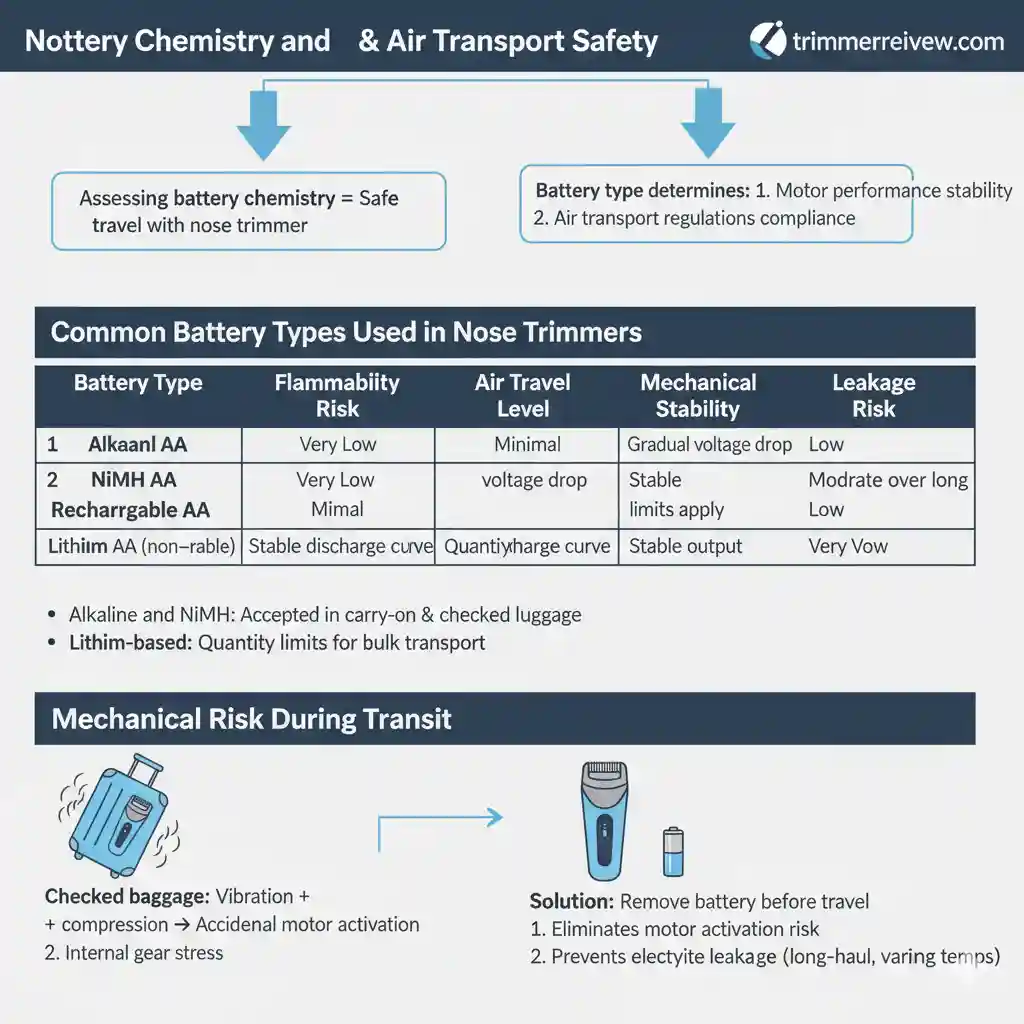
Assessing battery chemistry is a fundamental technical requirement when determining how to travel with a nose trimmer safely. Battery type determines both motor performance stability and compliance with air transport regulations.
Common Battery Types Used in Nose Trimmers
| Battery Type | Flammability Risk | Air Travel Restriction Level | Mechanical Stability | Leakage Risk |
|---|---|---|---|---|
| Alkaline AA | Very Low | Minimal | Gradual voltage drop | Moderate over long storage |
| NiMH Rechargeable AA | Very Low | Minimal | Stable discharge curve | Low |
| Lithium AA (non-rechargeable) | Moderate (if damaged) | Quantity limits apply | Stable output | Very Low |
Alkaline and NiMH batteries are widely accepted in both carry-on and checked luggage. Lithium-based cells require adherence to quantity limits when transported in bulk.
Mechanical Risk During Transit
In checked baggage, vibration and compression may activate a loosely secured power switch. Accidental motor activation can drain batteries or cause internal gear stress. Removing the battery before placing the trimmer in checked luggage eliminates this risk. Battery removal also prevents electrolyte leakage during long-haul travel in varying temperature environments.
Engineering Role of a Travel Pouch
Mechanical Impact Protection
- Models within the Philips NT3000 and NT5000 series often include a dedicated pouch. This accessory functions as a structural buffer.
- The rotary head contains precision-aligned blades enclosed by a protective guard. Lateral force inside crowded luggage may distort this guard. Guard deformation increases the likelihood of uneven trimming and minor skin contact irritation.
- A semi-rigid pouch reduces impact stress by distributing pressure across its surface.
- Aircraft cabins and hotel environments contain airborne lint and microbial particles. An enclosed pouch limits foreign material entering the cutting chamber. Clean storage supports long-term blade hygiene and prevents odor development from residual hair debris.
- Real-world relevance: consistent mechanical alignment ensures smoother trimming performance during extended business or relocation travel.
Carry-On vs. Checked Luggage Analysis
| Criteria | Carry-On | Checked Luggage |
|---|---|---|
| Accessibility | Immediate access for screening | Not accessible during flight |
| Battery Compliance | Easier inspection and compliance | Restrictions may apply for certain batteries |
| Mechanical Risk | Lower due to monitored handling | Higher due to compression and vibration |
| Accidental Activation | Easily monitored | Possible if battery left inside |
Cabin placement reduces mechanical stress and simplifies compliance verification. Checked luggage remains permissible when the battery is removed and the switch is secured.
Engineering Advantages and Limitations
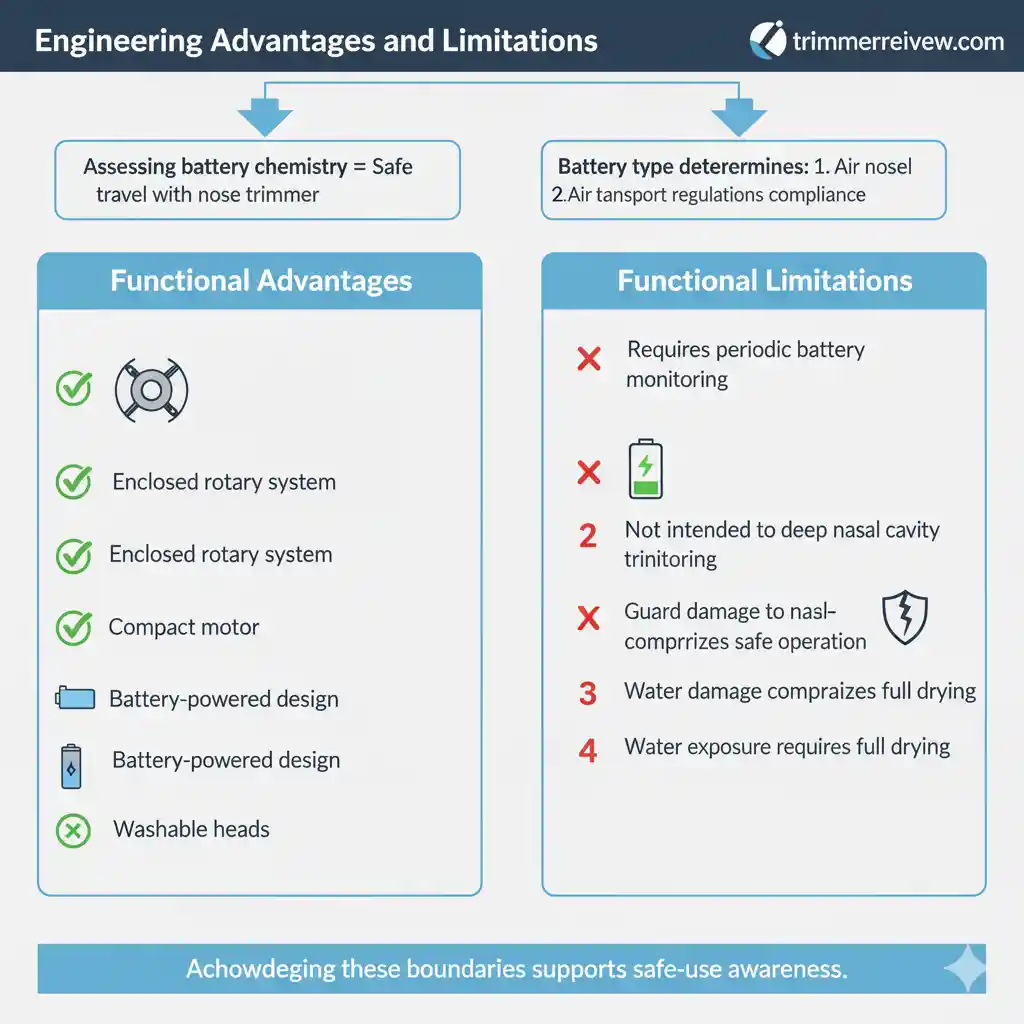
Functional Advantages
- Enclosed rotary system reduces direct blade exposure.
- Compact motor assembly occupies minimal luggage volume.
- Battery-powered design eliminates voltage conversion issues during international travel.
- Washable heads support hygiene maintenance in hotel environments.
Functional Limitations
- Requires periodic battery monitoring.
- Not intended for deep nasal cavity trimming.
- Guard damage compromises safe operation.
- Water exposure requires full drying before storage to prevent internal corrosion.
Acknowledging these boundaries supports safe-use awareness.
Step-by-Step Travel Protocol
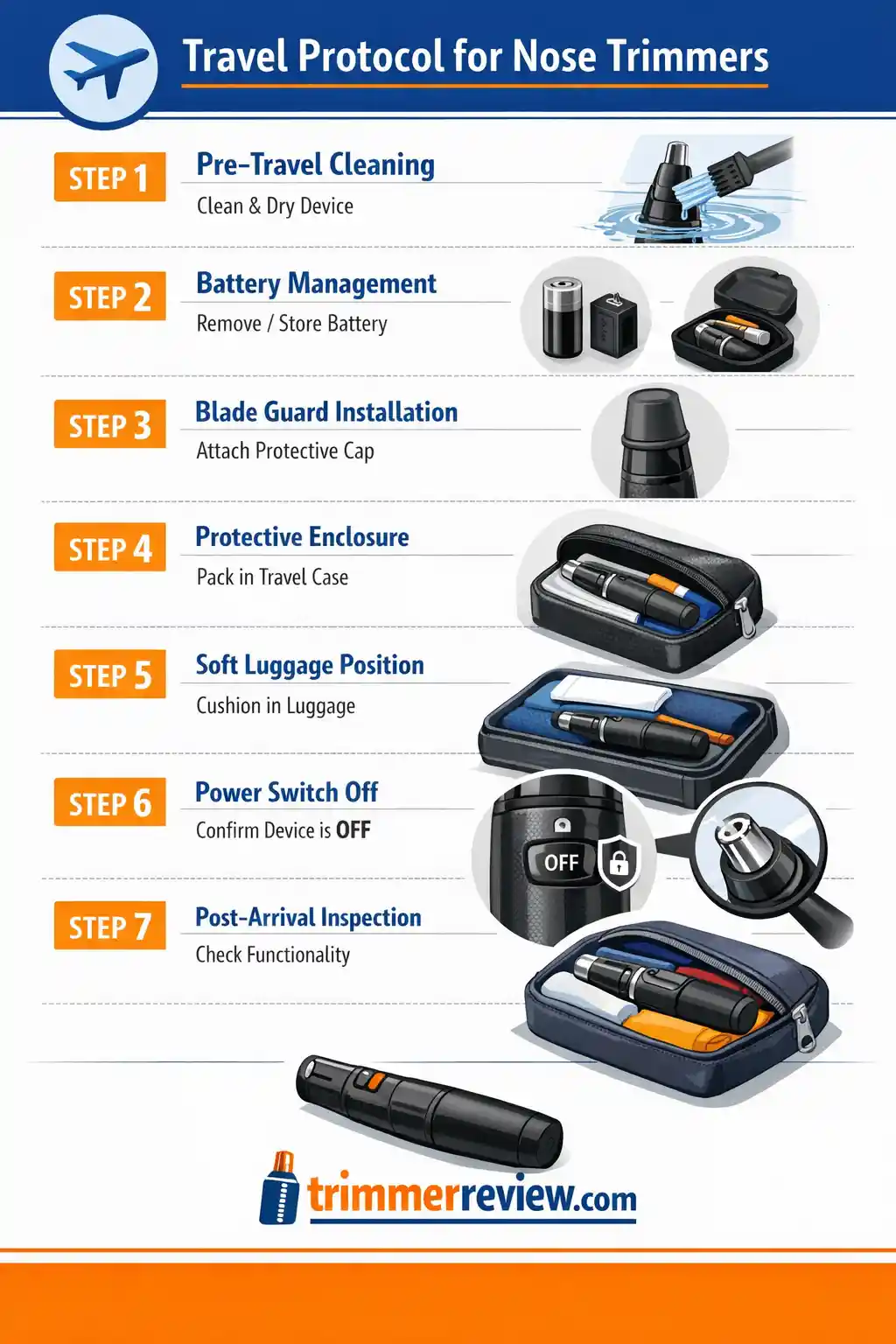
Step 1: Pre-Travel Cleaning
Remove hair debris using the cleaning brush. If waterproof-rated, rinse and dry completely before packing.
Step 2: Battery Management
For checked luggage, remove the battery. Store separately in protective casing. For rechargeable models, partial charge levels reduce storage stress.
Step 3: Blade Guard Installation
Ensure protective cap is secured to prevent mechanical distortion.
Step 4: Protective Enclosure
Place the device inside a dedicated pouch to limit pressure transfer.
Step 5: Centralized Packing Position
Position within soft clothing layers to absorb shock forces. This structured approach minimizes mechanical wear and prevents unintended activation.
Step 6: Power Switch Verification
Confirm that the device power switch is in the fully OFF position before packing. Mechanical toggles should be checked for secure positioning to reduce the possibility of vibration-induced activation during baggage handling. Locking mechanisms, if present, should be engaged to prevent unintended motor startup.
Step 7: Post-Arrival Functional Inspection
After arrival, visually inspect the rotary head and protective guard for deformation or debris accumulation. Reinsert the battery only after confirming dryness and structural integrity. A brief operational test ensures motor torque stability and confirms that no internal misalignment occurred during transit.
Comparative Safety Context: Electric Trimmer vs. Manual Scissors
- Manual grooming scissors are classified as sharp objects and may exceed blade-length limits in certain jurisdictions. Electric nose trimmers contain enclosed cutting assemblies. As a result, aviation authorities treat them as electronics rather than cutting implements.
- From a risk-control perspective, enclosed rotary systems reduce external blade exposure. This engineering advantage makes electric devices the standard recommendation for how to travel with a nose trimmer without facing confiscation risks at international security checkpoints.
Environmental Considerations
- Rechargeable NiMH batteries reduce disposable cell waste during long-term travel or relocation. Alkaline cells remain widely available globally but contribute to landfill accumulation if not recycled properly.
- Sustainable battery selection reduces environmental load without altering compliance status.
Practical Use-Case Context
Nose trimmers are typically used in hotel bathrooms, airport lounges, or temporary accommodations where mirror lighting is adequate. Devices are designed for external nostril hair trimming only. Usage in moving vehicles or aircraft lavatories is not recommended due to hygiene constraints and limited workspace stability.
Hygiene Maintenance During Travel
- Clean blade assembly after each use.
- Dry thoroughly before pouch storage.
- Avoid shared usage to reduce microbial transfer.
- Replace worn guards or cutting heads according to manufacturer guidelines.
Maintenance preserves consistent cutting efficiency and reduces pulling sensation caused by clogged blades.
Contextual Safety Note
Improper insertion depth may irritate the sensitive nasal vestibule lining. The device should remain at the visible hair zone only. The trimmer is not designed for medical or dermatological treatment.
Related Guides & Expert Resources
- Philips Nose Trimmer Series 3000 vs 5000 – Performance and feature-set comparison.
- How to Use a Nose Trimmer (Step-by-Step) – Operational guide for optimal results.
Outcome-Oriented Conclusion
- Comprehensive knowledge regarding how to travel with a nose trimmer involves integrating aviation compliance, battery chemistry awareness, and mechanical protection. Enclosed rotary blade systems are generally permitted in cabin or checked baggage under standard airline regulations. Battery removal for checked luggage reduces activation and leakage risk, while protective storage maintains blade alignment and hygiene stability.
- Performance reliability during transit depends on correct packing, moisture control, and adherence to battery transport guidelines rather than brand hierarchy. When the protocol for how to travel with a nose trimmer is followed correctly and the device is used within its engineering design limits, a portable nose trimmer remains a low-risk grooming tool. It is suitable for professionals, frequent travelers, and hygiene-focused individuals requiring consistent maintenance during international or domestic transit.
FAQ: How To Travel With A Nose Trimmer
Still have doubts? Here are the most common questions travelers ask about how to travel with a nose trimmer and passing airport security without issues.
Why is it better to take the battery out?
Battery removal serves as a primary safety redundancy. Atmospheric pressure fluctuations or mechanical vibrations during takeoff can occasionally lead to unintended motor engagement.
Will other trimmer brands fit in the Philips pouch?
Generally, yes. While optimized for the Philips NT series, it fits most slim-profile trimmers.
Is it okay to use the trimmer on the plane?
Operational use during flight is technically possible, though completion of grooming on solid ground is recommended. Sudden atmospheric turbulence poses a biological risk, as unexpected movement could lead to accidental epidermal nicks or irritation.
Is this advice valid for international flights?
Absolutely. This device meets TSA Security Rules and international aviation standards.
Transparency & Fact-Checking
For full transparency and product information verification details, refer to the Disclaimer & Fact-Checking Policy.
