
Why Deep Cleaning Matters
Keeping your Philips NT3650 clean is important for smooth and safe trimming. While a quick rinse after each use is usually enough, over time hair, oil, and dirt can build up inside the trimmer head. This can affect how well it works.
When dirt builds up, you may notice:
- Slower or less effective trimming
- Slight pulling or discomfort
- Visible dirt inside the blade area
- Bad smell
- Battery draining faster than usual
Learning how to deep clean Philips NT3650 blades helps remove this buildup and keeps the trimmer working properly. It also improves hygiene and makes trimming more comfortable.
Deep cleaning is not just about making the trimmer look clean—it helps maintain performance and keeps it safe to use on sensitive areas like your nose.
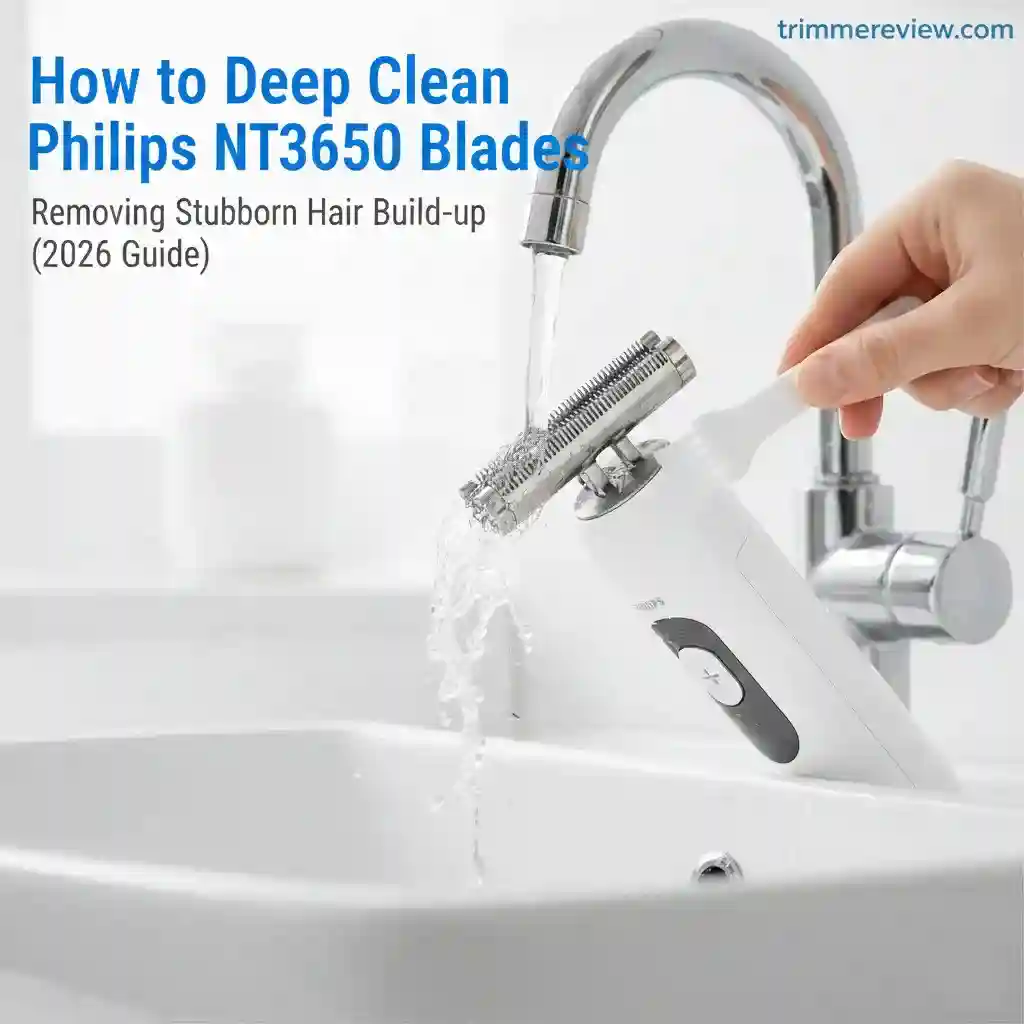
🎥 How to Deep Clean Philips NT3650 Blades (Step-by-Step Video Guide)
Watch this quick video to see how to deep clean Philips NT3650 blades step by step. It shows a simple method to remove stuck hair and keep your trimmer working smoothly.
Video Guide: Detailed maintenance walkthrough for Philips Series 3000. (Source: Nivek Notroh)
After watching the video, you can follow the same steps at home for safe and effective cleaning. Regular cleaning helps improve performance, maintain hygiene, and extend the life of your Philips NT3650.
Understanding the Blade System Before Cleaning
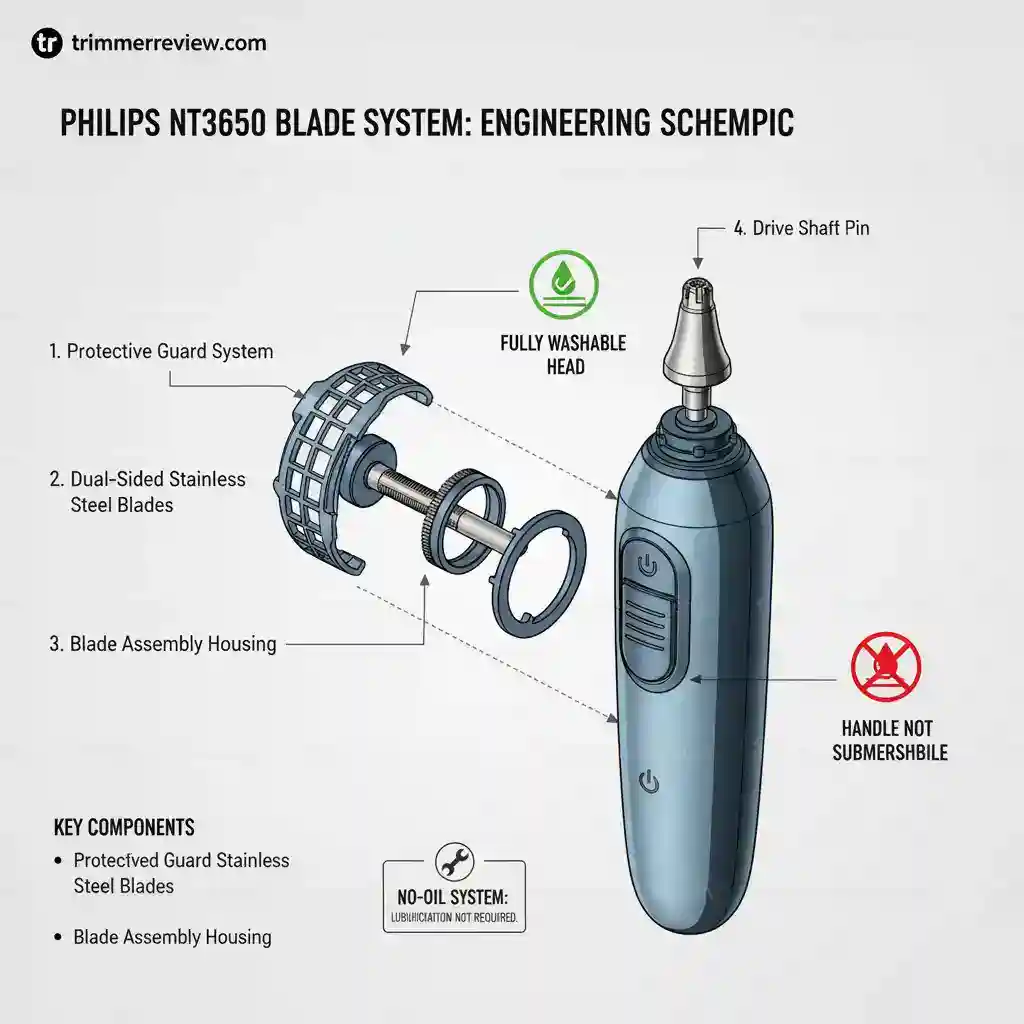
Before you start cleaning your Philips NT3650 blades, it helps to know the main parts of the trimmer. This makes cleaning easier and prevents damage.
Key Parts:
- Detachable Trimming Head – Can be removed and washed easily
- Dual-Sided Stainless Steel Blades – Trim hair from both sides for better results
- Protective Guard System – Keeps the blades from directly touching your skin
- Drive Shaft Pin – Connects the motor to the trimming head
The Philips NT3650 is designed to work without oil, so you should not apply any lubrication. Adding oil can actually attract dust and hair.
Also, the handle is only water-resistant, not waterproof. This means you should only wash or soak the trimming head, not the entire trimmer.
When Is Deep Cleaning Necessary?
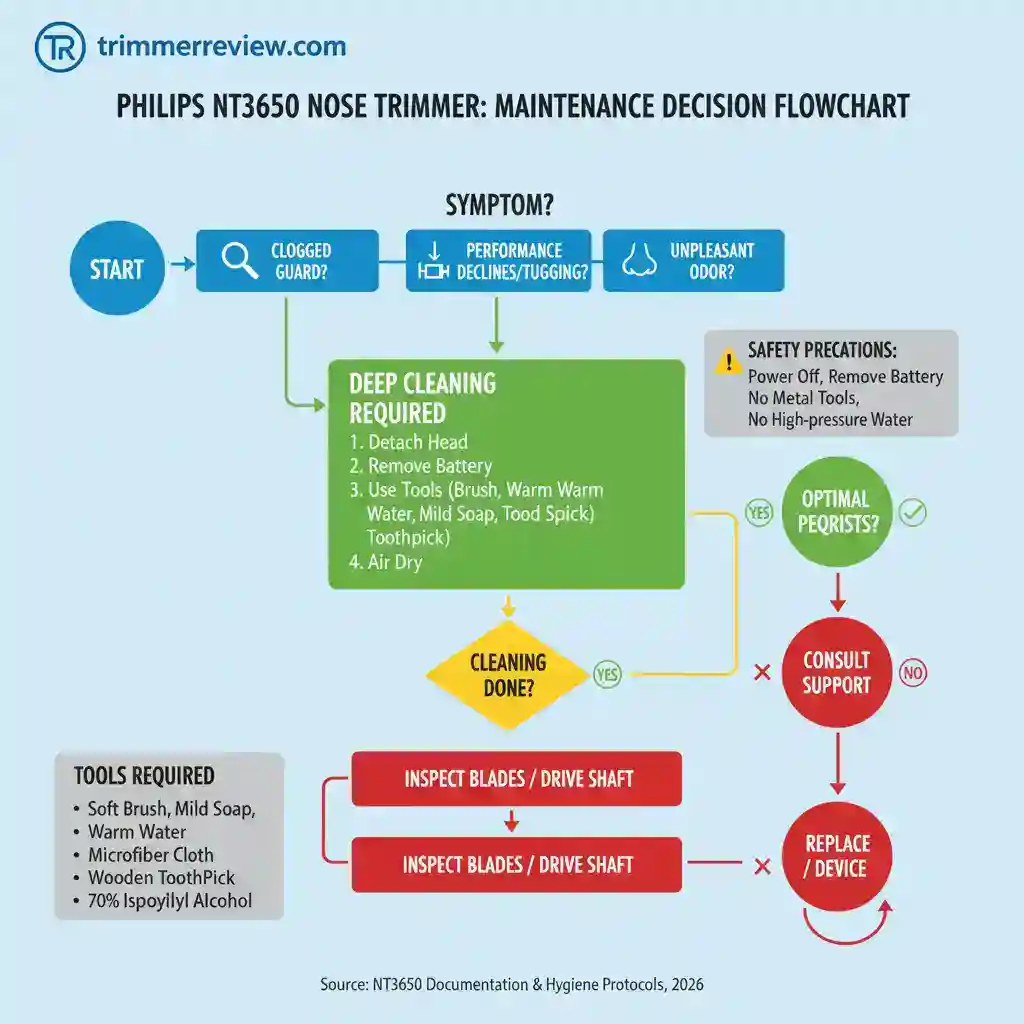
A quick rinse after use usually removes loose hair. But sometimes, your Philips NT3650 needs a deeper clean to keep working properly.
You should deep clean the blades when:
- The small guard openings look blocked
- Trimming feels less effective, even with a new battery
- You feel pulling or discomfort while trimming
- There is a bad smell from inside the trimmer
Knowing how to deep clean trimmer blades properly helps remove dirt and keeps your device working smoothly.
Safety Precautions Before Starting
Before you begin cleaning, follow these simple safety steps:
- Turn off the trimmer
- Remove the AA battery
- Take off the trimming head
- Do not insert sharp metal objects inside the blades
- Avoid using high-pressure water
- Do not open or disassemble the trimmer beyond the removable head
Tools Required
You only need a few basic items for cleaning:
- Soft toothbrush or small cleaning brush
- Mild liquid soap
- Warm water (not too hot)
- Microfiber cloth
- Wooden toothpick (optional, use gently)
- 70% isopropyl alcohol (optional for extra hygiene)
Avoid Using
To prevent damage, do not use:
- Metal pins or needles
- Harsh or abrasive cleaners
- Strong detergents
- Compressed air at close range
Step-by-Step: How to Deep Clean Philips NT3650 Blades
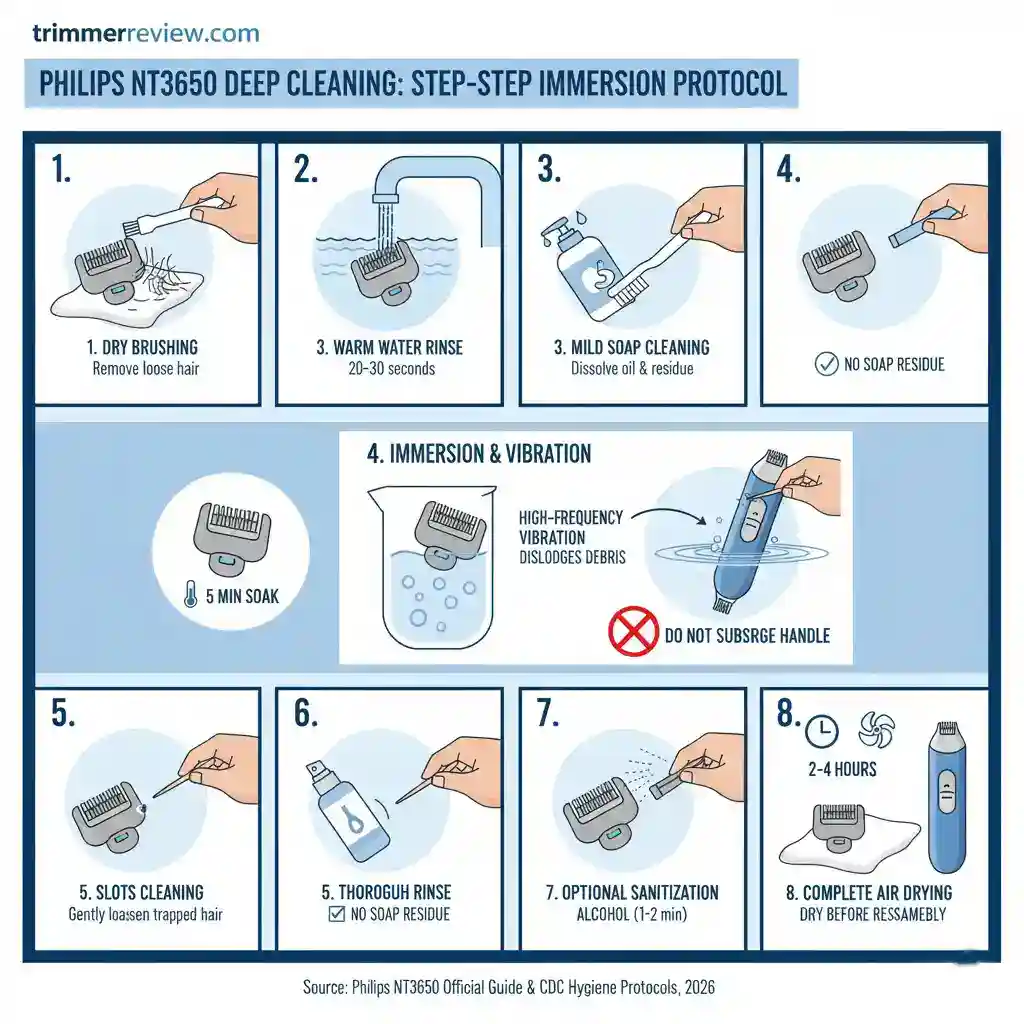
Below is a structured method combining surface cleaning and immersion technique for stubborn buildup.
Step 1: Dry Brushing (Initial Debris Removal)
Always begin dry.
Wet hair can become sticky and harder to remove.
- Detach the trimming head.
- Use the cleaning brush to remove loose hair from blade teeth.
- Gently tap the head against a towel.
This prepares the unit for deeper cleaning.
Step 2: Warm Water Rinse
- Hold the trimming head under warm running water for 20–30 seconds.
- Rotate the head slightly to allow water to enter multiple angles of the guard system.
- This removes surface debris.
Step 3: Mild Soap Cleaning
Apply a small drop of mild liquid soap.
Using a soft toothbrush:
- Gently brush around outer guard slots
- Lightly clean inner channels
- Avoid applying pressure to metal edges
This stage is critical when performing How to Deep Clean Philips NT3650 Blades properly. Soap helps dissolve oil-based residue that water alone cannot remove.
Step 4: Immersion Method for Stubborn Build-up
If performance still feels restricted:
- Fill a small glass with lukewarm water.
- Submerge only the detached trimming head for 3–5 minutes.
- Reattach the head to the handle.
- Turn the device on briefly while the blade head remains partially submerged.
The vibration helps dislodge compacted internal debris.
This immersion-assisted vibration technique is one of the most effective ways to complete How to Deep Clean Philips NT3650 Blades when buildup is internal. Do not submerge the handle.
Step 5: Careful Slot Cleaning (If Necessary)
Hair often becomes trapped in micro guard openings.
If needed:
- Use a wooden toothpick lightly
- Avoid deep insertion
- Do not scrape metal surfaces
The goal is loosening — not mechanical scraping.
Step 6: Thorough Rinse
- Rinse again under running water for 30–60 seconds.
- Ensure all soap residue is removed.
- Shake off excess water.
Step 7: Optional Alcohol Sanitization
For additional hygiene:
- Lightly apply 70% isopropyl alcohol
- Do not soak longer than 1–2 minutes
- Rinse afterward
- Allow full air drying
This step is optional but useful if the device has not been cleaned for an extended period.
Step 8: Complete Air Drying
- Place the trimming head on a dry towel.
- Allow 2–4 hours of air drying before reattaching and reinserting the battery.
- Moisture inside the motor housing can cause corrosion or oxidation.
- Proper drying is essential when learning How to Deep Clean Philips NT3650 Blades safely.
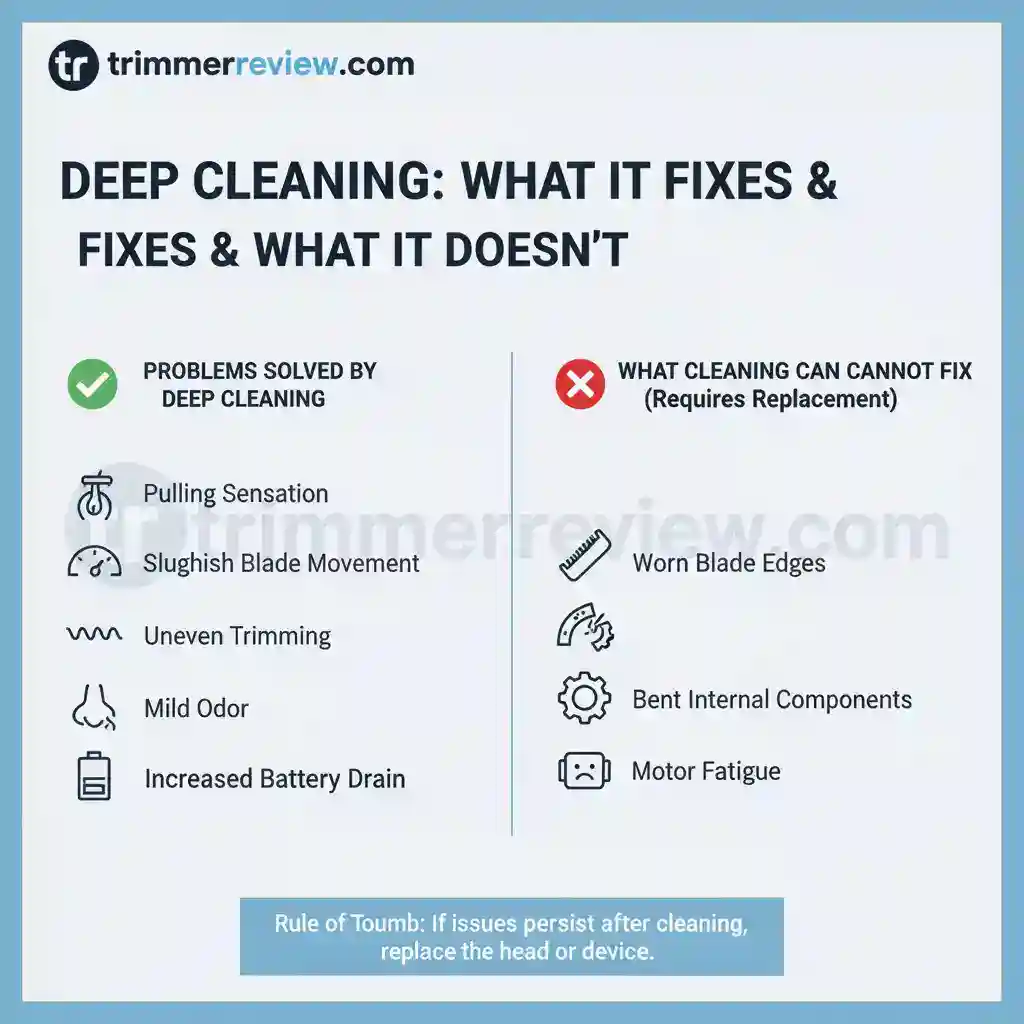
Common Problems Solved by Deep Cleaning
Deep cleaning often resolves
- Pulling sensation
- Sluggish blade movement
- Uneven trimming
- Mild odor
- Increased battery drain
However, cleaning cannot fix
- Worn blade edges
- Bent internal rotary components
- Motor fatigue
If issues persist after properly performing How to Deep Clean Philips NT3650 Blades, blade replacement may be necessary.
When Cleaning Is Enough — and When It Is Not
Understanding deep cleaning the NT3650 trimming head is important, but cleaning is not always the correct solution. Use the guide below to determine the appropriate action.
When Deep Cleaning Is the Correct Solution
Deep cleaning is appropriate when:
- Guard slots appear visibly clogged
- Cutting performance gradually declines
- Mild pulling occurs after several uses
- Odor develops from internal buildup
- The device has not been cleaned in 3–6 weeks
In these situations, buildup is the likely cause, and performing How to Deep Clean Philips NT3650 Blades will typically restore normal performance.
When Blade Replacement Is Likely Required
Cleaning may not resolve the issue if:
- Pulling continues after deep cleaning
- Blade edges appear worn or uneven
- Trimming feels inconsistent on multiple areas
- The device is several years old with heavy use
In these cases, the cutting edges may have naturally degraded. Stainless trimming elements do wear over time, and mechanical sharpness cannot be restored through washing alone.
When to Stop Troubleshooting
Further cleaning attempts are unlikely to help if:
- The motor produces grinding or irregular noise
- The rotary mechanism does not spin smoothly
- The drive shaft appears misaligned
- Water has entered the handle housing
At this point, continued troubleshooting may increase internal wear. Service consultation or unit replacement may be more appropriate than repeated cleaning cycles.
Practical Rule of Thumb
- If performance improves immediately after deep cleaning, buildup was the cause.
- If performance does not change, mechanical wear is the likely factor.
- This simple distinction helps users apply How to Deep Clean Philips NT3650 Blades appropriately without over-cleaning or misdiagnosing mechanical fatigue.
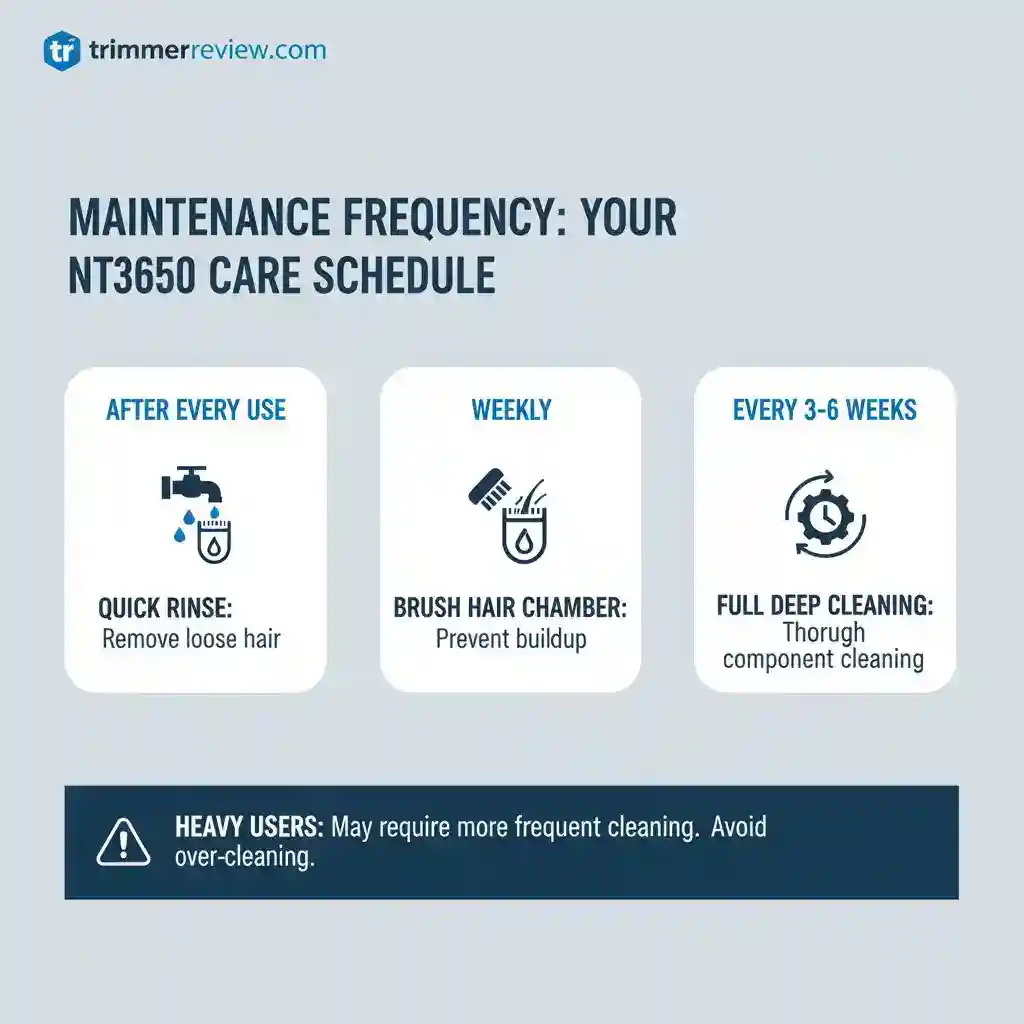
Maintenance Frequency
Recommended schedule:
- After every use: Quick rinse
- Weekly: Brush hair chamber
- Every 3–6 weeks: Full deep cleaning
Note: Heavy users may require more frequent cleaning. Over-cleaning is not necessary and may increase wear.
Travel & Storage Tips
After deep cleaning your Philips NT3650, follow these simple tips to keep it safe while traveling or storing:
- Make sure the trimmer is completely dry before packing
- Always use the protective cap
- Keep it in a clean, dry pouch
- Remove the battery if you won’t use it for a long time
Moisture inside a closed bag can cause odor or germs to develop. Removing the battery also helps prevent the trimmer from turning on by mistake during travel.
Long-Term Care and Durability
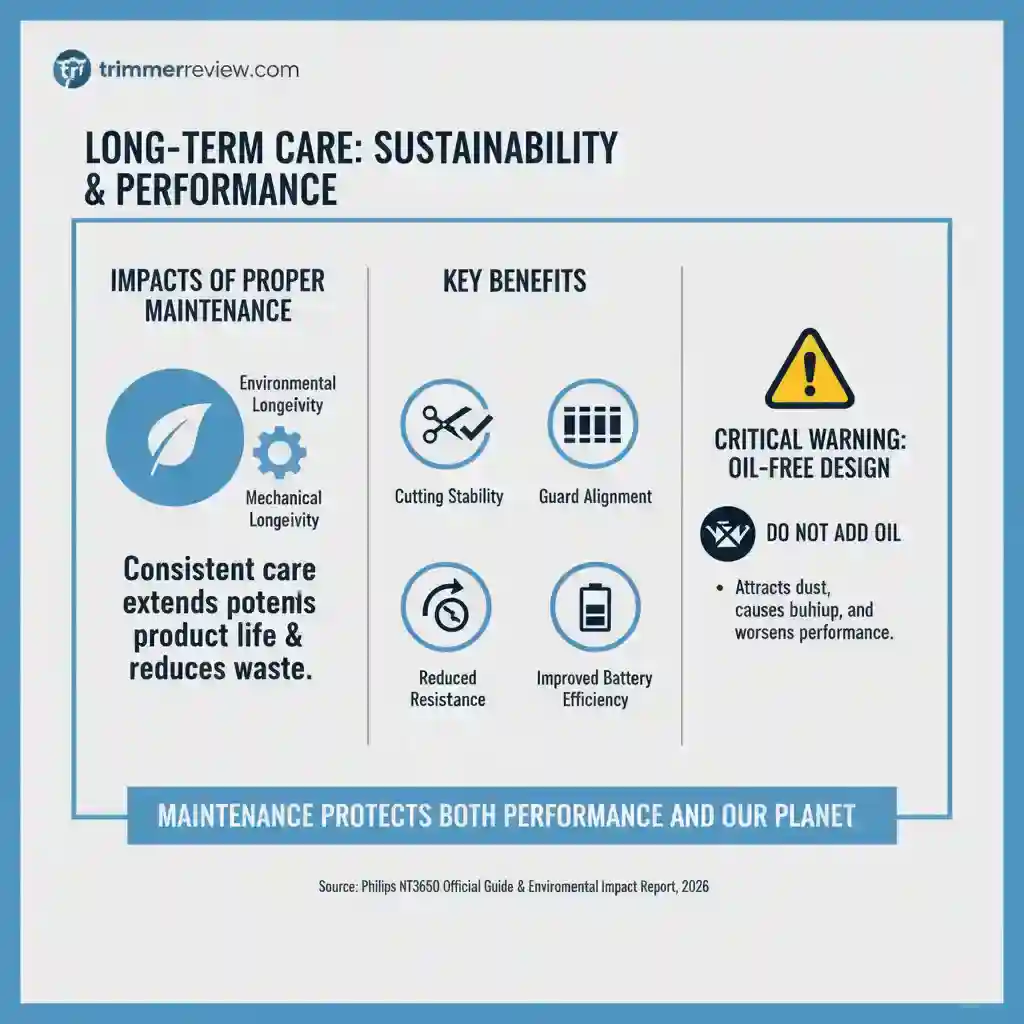
Taking good care of your Philips NT3650 helps it last longer and reduces the need to replace it too soon.
This trimmer is designed to work without oil, so you don’t need to apply any lubrication. In fact, using oil can attract dust and make dirt build up faster.
Regularly deep cleaning your Philips NT3650 blades helps to:
- Keep trimming smooth and even
- Maintain proper blade position
- Reduce extra strain on the motor
- Improve battery performance
With proper cleaning and care, your trimmer will stay reliable, work better, and last longer.
Final Summary
Learning how to deep clean Philips NT3650 blades is important for keeping your trimmer clean, safe, and working smoothly.
Deep cleaning helps to:
- Remove stuck hair and dirt
- Keep the guard system safe and damage-free
- Maintain proper hygiene
- Improve overall performance and lifespan
A quick rinse after each use can prevent most buildup. But over time, deep cleaning becomes necessary to restore full performance.
When done gently and correctly, deep cleaning makes trimming smoother without harming the trimmer.
For best results, you can also check official Philips support guides for extra help. With proper care, your Philips NT3650 will stay reliable, clean, and ready to use for a long time.
Related Guides & Expert Resources
- Philips NT3650/16 Performance Review (2026): An empirical assessment of motor torque, blade geometry, and long-term durability metrics for the Series 3000 platform.
- Comparative Technical Analysis: Philips NT3650/16 vs. Norelco NT3600: A detailed breakdown of internal drive architectures, cutting precision, and material specifications between these regional variants.
- Engineering Comparison: Philips Series 3000 vs. Series 5000 Trimmers: An objective evaluation of power management systems, housing ergonomics, and cutting head oscillation frequencies.
FAQs: How to Deep Clean Philips NT3650 Blades
Can soap damage the blades?
Mild liquid soap is safe when thoroughly rinsed.
Can vinegar be used?
Not recommended for stainless blade systems.
Is ultrasonic cleaning safe?
Not advised unless explicitly approved by the manufacturer.
Why does pulling continue after cleaning?
Blade wear may be present.
Can the entire handle be submerged?
No. Only the trimming head is washable.
Transparency & Fact-Checking
For full transparency and product information verification details, refer to the Disclaimer & Fact-Checking Policy.
