
Introduction: Functional Role of Grooming in 2026
- Grooming in 2026 is defined by the interaction between skin biology, mechanical cutting systems, and hygiene protocols, forming the foundation of effective grooming tips for men 2026.
- The process extends beyond appearance management to include skin barrier protection, microbial control, and controlled maintenance of hair and surface tissues.
- A structured routine minimizes friction-induced irritation, enhances cutting efficiency, and maintains hygienic conditions across repeated grooming cycles, supporting consistent and stable performance outcomes.
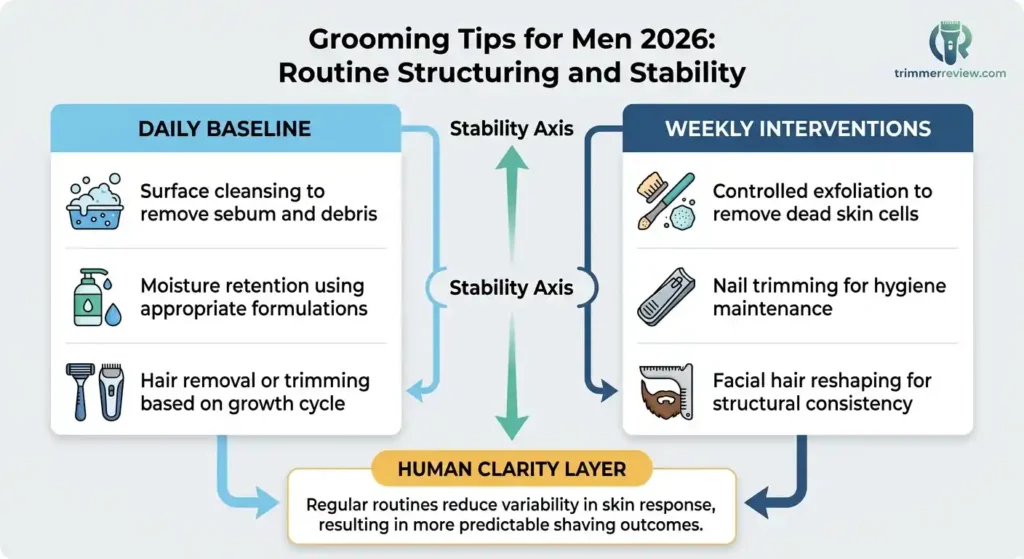
Grooming Tips for Men 2026: Routine Structuring and Stability
These grooming tips for men 2026 emphasize consistency to stabilize skin response and improve shaving predictability.
Daily Baseline:
- Surface cleansing to remove sebum and debris
- Moisture retention using appropriate formulations
- Hair removal or trimming based on growth cycle
Weekly Interventions:
- Controlled exfoliation to remove dead skin cells
- Nail trimming for hygiene maintenance
- Facial hair reshaping for structural consistency
Human clarity layer: Regular routines reduce variability in skin response, resulting in more predictable shaving outcomes.
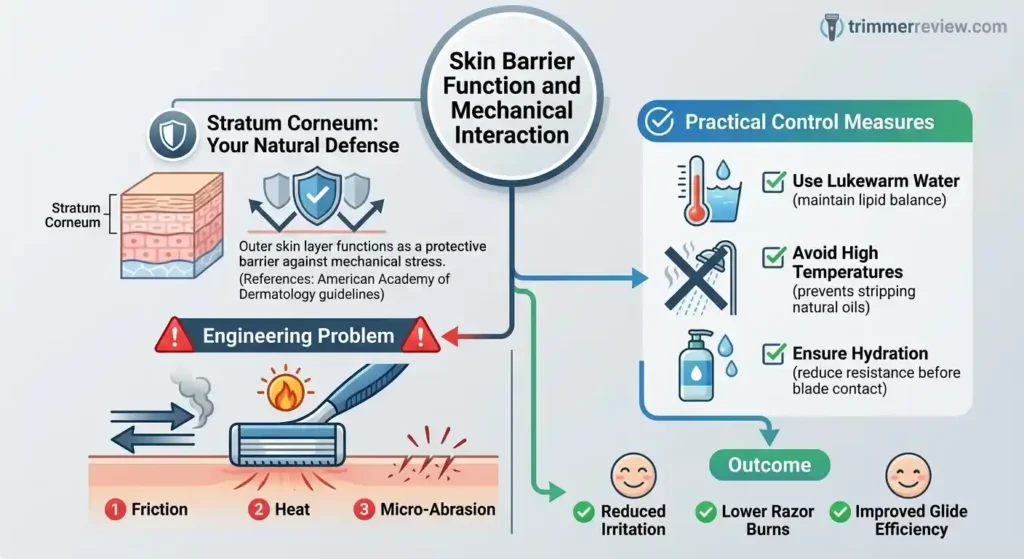
Skin Barrier Function and Mechanical Interaction
The outer skin layer (stratum corneum) functions as a protective barrier against mechanical stress, as outlined in dermatological guidelines from the American Academy of Dermatology.
Engineering Problem:
Blade interaction creates friction, heat, and micro-abrasion.
Practical Control Measures:
- Use lukewarm water to maintain lipid balance
- Avoid high-temperature exposure that strips natural oils
- Ensure hydration before blade contact to reduce resistance
Outcome:
Reduced irritation, lower incidence of razor burns, and improved glide efficiency.
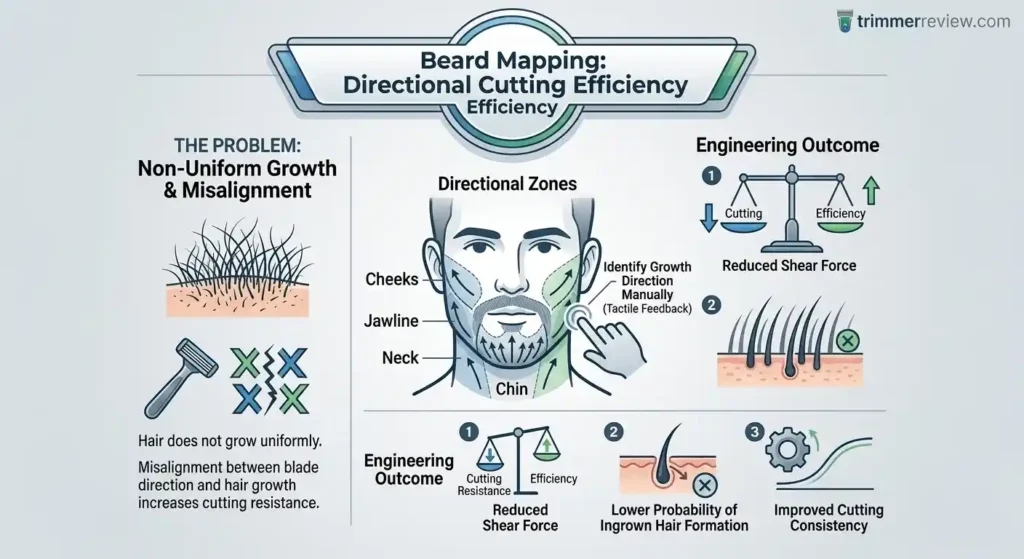
Beard Mapping: Directional Cutting Efficiency
Hair does not grow uniformly. Misalignment between blade direction and hair growth increases cutting resistance.
Method:
- Identify growth direction manually through tactile feedback
- Map directional zones across jawline, cheeks, and neck
Engineering Outcome:
- Reduced shear force
- Lower probability of ingrown hair formation
- Improved cutting consistency
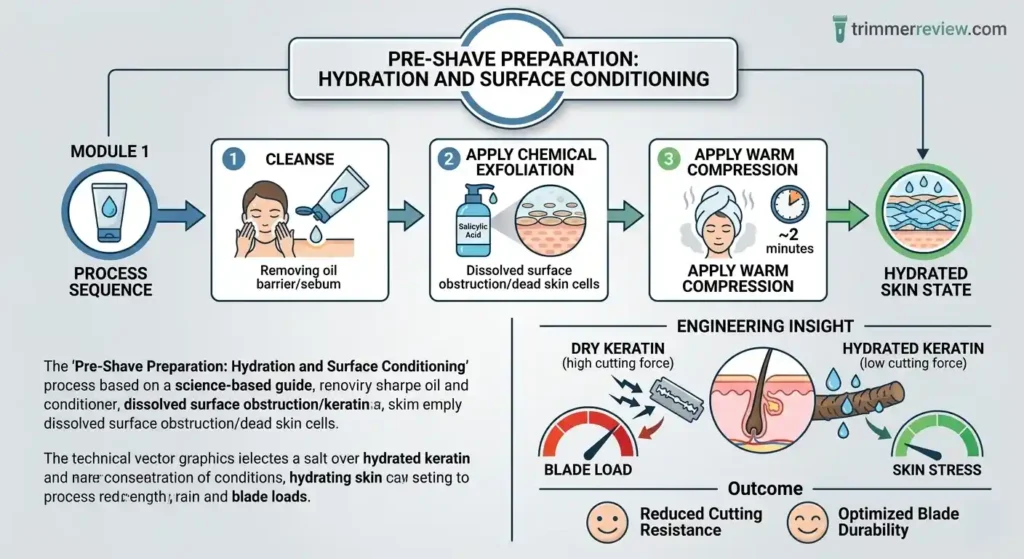
Pre-Shave Preparation: Hydration and Surface Conditioning
Proper preparation remains a core component of grooming tips for men 2026, particularly for reducing cutting resistance.
Process Sequence:
- Cleanse to remove oil barriers
- Apply chemical exfoliation (e.g., salicylic acid) to reduce surface obstruction
- Apply warm compression for ~2 minutes
Engineering Insight:
Hydrated keratin structures require less cutting force, reducing blade load and skin stress.
Shaving System Selection: Rotary vs Foil Mechanics
Different cutting systems address different hair growth patterns. Rotary shaving system breakdown
| 🔧 Step | ⚙️ Function | 📈 Outcome |
|---|---|---|
| 💧Preparation | Cleansing and hydration | Reduced friction and smoother glide |
| 🧭Mapping | Identify hair growth direction | Improved cutting efficiency |
| ✂️Execution | Controlled shaving technique | Lower irritation and better precision |
| 🧴Recovery | Skin barrier restoration | Stabilized skin condition |
| 🧼Maintenance | Tool cleaning and lubrication | Improved hygiene and longer lifespan |
Use-Case Context:
- Rotary systems perform efficiently on contour-heavy regions
- Foil systems provide uniform results on flat surfaces
Limitation:
No system eliminates the need for proper technique and preparation.
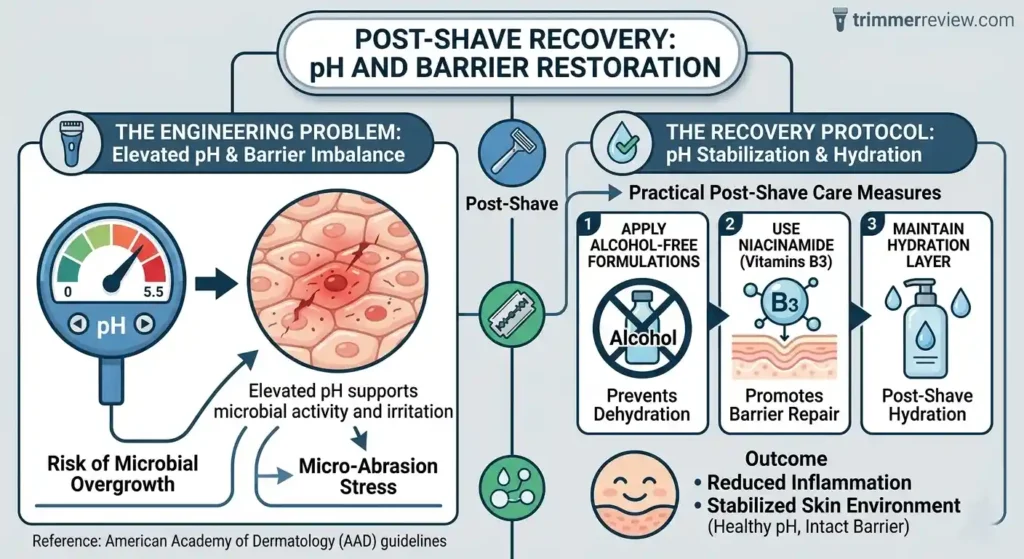
Post-Shave Recovery: pH and Barrier Restoration
Post-shave skin imbalance and irritation risk are well-documented in dermatological research published by the American Academy of Dermatology.
Engineering Problem:
Elevated pH supports microbial activity and irritation.
Recovery Protocol:
- Apply alcohol-free formulations to prevent dehydration
- Use compounds such as niacinamide for barrier repair
- Maintain hydration layer post-shave
Outcome:
Stabilized skin environment and reduced post-shave inflammation.
Hair Maintenance: Structural Integrity
Hair grooming involves maintaining fiber strength and scalp condition.
Functional Guidelines:
- Use mild surfactants to prevent protein degradation
- Condition to maintain cuticle alignment
- Avoid excessive thermal stress
Result:
Improved hair resilience and reduced breakage.
Precision Trimming and Boundary Definition
Facial hair structure depends on defined edges and symmetry.
Techniques:
- Perform trimming on dry hair for accurate length estimation
- Maintain neckline above the Adam’s apple for structural balance
Outcome:
Consistent shape and controlled growth boundaries.
Body Grooming and Hygiene Control
Hair removal beyond facial regions contributes to hygiene maintenance. Nose and ear trimmer comparison
Application Areas:
- Underarms (odor control)
- Chest and back (density management)
- Nasal and ear regions (external trimming only)
Safety Note:
Internal trimming beyond visible hair regions is not recommended due to tissue sensitivity.
Nail Maintenance: Microbial Control
Nails accumulate debris and microorganisms.
Protocol:
- Regular trimming
- Cleaning under nail surfaces
Outcome:
Reduced contamination risk and improved hygiene presentation.
Nutritional Influence on Hair and Skin
Hair growth and skin condition are influenced by nutrient availability.
Key Components:
- Protein → keratin formation
- Zinc and Biotin → follicle function
- Water → skin elasticity
Result:
Improved structural integrity of hair and reduced breakage.
Ingrown Hair Prevention: Mechanical Correction
Ingrown hairs result from improper cutting angles and excessive closeness.
Causes:
- Multi-pass shaving
- High pressure application
- Lack of exfoliation
Solutions:
- Single-pass technique
- Controlled pressure
- Regular surface exfoliation
Tool Maintenance: Mechanical and Hygienic Stability
These practices align with modern grooming tips for men 2026, where hygiene stability and mechanical efficiency are prioritized.
| ⏱️ Frequency | 🛠️ Action | ⚙️ Function |
|---|---|---|
| 📅Daily | 💧Rinse | Removes debris |
| 🗓️Weekly | 🧴Disinfect | Reduces microbial load |
| 📆Monthly | 🛢️Lubricate | Minimizes friction |
Outcome:
Extended device lifespan and consistent cutting performance.
Fragrance Application: Controlled Use
Fragrance is applied as a finishing layer.
Guidelines:
- Apply to pulse points
- Use minimal quantity to avoid overexposure
Limitation:
Fragrance does not substitute hygiene practices.
Common Operational Errors
Frequent issues affecting grooming outcomes:
- Excessive product application
- Use of dull blades
- Ignoring directional shaving
- Lack of post-shave care
Result:
Increased irritation and reduced efficiency.
Time Optimization in Grooming Routines
Efficient routines reduce time without compromising outcomes.
Methods:
- Use multi-functional tools
- Maintain structured schedules
- Reduce unnecessary steps
Quick Reference: Grooming Workflow
| 🔧 Step | ⚙️ Function | 📊 Outcome |
|---|---|---|
| 💧Preparation | Hydration and cleansing | Reduced resistance |
| 🧭Mapping | Direction control | Efficient cutting |
| ✂️Execution | Controlled shaving | Lower irritation |
| 🧴Recovery | Barrier restoration | Skin stability |
| 🧼Maintenance | Tool cleaning | Long-term hygiene |
Conclusion: Performance Stability Over Time
These structured methods align with modern grooming tips for men 2026, emphasizing consistent routines, controlled techniques, and long-term skin stability
Realistic Scope Statement:
These methods improve surface-level grooming efficiency but do not replace medical treatment for chronic skin conditions.
Suitability:
- Sensitive skin users → benefit from low-friction techniques
- Hygiene-focused individuals → benefit from structured maintenance
- Regular shavers → benefit from consistent routines
Final Note:
No single method is universally optimal; effectiveness depends on individual skin type, hair density, and adherence to proper technique.
❓ Frequently Asked Questions (FAQs)
What are the most effective grooming tips for men in 2026?
Effective grooming tips for men 2026 focus on consistency, skin barrier protection, and proper tool usage. A structured routine including cleansing, hydration, controlled shaving, and post-shave recovery helps maintain stable skin condition and reduces irritation.
How does skin biology affect shaving performance?
The outer skin layer (stratum corneum) acts as a protective barrier. When this barrier is compromised, friction, heat, and micro-abrasions increase during shaving. Maintaining hydration and avoiding harsh conditions improves blade glide and reduces mechanical stress.
What is beard mapping and why is it important?
Beard mapping involves identifying the natural direction of hair growth across different facial regions. Proper alignment between blade movement and hair direction reduces cutting resistance, minimizes ingrown hairs, and improves overall shaving efficiency.
Which shaving system is more suitable: rotary or foil?
Rotary systems are suitable for multi-directional hair growth and contoured areas such as the neck and jawline. Foil systems provide more uniform cutting on flat surfaces and are commonly used for frequent shaving routines. Selection depends on hair pattern and usage preference.
Why is pre-shave preparation necessary?
Pre-shave preparation hydrates hair fibers and softens keratin structure, reducing the force required for cutting. This process minimizes blade resistance, lowers friction, and decreases the likelihood of irritation and surface damage.
Transparency & Fact-Checking
For full transparency and product information verification details, refer to the Disclaimer & Fact-Checking Policy.
