
Introduction: Why Deep Cleaning is the Secret to Skin Health
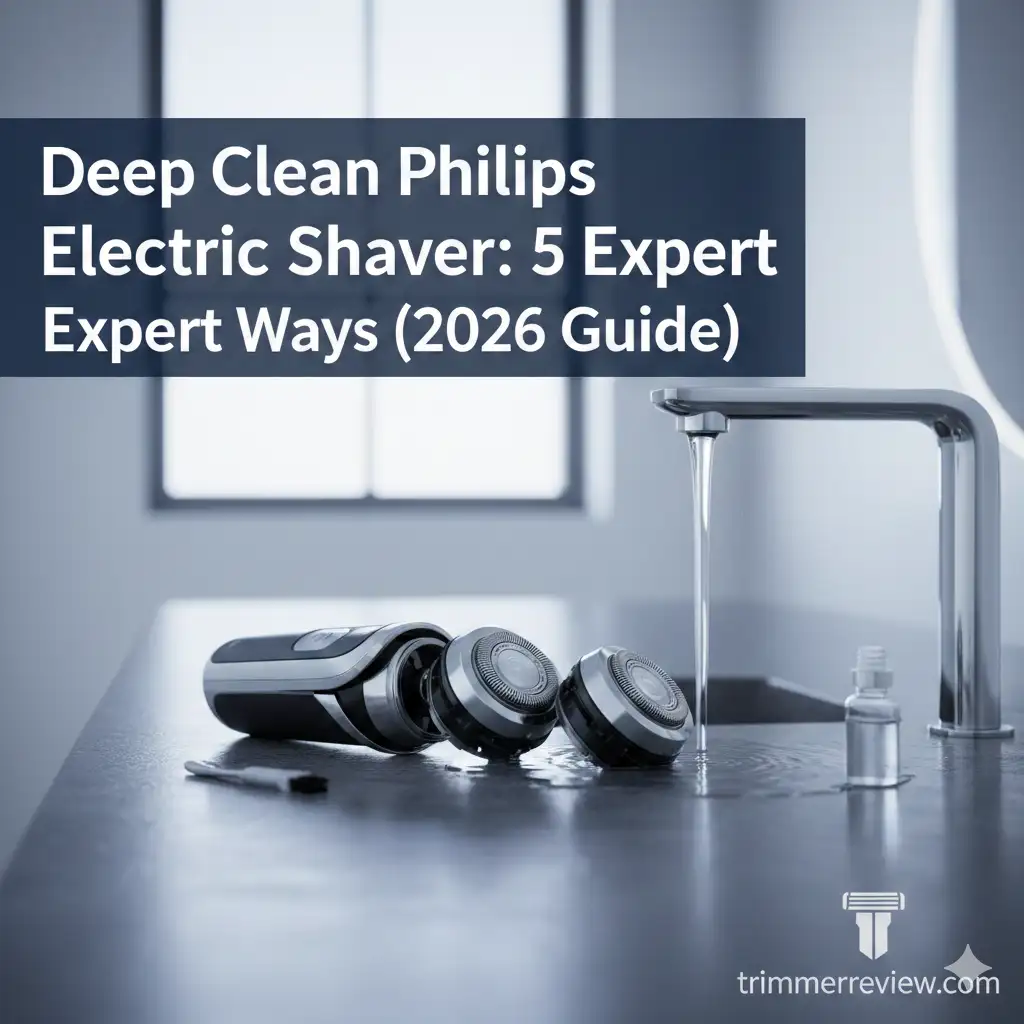
- Deep clean Philips electric shaver units regularly to maintain optimal shaving performance and hygiene. Electric shavers accumulate oils, keratin residue, and microscopic debris during regular grooming use.
- A neglected shaving assembly functions as both a biological and mechanical liability.
- The accumulation of keratinized debris and sebaceous lipids facilitates the proliferation of bacterial colonies, which serve as the primary catalyst for folliculitis and localized dermal inflammation.
- From a mechanical standpoint, obstructed cutting interfaces significantly elevate torque resistance, forcing the drive system to operate beyond calibrated parameters.
- This increased load accelerates internal gear attrition and precipitates premature lithium-ion degradation. Furthermore, this systemic mechanical stress results in suboptimal follicular shearing, a condition widely recognized as one of the primary causes of chronic shaver burn.
Daily Maintenance: Protocol for Debris Prevention
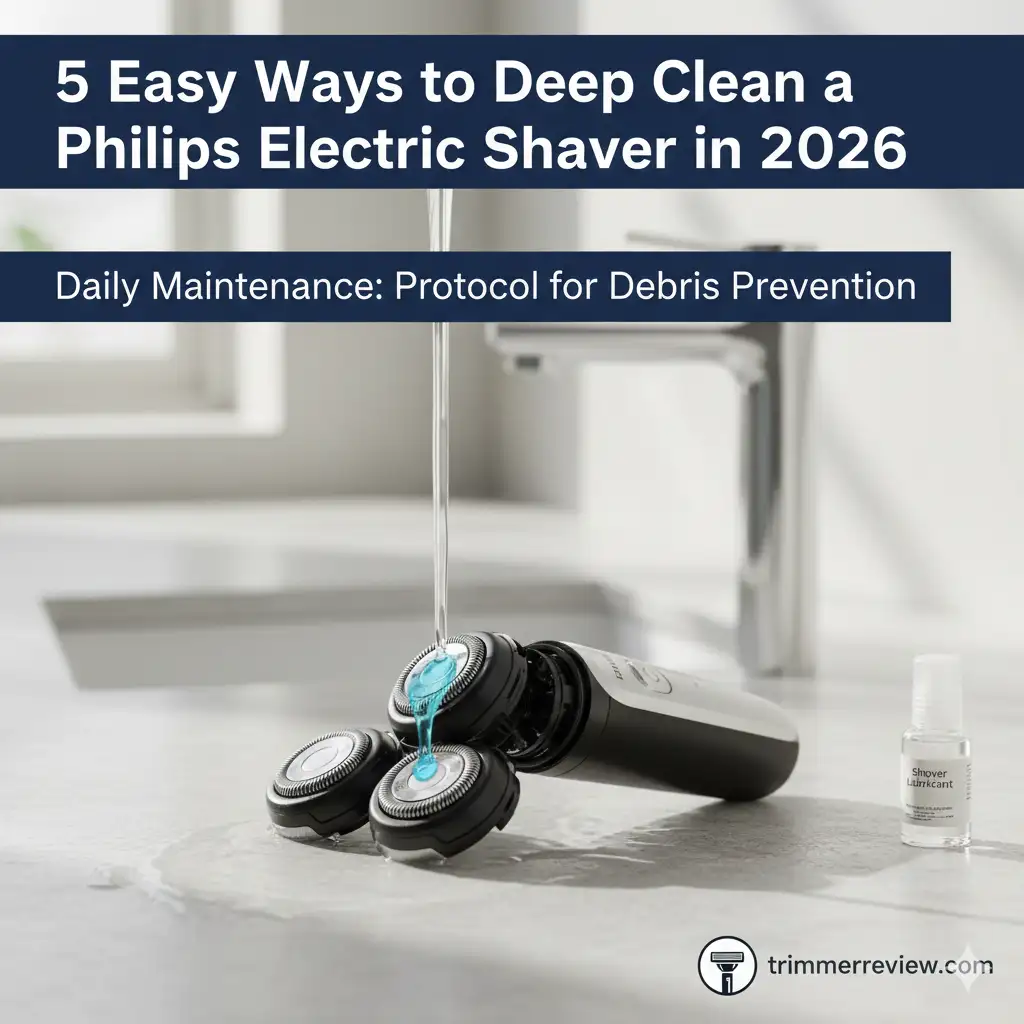
The longevity of Philips rotary hardware is fundamentally dependent on the consistency of the Philips shaver maintenance routine. To deep clean Philips electric shaver systems effectively, implementing a disciplined daily cleaning cycle is essential to prevent the accumulation of keratinized skin cells and sebaceous oils, which otherwise solidify within the cutting chamber. This buildup creates mechanical resistance; therefore, immediate post-operational debris removal is mandatory to preserve the device’s internal gear integrity and ensure peak torque efficiency.
- Primary Procedure: Rinsing the shaving head under lukewarm water after each session effectively clears the majority of organic build-up.
- Technical Specification: It is critical to verify the device’s waterproof rating prior to exposure to water. Maintenance involving rinsing or submersion is strictly reserved for hardware with an IPX7 rating or higher to prevent internal circuitry failure.
- Mechanical Efficiency Tip: The application of a single drop of pH-balanced liquid soap to the cutters while the motor is engaged assists in the immediate emulsification of sebaceous oils. A thorough secondary rinse is required to ensure no surfactant residue remains on the blades, which could otherwise affect the quality of the next shave.
Automated vs. Manual Maintenance
The following demonstration compares automated cleaning systems with traditional manual maintenance for Philips rotary shavers.
Video Credit: [Philips] via YouTube.
Automated Sanitization: The Quick Clean Pod System
For compatible models, the Quick Clean Pod provides a high-efficiency alternative to manual rinsing and helps deep clean Philips electric shaver systems more effectively. The system utilizes a specialized, alcohol-free detergent engineered to dissolve sebum and hair particles that standard water pressure cannot displace.
- Chemical Compatibility: Maintenance must be limited to approved solutions. The introduction of household agents—such as vinegar, bleach, or concentrated disinfectants—is a common cause of hardware degradation. These substances are chemically aggressive and can corrode internal metallic coatings or cause the premature failure of waterproof seals.
- Operational Continuity: Maintaining the efficacy of the system requires the periodic replacement of the fluid cartridges to ensure optimal sanitization levels. [Technical Resource: Philips Cleaning Cartridge Specifications]

Monthly Technical Overhaul: Component and Ventilation Maintenance
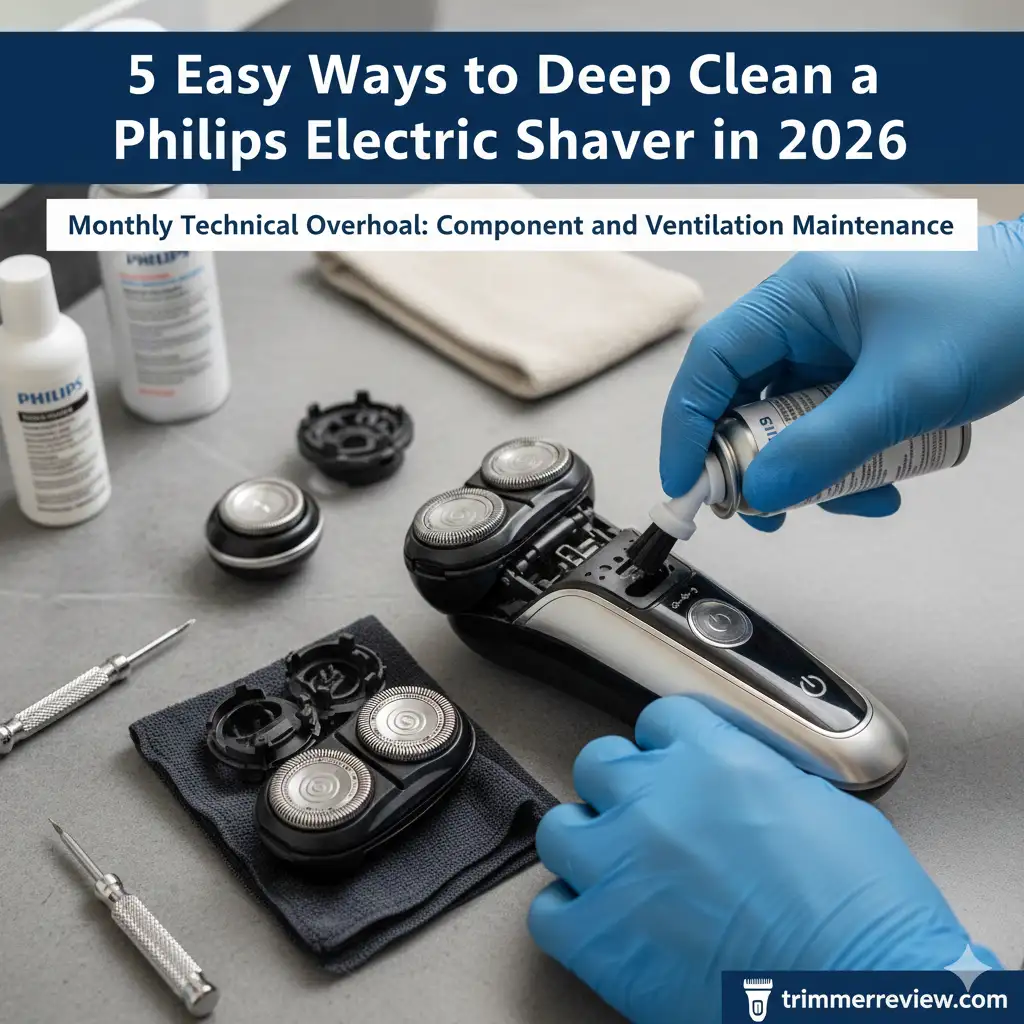
Preservation of motor efficiency and hardware integrity necessitates a comprehensive monthly cleaning of the internal assembly. This shaving head cleaning guide establishes the protocol required to deep clean Philips electric shaver components and extract deep-seated debris that remains resistant to standard rinsing cycles. Implementing this intensified maintenance schedule prevents organic saturation, which otherwise increases mechanical drag and compromises the rotational velocity of the cutters.
- Precision Disassembly: Accessing the cutting chamber requires the removal of the retaining rings to separate the cutters from their respective guards. It is imperative to maintain these as matched pairs. Because cutters and guards undergo a synchronized factory-honing process, interchanging them will result in diminished cutting precision and increased mechanical friction.
- Thermal Management: Over time, microscopic hair particulate accumulates within the motor spindle vents. Utilizing compressed air to clear these obstructions is essential for maintaining proper airflow. Unobstructed ventilation prevents thermal overload, ensuring the motor sustains its calibrated rotational speed and prevents premature battery drain.
Drying and Storage: Preservation of Component Integrity
The efficacy of any maintenance cycle is fundamentally dependent on the subsequent drying phase. Residual moisture is the primary catalyst for structural degradation and performance loss in rotary systems.
- Desiccation Protocol: Following the rinse cycle, excess water must be expelled through gentle mechanical shaking. The shaving unit should remain in the open position to facilitate unobstructed evaporation. The application of towels or microfiber cloths is strictly discouraged; textile fibres present a risk of entangling within the cutter assembly and can microscopically dull the factory-honed edges of the blades.
- Atmospheric Storage Requirements: Hardware should be stored in a climate-controlled, low-humidity environment. Storing the device in a typical bathroom setting exposes the internal circuitry and metallic components to persistent humidity, which facilitates oxidation (rust) and the proliferation of odor-causing bacteria. Utilizing a dry cabinet or a ventilated storage case is recommended to maintain long-term mechanical reliability.
Friction Mitigation and Electrical Isolation Protocols
The process used to deep clean Philips electric shaver units can inadvertently remove essential lubricants from the cutting interfaces. Failure to replenish these lubricants results in increased mechanical resistance, which accelerates component wear.
- Lubrication Maintenance: Once the assembly is completely desiccated, the application of a single drop of specialized shaver lubricant to each rotary head is required. This thin film of oil reduces the kinetic friction between the cutter and the guard, preventing thermal expansion and preserving the factory-honed sharpness of the blades.
- Electrical Safety Constraints: Maintenance activities must be restricted to a cordless state. Regardless of “Wet & Dry” operational ratings, the device must be physically disconnected from the charging cable prior to any exposure to liquid or internal cleaning. This protocol is mandatory to mitigate the risk of dielectric breakdown or catastrophic electrical failure.
Diagnostic Indicators for Mechanical Intervention
Operational anomalies often serve as early warning signs of internal debris saturation. Identifying these symptoms promptly is essential for preventing permanent motor damage or component failure.
- Thermal Emission and Odor: The presence of a burning scent indicates that the motor is encountering excessive resistance. This thermal stress occurs when the drive system must compensate for the friction caused by compacted hair and sebum, leading to potential winding failure if not addressed.
- Elevated Kinetic Vibration: An increase in vibration levels typically suggests a loss of mechanical equilibrium. Uneven buildup within the cutting assembly causes the blades to rotate off-axis, creating an imbalance that increases wear on the drive shaft.
- Diminished Rotational Velocity: A perceptible reduction in speed is a primary indicator of torque resistance. When internal gears struggle to overcome physical obstructions, the resulting load places undue strain on the power cell and reduces the overall efficacy of the cutting cycle.
Hardware Diagnostic and Remediation Matrix
The following table serves as a technical reference for identifying mechanical or biological stressors that may appear when you deep clean Philips electric shaver units, along with the necessary protocols for restoration.
| Symptomatic Indicator | Primary Etiology | Corrective Action |
|---|---|---|
| Persistent Malodor | Microbial proliferation due to residual organic matter. | Conduct a comprehensive immersion cycle; ensure total atmospheric desiccation and relocate to a non-humid environment. |
| Follicular Traction (Pulling) | Mechanical obstruction or compromised blade geometry. | Execute a deep-cleaning protocol to remove solidified debris and restore cutting clearance. |
| Atypical Acoustic Output | Elevated friction coefficients or spindle ventilation blockage. | Apply specialized lubricant to the rotary-guard interface and clear particulate from motor vents. |
| Dermatological Stress | Surface contamination and pathogen accumulation. | Implement an automated sanitization cycle utilizing specialized detergents to achieve a sterile interface. |
Conclusion: Mechanical Longevity and Operational Efficiency
- The functional lifespan and performance consistency of shaving hardware are directly contingent upon the rigor of the maintenance cycle. Learning the correct deep cleaning method plays a crucial role in preserving motor efficiency and blade performance. Empirical data suggests that systematic upkeep can extend the operational life of the device by approximately 30–40%. Beyond mechanical durability, maintaining a sterile cutting interface is the primary factor in eliminating friction-induced dermatological trauma.
- Establishing a proactive monthly maintenance schedule, rather than relying on reactionary repairs, ensures that the motor and battery operate within their calibrated parameters. This disciplined approach minimizes the frequency of component replacement and preserves the integrity of the hardware, ensuring peak performance remains a constant rather than a variable.
Maintenance and Hardware Compatibility: Technical FAQ
Before reviewing the following questions, it is important to understand that the procedures used to deep clean Philips electric shaver systems may vary depending on the model and hardware architecture. Proper maintenance routines ensure consistent cutting performance, improved hygiene, and longer motor lifespan. The answers below address the most common technical questions related to maintaining and operating Philips rotary shaving systems safely.
What is the recommended replacement interval for rotary shaving heads?
Component longevity typically necessitates a replacement cycle of 12 to 24 months. This timeline is contingent upon the density of the hair being processed and the frequency of operation. Reference the official model-specific replacement schedules for precise technical specifications.
Are these maintenance protocols compatible with foil-based architectures?
The procedures described in this guide are calibrated specifically for rotary systems. Maintenance of foil-based hardware requires a different approach; specifically, the foil and cutter block should remain integrated unless the manufacturer’s service manual dictates otherwise, as the foil mesh is highly susceptible to structural deformation.
Can alcohol-based solutions be utilized for sanitization?
The use of high-concentration alcohol is discouraged due to its solvent properties. Alcohol can cause the premature desiccation and cracking of internal elastomeric seals and gaskets, leading to a loss of water resistance. The use of specialized, material-safe sanitization fluids is necessary to maintain component integrity.
What factors contribute to persistent malodor following a rinse cycle?
Persistent odor is frequently attributed to anaerobic bacterial growth caused by inadequate evaporation. If the shaving unit is closed before the internal chamber has achieved complete atmospheric desiccation, trapped moisture facilitates microbial proliferation. Ensuring the cutting assembly remains open until fully dry is a mandatory preventative measure.
Transparency & Fact-Checking
For full transparency and product information verification details, refer to the Disclaimer & Fact-Checking Policy.
