
Introduction: Easy & Comfortable Nose Grooming
- In India, two nose trimmers that people often choose are the Philips NT3650 and the Mi Nose Trimmer S100. Both are easy to find online and in stores, and they help you stay well-groomed without any hassle.
- The Philips NT3650 Nose Trimmer official page focuses on comfort and safety. Its protective guard prevents skin irritation and pulling, giving you a smooth and gentle trim every time.
- The Mi Nose Trimmer S100, on the other hand, is designed for convenience and travel. It’s lightweight, charges with USB-C, and trims quickly — perfect for grooming on the go.
- Most users who trim regularly prefer the NT3650 for its reliable performance, while the Mi S100 is loved as a compact, travel-friendly option. The choice mainly depends on whether you want a durable everyday trimmer or a handy trimmer for travel.
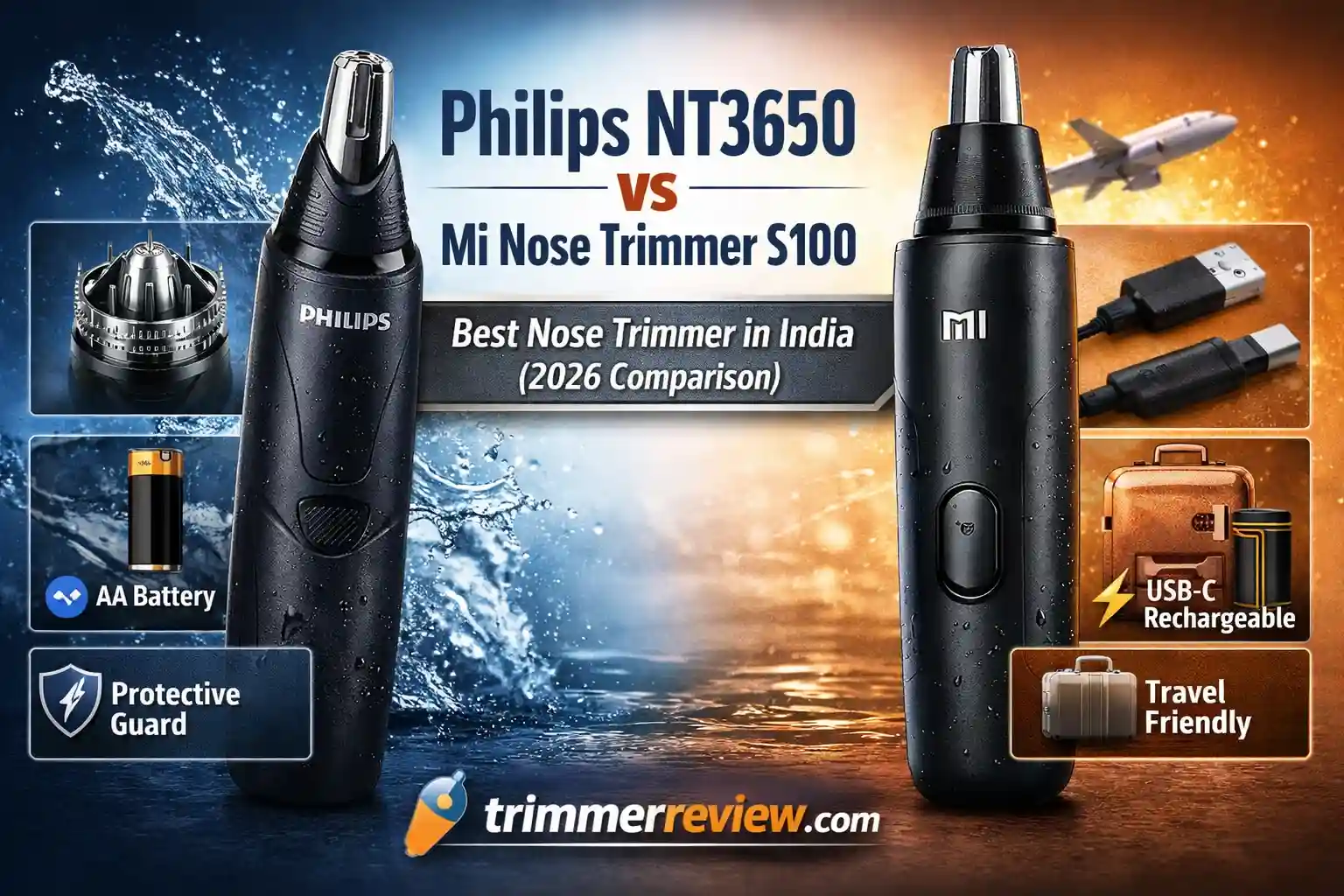
Philips NT3650 vs Mi Nose Trimmer S100: 2026 Performance Comparison
When comparing performance, the main difference comes down to how each trimmer cuts nose hair. The Philips NT3650 uses a straight, dual-sided blade for precise and gentle trimming, while the Mi Nose Trimmer S100 has a rotating 360-degree blade that quickly trims hairs from all angles.
Here’s how they perform in real-world use under normal grooming conditions.
| Feature | Philips NT3650 | Mi Nose Trimmer S100 |
|---|---|---|
| Blade Style | Safe Guard Blade | Round Spinning Blade |
| Motor Speed | Steady Linear Movement | Fast Spinning Motion |
| Power Source | 1x AA Battery (Replaceable) | Rechargeable Lithium Battery (USB-C) |
| Body Material | Durable Polymer | Plastic Finish |
| Water Resistance | IPX7 (Can Submerge) | IPX7 (Can Submerge) |
| Consistent Cutting Power | Strong and Steady | Varies with Battery |
Philips NT3650 vs Mi Nose Trimmer S100: How They Work
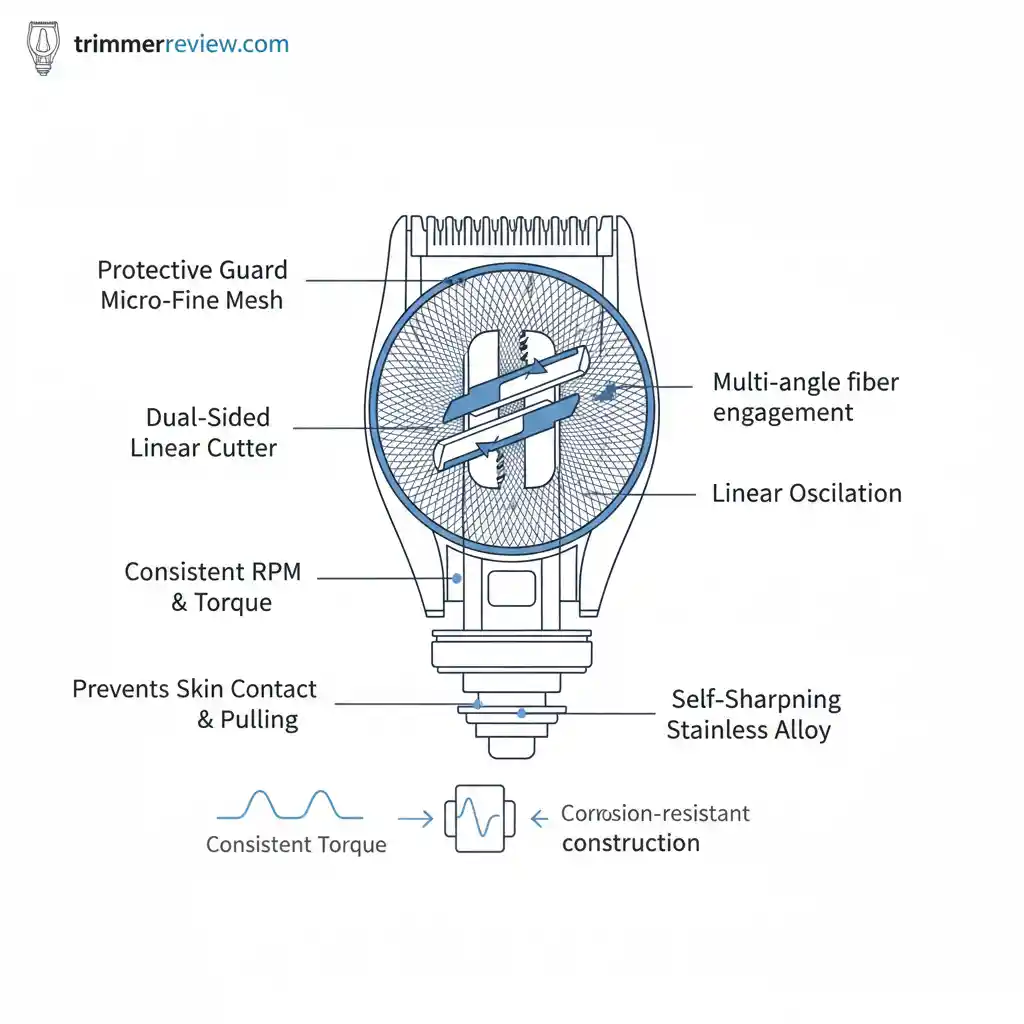
The Philips NT3650 is designed to be safe and gentle. Its blades are covered by a protective mesh, which stops them from touching your skin directly. This helps prevent tiny scratches or irritation inside the nose.
- Dual-Sided Blades: The blades are designed to trim hairs from different angles, making it easier to get a clean cut without pulling.
- Stable Performance: The trimmer keeps a steady speed even when the hair is thick, so it won’t get stuck or slow down.
- Durable Blades: Made from stainless steel that sharpens itself, the blades stay sharp for years and resist rust, ensuring smooth trimming every time.
Mi Nose Trimmer S100: Safe, Quick & Travel-Friendly
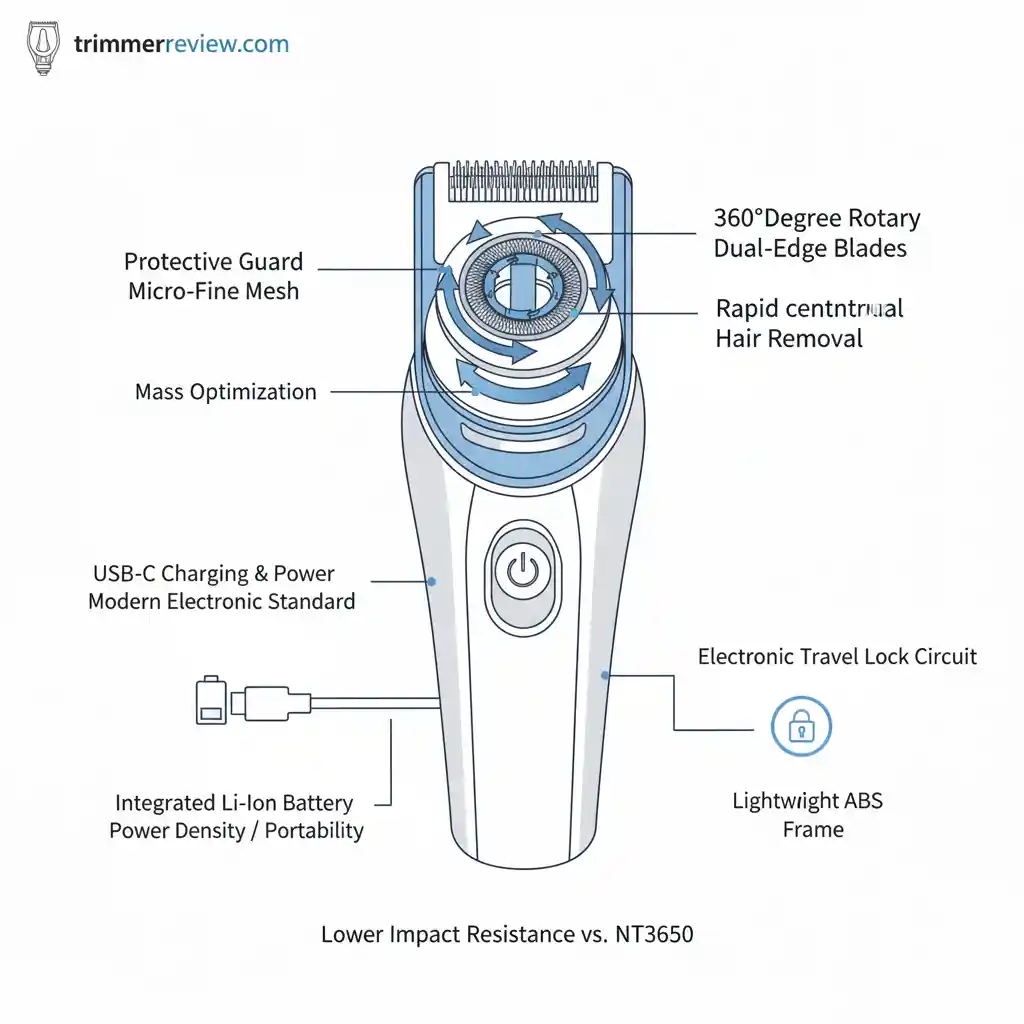
The Mi Nose Trimmer S100 is designed for convenience and portability. It charges via USB-C, making it easy to power up anywhere, and is ideal for quick grooming sessions.
- 360-Degree Rotating Blades: The round blades trim hairs from all directions, helping you remove nose hair quickly and efficiently.
- Travel Safety Lock: A built-in lock prevents the trimmer from turning on accidentally while in your bag or luggage
- Lightweight Design: The trimmer’s plastic frame makes it easy to handle and carry, though it’s slightly less impact-resistant than the Philips NT3650.
Blade Quality & How Long They Last
When comparing the Philips NT3650 and the Mi Nose Trimmer S100, one big difference is how their blades hold up over time. Most nose trimmers, including these models, use stainless steel blades, which are known for being strong, rust‑resistant, and easy to clean. Stainless steel is one of the most common materials used in grooming tools because it stays sharp longer and doesn’t corrode easily, even with regular exposure to moisture.
- Philips NT3650: Its blades are built to cut smoothly and are designed to stay sharp with normal use. Because they resist rust and wear, they can last many months or even years if cleaned properly after trimming. You don’t usually need to replace the blades often.
- Mi Nose Trimmer S100: This trimmer also uses stainless steel blades, and they work well for quick hair removal. However, because its round blade spins fast, it can wear down a bit quicker if not cleaned after every grooming session.
Routine cleaning and gentle care — like rinsing and drying the blade area — can help both trimmers keep performing well longer. For more on why stainless steel is preferred in grooming tools, you can check this guide on blade materials from a trusted source.

Trimming Without Tugging or Irritation
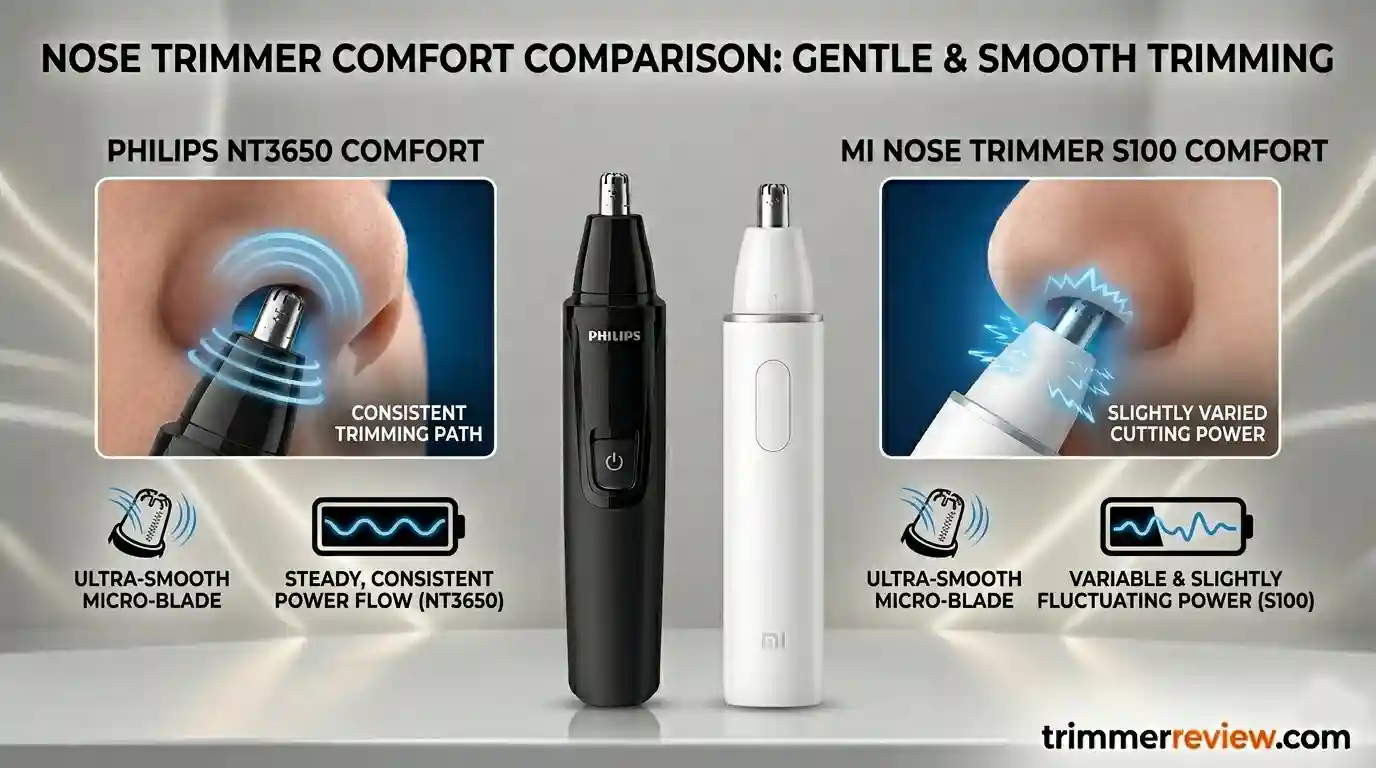
A smooth and steady trimming experience is important to avoid discomfort or tugging inside the nose. Here’s how the two trimmers compare:
- Philips NT3650: The trimmer keeps a consistent cutting speed, even as the battery runs low. This means it trims hairs gently without pulling, making it comfortable for regular use.
- Mi Nose Trimmer S100: It starts off fast and efficient, but as the battery drains, the cutting power can vary. This may make trimming thicker or coarse hairs a bit less smooth.
In short, if you want a trimmer that won’t tug or irritate the nose, the NT3650 is generally the safer choice for frequent use, while the Mi S100 works well for quick grooming sessions or travel.
Easy Cleaning & Hygiene Tips
Nose trimmers need regular cleaning to stay hygienic and prevent bacteria buildup. One key difference between trimmers is how easy it is to remove hair and debris after use.
| Maintenance Aspect | Philips NT3650 | Mi Nose Trimmer S100 |
|---|---|---|
| Cleaning Method | Rinse Directly with Water | Remove Head and Rinse |
| Blade Care | Self-Sharpening, No Oil Needed | Check & Replace Head Occasionally |
| Safe with Cleaning Liquids | Can Use 70% Alcohol | Can Use 70% Alcohol |
| Main Focus | Lasts Long & Stays Sharp | Easy & Convenient to Use |
Energy Use & Eco-Friendliness
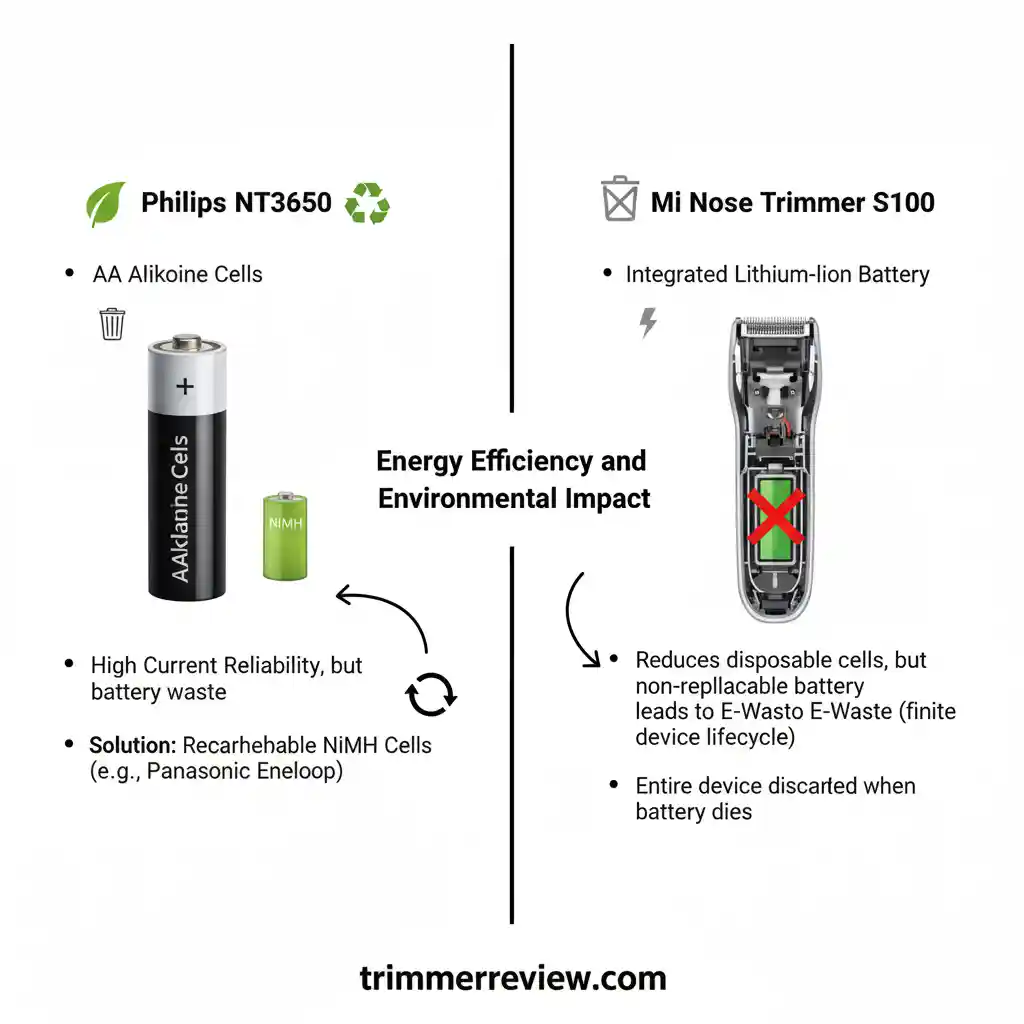
The type of battery each trimmer uses affects both convenience and the environment:
- Philips NT3650: Uses AA batteries, which are easy to replace and give reliable power. However, disposable batteries can create waste unless you use rechargeable options like NiMH cells (for example, Panasonic Eneloop).
- Mi Nose Trimmer S100: Comes with a built-in rechargeable lithium-ion battery, so you don’t need disposable batteries. The downside is that once the battery wears out over time, you’ll need to replace the whole device.
In short, the NT3650 gives more flexibility with battery options, while the Mi S100 is convenient but has a limited lifespan tied to its battery.
Pros & Cons: Philips NT3650 vs Mi Nose Trimmer S100
When choosing a nose trimmer, it helps to know the strengths and limitations of each model:
Philips NT3650
- Strength: The protective guard keeps the blades safe from touching your skin directly, making trimming gentle and reducing irritation.
- Limitation: Uses AA batteries that need to be replaced occasionally. If you don’t use rechargeable batteries, this can add to long-term costs.
Mi Nose Trimmer S100
- Strength: Charges with USB-C, so it works with most modern phone chargers and is convenient for travel.
- Limitation: The fast-spinning rotary blades may get warmer during use compared to the NT3650, so trimming sessions might feel slightly warmer.
This comparison helps you decide whether you value safety and battery flexibility (NT3650) or travel convenience and quick trimming (Mi S100).
Final Verdict: Which Nose Trimmer Should You Choose?
Choosing between the Philips NT3650 and the Mi Nose Trimmer S100 depends on what matters most to you.
- Philips NT3650: Ideal if you want a gentle, reliable trim with stable performance. Its design focuses on safety and comfort, making it perfect for regular use and trimming thicker nose hair.
- Mi Nose Trimmer S100: Best for quick, convenient grooming, especially when traveling. It’s lightweight, USB-C rechargeable, and easy to carry, making it great for on-the-go use.
In short, pick the NT3650 for durability and smooth trimming, and the Mi S100 if you value portability and fast, hassle-free grooming.
Related Guides & Expert Resources
Philips Nose Trimmer Series 3000 vs 5000 – Performance and feature-set comparison.
How to Use a Nose Trimmer (Step-by-Step) – Operational guide for optimal results.
Note: The debate between linear and rotary blades is central to nasal grooming. In our [Philips NT3650 vs. Panasonic ER-GN30 comparison], we analyze how Philips’ side-cutting system performs against Panasonic’s dual-edge rotary blades to see which one handles coarse hair more efficiently.
FAQs: Easy Answers About Philips NT3650 & Mi S100
Which trimmer is easier to carry around?
The Mi S100 is compact and charges via USB-C, making it a perfect choice for travel or on-the-go grooming without worrying about carrying extra batteries.
How does the NT3650 protect my nose skin?
The NT3650 has a built-in protective guard that keeps the blades from touching your skin directly, giving you a gentle trim without any irritation or tiny cuts.
Can I use these trimmers in wet conditions?
Yes! Both the NT3650 and Mi S100 are waterproof and safe to use in the shower or rinse under water. They can handle full submersion for short periods without damage.
How often should I replace the blades?
Philips NT3650 blades are designed to stay sharp for years with normal use, so replacements are rarely needed. For the Mi S100, check the spinning blades every 12 months to make sure they’re still trimming efficiently.
Transparency & Fact-Checking
For full transparency and product information verification details, refer to the Disclaimer & Fact-Checking Policy.
