
Why Cleaning Matters More Than Most Users Think
Cleaning your Philips nose trimmer isn’t just about hygiene — it also helps your trimmer work properly.
When you trim, the device collects:
- Tiny hair pieces
- Dead skin (keratin)
- Natural skin oils
These can get stuck inside:
- The guard slots
- The cutting area
- The inner part of the trimmer
If you don’t clean it regularly, this build-up can cause:
- Extra resistance inside the trimmer
- The motor to work harder
- Blades to slow down
As a result, you may notice:
- Hair pulling instead of smooth cutting
- Uneven trimming
- The trimmer not running smoothly
Regular cleaning helps:
- Keep the blades moving smoothly
- Maintain consistent performance
- Reduce wear and tear over time
👉 In many cases, performance starts dropping even before you can see any dirt inside.
How Poor Cleaning Affects Performance
When you don’t clean your trimmer regularly, dirt and hair build-up can affect how well it works over time.
How the Trimmer Works
Both Series 3000 and Series 5000 trimmers use a small motor that moves the cutting blades back and forth to trim hair.
What Happens When Dirt Builds Up
With regular use, tiny hair and dirt can collect inside the trimmer. This can cause:
- Extra resistance inside the blades
- Uneven running speed
- Extra strain on the internal parts
Over time, this may lead to:
- Less effective trimming
- Faster battery drain
- The motor working harder than usual
Why Cleaning Helps
Regular cleaning helps your trimmer:
- Run more smoothly
- Maintain steady performance
- Give consistent trimming results
👉 In short, a clean trimmer works better, lasts longer, and feels smoother to use.
trimmerreview.com
HOW DIRT AFFECTS YOUR TRIMMER
1. Dirt Starts Building Up
Hair and dust collect inside
2. Blades Get Blocked
Dirt stops smooth movement
3. Movement Becomes Rough
Blades don’t move smoothly
4. Trimmer Works Harder
Extra pressure on the motor
5. Performance Drops
Uneven trimming and pulling
Simple explanation of how dirt can affect your trimmer over time.
Series 3000 vs Series 5000 Cleaning Needs
Cleaning requirements differ slightly due to structural design.
🔒 Design comparison based on product architecture described in official Philips grooming documentation.
Series 5000 may require slightly deeper inspection due to detachable components.
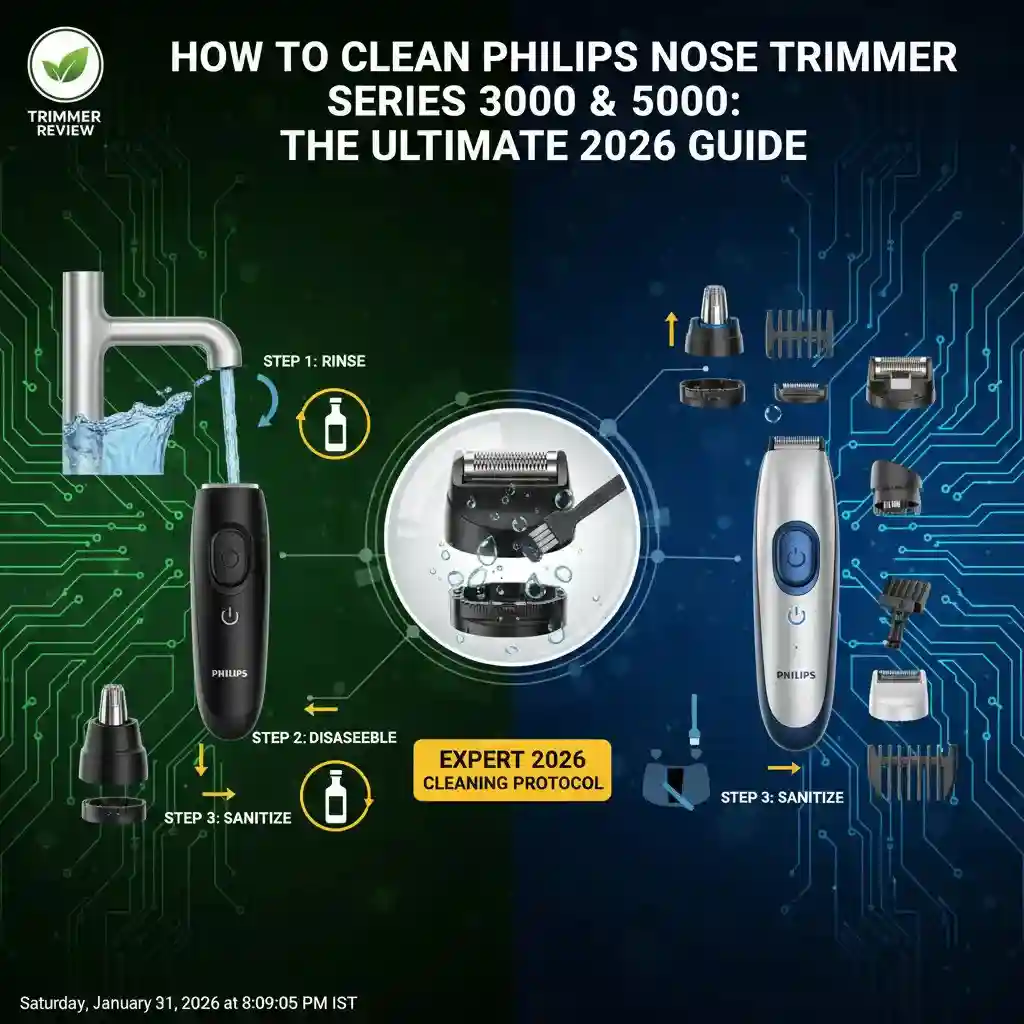
Step-by-Step: How to Clean Your Philips Nose Trimmer
Cleaning your trimmer regularly is quick and only takes a few minutes.
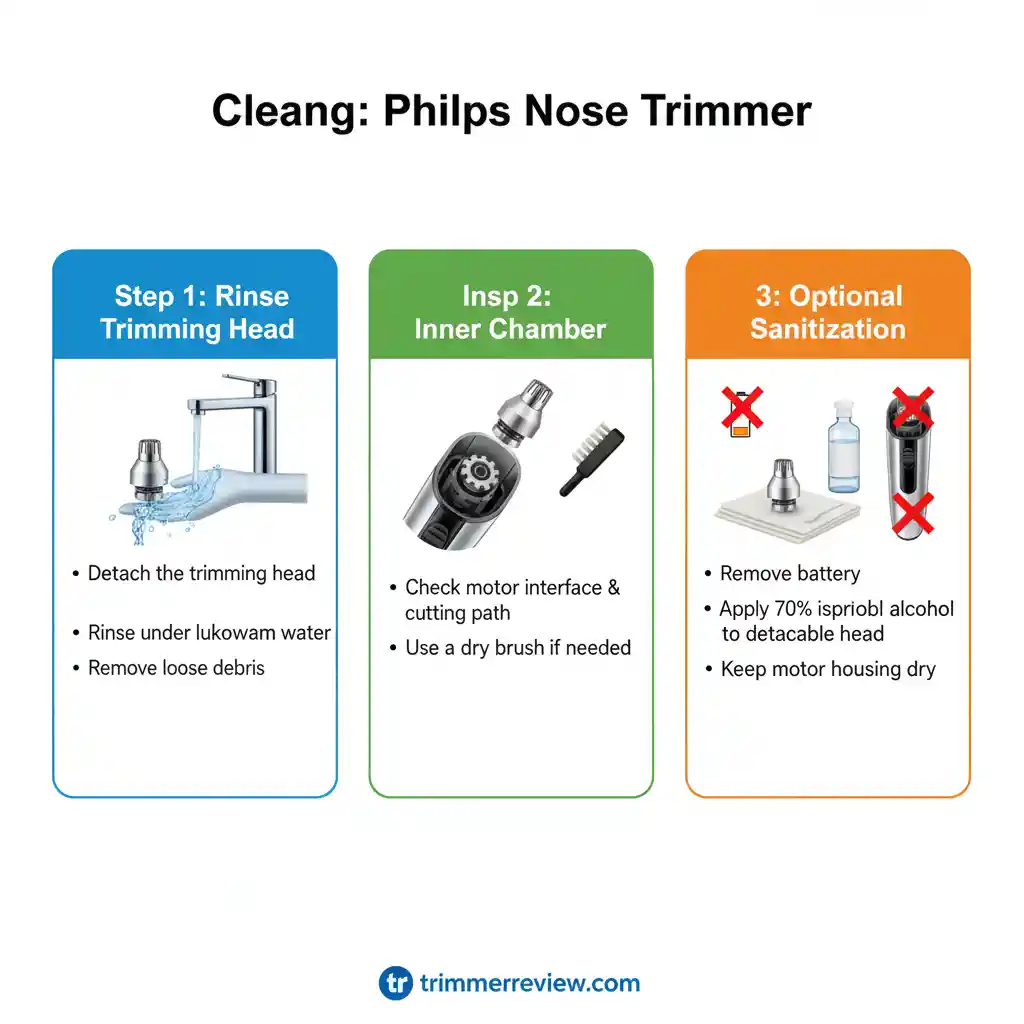
Step 1: Rinse the Trimming Head
- Remove the trimming head
- Rinse it under lukewarm water
- Gently wash away any loose hair
👉 This helps clean the surface and remove visible dirt.
Step 2: Check the Inside
- Look inside the trimmer where the blades move
- Check the cutting area and inside part of the trimmer
- Use a small dry brush if needed
👉 This helps prevent dirt from building up inside.
Step 3: Optional Deep Cleaning
- Only clean the detachable head with alcohol
- Remove the battery before doing this
- Use a small amount of 70% alcohol if you want extra cleaning
- Keep the main body (motor part) completely dry
👉 This keeps your trimmer hygienic without damaging it.
Post-Cleaning Care
Technical Protocol for Waterproof Trimmers
| What to Do | Why It Helps |
|---|---|
| Let it air dry | Helps remove moisture so the trimmer keeps working smoothly |
| Make sure it is fully dry inside | Prevents dirt or leftover water from affecting performance |
| Do not use oil | ⚠ These trimmers are made to work without oil, so adding it is not needed |
These simple steps help keep your trimmer clean, safe, and working properly for a long time.
Cleaning Frequency Guide
Cleaning frequency depends on usage intensity:
| Usage Type | Recommended Cleaning Need |
|---|---|
| Daily Use | Cleaning after each session helps prevent debris accumulation |
| Weekly Use | A weekly rinse maintains hygiene and internal efficiency |
| Coarse Hair Trimming | Cleaning after every use prevents blade resistance and chamber blockage |
Technical Basis: This usage-based cleaning recommendation reflects general grooming device hygiene practices followed by manufacturers such as Philips and aligns with broader hygiene principles supported by public health authorities regarding routine cleaning after biological exposure.
How Cleaning Affects Performance
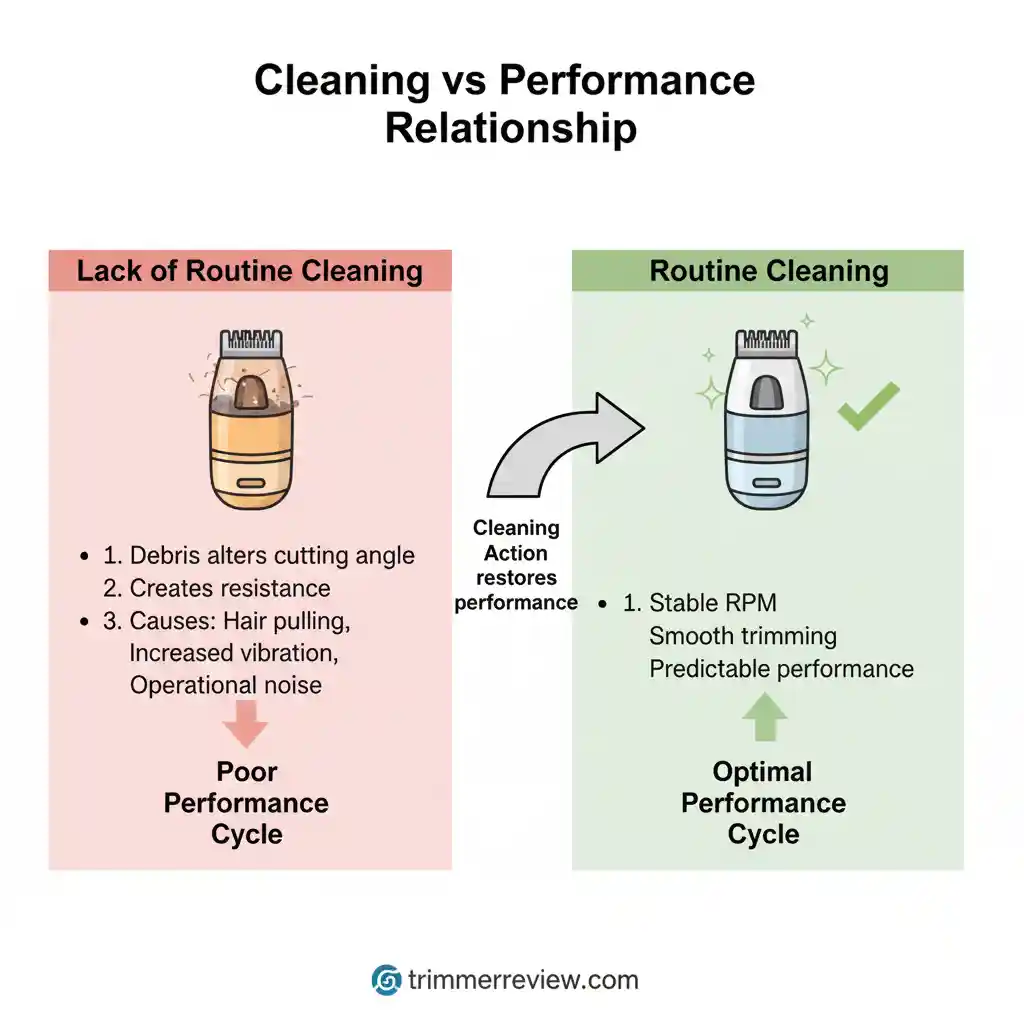
Cleaning your Philips nose trimmer the right way helps it work smoothly and give better results.
When dirt and hair get stuck inside, it can:
- Change how the blades cut
- Create extra resistance
Over time, this may lead to:
- Hair pulling instead of smooth trimming
- More vibration while using
- Extra noise from the trimmer
Why Regular Cleaning Is Important
Cleaning your trimmer regularly helps:
- Keep the speed steady
- Make trimming smooth and comfortable
- Give consistent results every time
👉 In short, a clean trimmer works quietly, smoothly, and more effectively.
What Happens Over Time Without Cleaning
If you don’t clean your trimmer regularly, you may start noticing small problems over time.
After a few months:
- The trimmer may feel a bit slower or less smooth
After longer use:
- Trimming may become uneven
Many people think this means:
- ❌The battery is not working properly
But in most cases, the real reason is:
- Dirt and hair stuck inside the trimmer
👉 Regular cleaning helps you avoid these issues and keeps your trimmer working properly for a long time.
Cleaning vs Replacement: What You Should Know
Cleaning your trimmer can help it run smoothly again, but it can’t fix everything.
Cleaning will not fix:
- Blades that have become dull
- A motor that has worn out over time
When You May Need to Replace the Trimmer or Blade
You might need to replace the blade or trimmer if you notice:
- Hair pulling even after cleaning
- Unusual noise while using
- Visible wear or damage on the blades
👉 In short, cleaning helps with performance, but worn-out parts will eventually need replacement.
Hygiene Cleaning vs Performance Cleaning
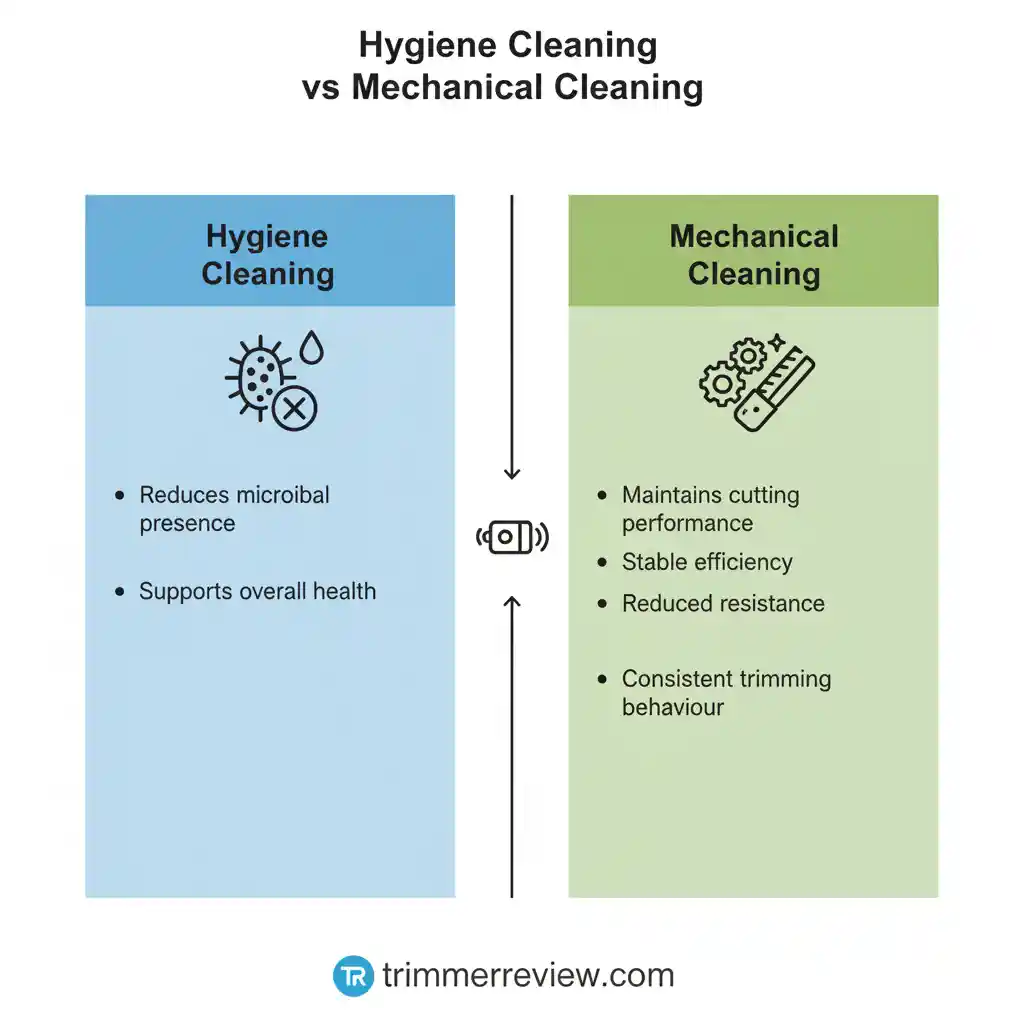
Cleaning your Philips nose trimmer is not just one thing — there are two types of cleaning you should know.
Hygiene Cleaning
- Helps keep your trimmer clean and germ-free
Performance Cleaning
Helps the trimmer cut hair properly
Performance cleaning helps:
- The trimmer run more smoothly
- Reduce extra resistance inside
- Give consistent trimming results
👉 In short, one type keeps your trimmer clean, and the other keeps it working at its best.
Common Cleaning Mistakes to Avoid
🚫 Washing battery housing
🚫 Using hot water
🚫 Applying oil
🚫 Reassembling while wet
Safe Water Exposure
IPX7 allows:
- Head rinsing
Avoid:
- Full submersion
- High-pressure water
Environmental Influence
| Condition | What You Should Do |
|---|---|
| Humid Climate | Let the trimmer dry properly so no water stays inside |
| Dusty Environment | Check and clean it regularly to remove dust and hair |
| Cold Storage | Let the trimmer adjust to room temperature before using it |
Note: These are simple care tips to keep your trimmer clean and working properly in different conditions.
Preventive Maintenance Advantage
Routine cleaning helps:
- Reduce energy consumption
- Lower motor load
- Maintain runtime stability
Clean systems operate with:
- Lower strain
- Balanced performance
Expected Results of Proper Cleaning
Consistent maintenance supports:
- Smooth operation
- Reduced friction
- Predictable trimming
Related Guides & Expert Resources
To further understand the performance and maintenance of Philips grooming devices, explore the following expert resources. These guides provide detailed insights into nose trimmer design, proper usage techniques, and comparative analysis of different Philips models, helping readers maintain optimal trimming performance and choose the most suitable device for their grooming needs.
- Philips NT3650/16 vs Philips Norelco NT3600 – Technical breakdown of regional variations.
- How to Use a Nose Trimmer (Step-by-Step) – Operational guide for optimal results.
- Buying the hardware is only the first step; ensuring it is covered against manufacturing defects is equally important. We have created a step-by-step [Philips nose trimmer warranty guide] to help you register your product and understand the claim process in India.
Frequently Asked Questions (FAQs)
The following frequently asked questions address common concerns about how to clean Philips nose trimmer devices safely and effectively. These quick answers clarify proper rinsing methods, hygiene practices, and maintenance steps to help maintain smooth trimming performance and long-term device reliability.
Can the trimmer be rinsed?
Yes — detachable heads are washable.
Why does trimming become uneven?
Usually due to debris build-up or blade wear.
Is disinfectant safe?
Yes — only on detachable parts.
Transparency & Fact-Checking
For full transparency and product information verification details, refer to the Disclaimer & Fact-Checking Policy.
