
Introduction: Design and How It Works
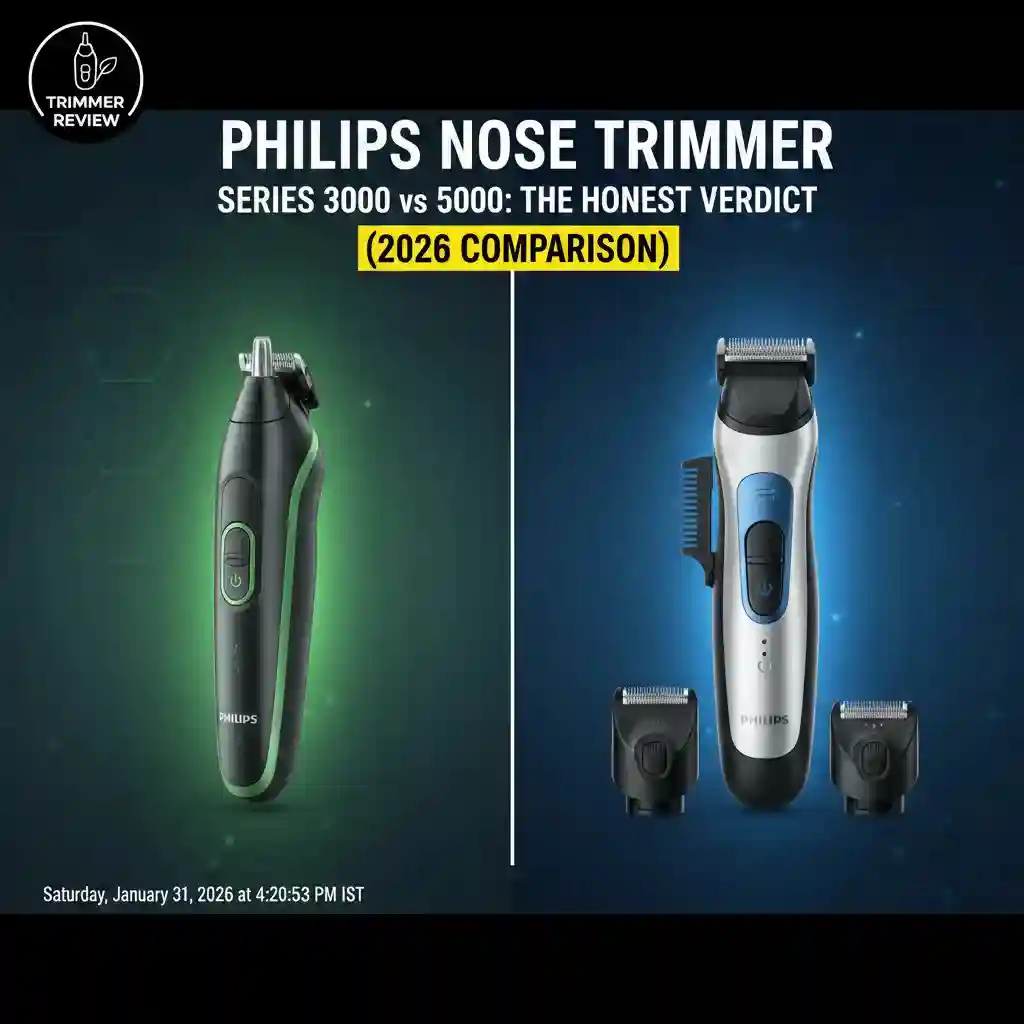
Both the Philips Nose Trimmer Series 3000 and 5000 use the same safety design that keeps the blades away from your skin. This helps prevent cuts and irritation during use. However, there are some differences in motor power, battery performance, and the accessories included. These differences affect how smoothly each nose trimmer works, how efficient it feels during use, and how well it performs over time.
How the Protective Guard System Works
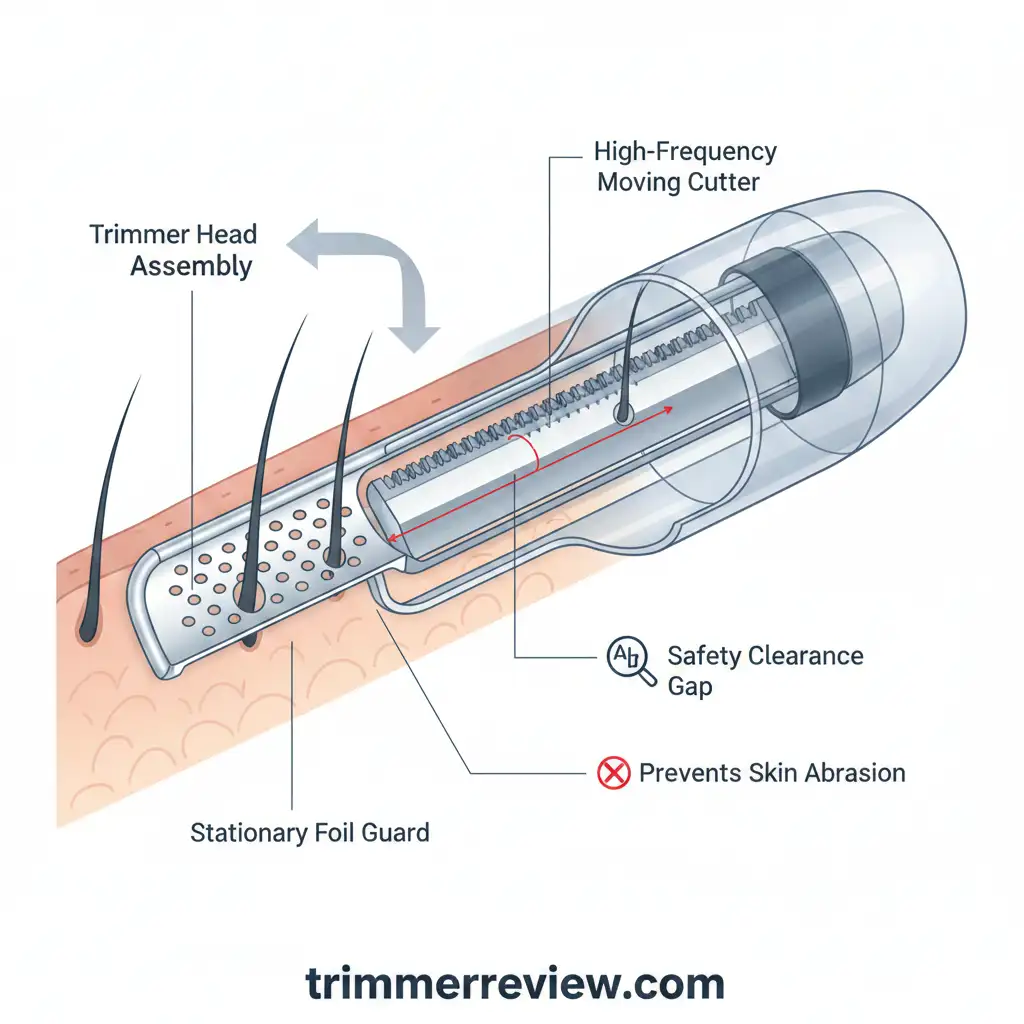
Both nose trimmer series use a protective guard that acts as a barrier between the blades and your skin. This design allows only the hair to enter the cutter while keeping the sensitive skin inside your nose safe. Because the blades don’t touch your skin directly, it helps reduce the risk of cuts, irritation, and pulling during trimming.
Real Performance Test: Sound and Usage Experience
To properly compare the Philips Nose Trimmer Series 3000 and 5000, it’s important to look at real-world use, not just the specs. Testing these nose trimmers in different situations shows how well each one keeps a steady speed and how smoothly the blades cut hair. It’s also important to see how easy they are to control, especially when trimming inside the nose and ears, where better control means safer and more comfortable use.
Video Source: [Philips Official YouTube Channel] via YouTube.
Video Source: [Philips Official YouTube Channel] via YouTube.
From real use, the Philips Nose Trimmer Series 5000 runs more smoothly and keeps a steady sound while trimming. This shows that its motor is stronger and can maintain speed better than the Series 3000, even when trimming thicker hair.
While the Series 3000 nose trimmer works well for basic grooming, the Series 5000 is more efficient and usually gets the job done in fewer passes. This means less repeated contact with the skin, which helps reduce irritation and makes trimming more comfortable.
Specifications Table: Philips Nose Trimmer Series 3000 vs 5000
| Feature | Philips Series 3000 | Philips Series 5000 |
|---|---|---|
| Primary Use | Nose, Ear & Eyebrow | Nose, Ear, Eyebrow & Precision Detailing |
| Cutting Element | Stainless Steel Dual-Sided Precision Trimmer | Dual-Sided Stainless Steel Precision Trimmer |
| Safety Technology | Protective Guard System | Protective Guard System |
| Power Source | 1× AA Battery | 1× AA Battery |
| Water Resistance | Fully Washable / Showerproof | Fully Washable / Showerproof |
While both units utilize the Protective Guard System to ensure epidermal safety, the Series 5000 integrates a higher-torque motor calibration and an expanded accessory system that improves trimming efficiency during multi-zone grooming tasks.
Design and Performance
Motor Power and Smooth Trimming
The Series 5000 nose trimmer comes with a stronger motor compared to the Series 3000. This helps it maintain a steady speed even when trimming thick or dense hair. As a result, it cuts more smoothly without slowing down or pulling hair. This also reduces stress on the blades and makes trimming more comfortable.
Battery Performance
The Series 5000 nose trimmer is designed to deliver consistent performance as the battery drains, so it keeps working at a steady speed for longer. On the other hand, the Series 3000 may slowly lose power over time, which means you might need to replace the battery sooner to maintain the best trimming performance.
Attachments and Usability
The Series 5000 supports multiple attachments, such as eyebrow combs and a precision detailer, making it more versatile for different grooming needs. In comparison, the Series 3000 is mainly designed for nose and ear hair trimming, keeping things simple and easy to use without extra attachments.
Cleaning and Maintenance Tips for Nose Trimmers
How to Clean
Both nose trimmers come with a washable head (IPX7 rated), so you can safely rinse them under water. Hair and dirt buildup inside the cutting area can reduce performance over time, so it’s best to clean the trimmer after each use with lukewarm water.
Important tip: Avoid using compressed air to clean the trimmer. It can push dirt deeper inside or affect how the blades are aligned.
How to Keep Your Trimmer Working Longer
Over time, performance may drop due to hair buildup, blade wear, or weak batteries. Regular care can help your nose trimmer last longer.
Check the battery: Remove the battery if you’re not using the trimmer for a long time. This helps prevent leakage and damage.
Let it dry properly: After washing, make sure all parts are fully dry before storing. This prevents moisture from getting trapped inside.
Comparative Performance Analysis: Functional Metrics
| Metric | Philips Series 3000 | Philips Series 5000 |
|---|---|---|
| Load Handling | Standard | High-Torque |
| Versatility | Focused | Multi-Zone |
| Power Consistency | Gradual Decline | Stable (Flat Curve) |
Note: Performance metrics derived from comparative evaluation of power discharge characteristics and mechanical torque threshold testing as of 2026.
Performance Summary: Power and Reliability
- The comparison shows that both trimmers are designed for slightly different uses. The Series 3000 is made for basic grooming and works well for regular nose and ear hair trimming where the workload is simple.
- On the other hand, the Series 5000 is built with a stronger motor and more stable power. This helps it handle thicker hair and different grooming areas more easily without slowing down. Because of this, it is less likely to stall and usually gets the job done in fewer passes.
- Overall, while both trimmers are safe to use, the Series 5000 offers better performance, smoother trimming, and can help the blades last longer with regular use.
Final Verdict: Performance and Practical Use
Both the Philips Nose Trimmer Series 3000 and 5000 keep your skin safe with the same protective design. The Series 5000 has a stronger motor and more consistent power, making it better for handling thicker hair or multi-area grooming with fewer passes. The Series 3000 works well for regular nose and ear trimming and is reliable for everyday use. Choosing between them depends on whether you need extra attachments and more motor power for versatile grooming.
Related Guides & Expert Resources
The following resources expand on key topics discussed in the Philips Nose Trimmer Series 3000 vs 5000 comparison. These guides provide additional technical insights into trimmer maintenance, operational techniques, and detailed hardware comparisons across different Philips grooming models. Reviewing these related resources can help readers better understand how various nose trimmer platforms perform in real-world grooming environments and how to maintain them for long-term mechanical reliability.
- Philips NT3650/16 vs Philips Norelco NT3600: Technical breakdown of regional variations.
- How to Use a Nose Trimmer (Step-by-Step): Operational guide for optimal results.
Frequently Asked Questions (FAQs):
These frequently asked questions answer common concerns about the Philips Nose Trimmer Series 3000 and 5000. They explain the differences in motor strength, safety features, and how versatile each trimmer is. The answers are based on official specifications and real-world testing of both models.
Does the Series 5000 offer higher motor speed?
The operational RPM is comparable; however, the Series 5000 maintains this speed more consistently under load due to higher torque calibration and improved mechanical stability during trimming.
Is this hardware suitable for body hair maintenance?
No. Technical design specifications limit the application of these units to facial orifices and precision detailing.
Which unit offers superior safety for sensitive skin?
Both units employ the same Protective Guard System, providing identical protection levels against skin contact during operation.
Is lubrication required for the blade assembly?
No. The blades are engineered from self-sharpening stainless steel, designed to operate without external lubrication.
Transparency & Fact-Checking
For full transparency and product information verification details, refer to the Disclaimer & Fact-Checking Policy.
