
Introduction
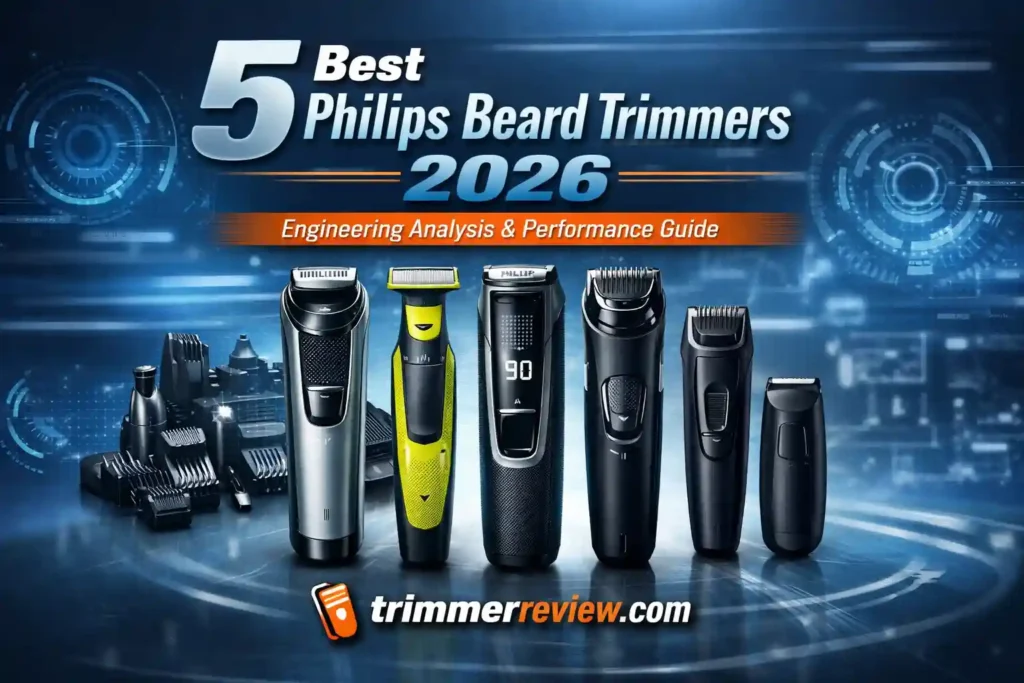
- Selecting a beard trimmer is not limited to brand preference; performance in real-world conditions plays a critical role. The 5 Best Philips Beard Trimmers (2026) are designed to address different grooming requirements, ranging from precision styling to full beard maintenance.
- This guide evaluates these trimmers using practical parameters such as motor performance, blade efficiency, and long-term operational stability. Rather than focusing on marketing claims, the analysis is based on how these devices perform during regular use—whether handling dense beard growth, maintaining stubble, or achieving defined edges.
- For broader grooming insights, additional comparisons and technical guides are available on trimmerreview.com, covering areas such as beard styling, as well as nose and ear trimming solutions.
Quick Summary
This quick comparison highlights how each Philips trimmer is designed for a specific type of grooming need rather than a one-size-fits-all approach. While some models focus on precision and styling, others are better suited for full grooming or regular maintenance.
In practical use, choosing the right option depends more on beard type, usage frequency, and required control than just features on paper. Understanding these differences can help in selecting a trimmer that delivers consistent and comfortable results over time.
| Model | Core Strength | Best Use Case | Key Advantage |
|---|---|---|---|
| Multigroom 7000 | High versatility | Full grooming (beard, hair, body) | Multiple attachments with long runtime (~120 min) |
| OneBlade Hybrid | Precision cutting | Edge styling & detailing | Fast cutter system for clean lines |
| Beard Trimmer 3000 | Controlled trimming | Regular beard maintenance | Adjustable length settings with stable performance |
| Beard Trimmer 1000 | Basic functionality | Light trimming & short beards | Simple design with minimal controls |
| Multigroom 5000 | Balanced performance | Multi-purpose grooming | Moderate attachments with consistent output |
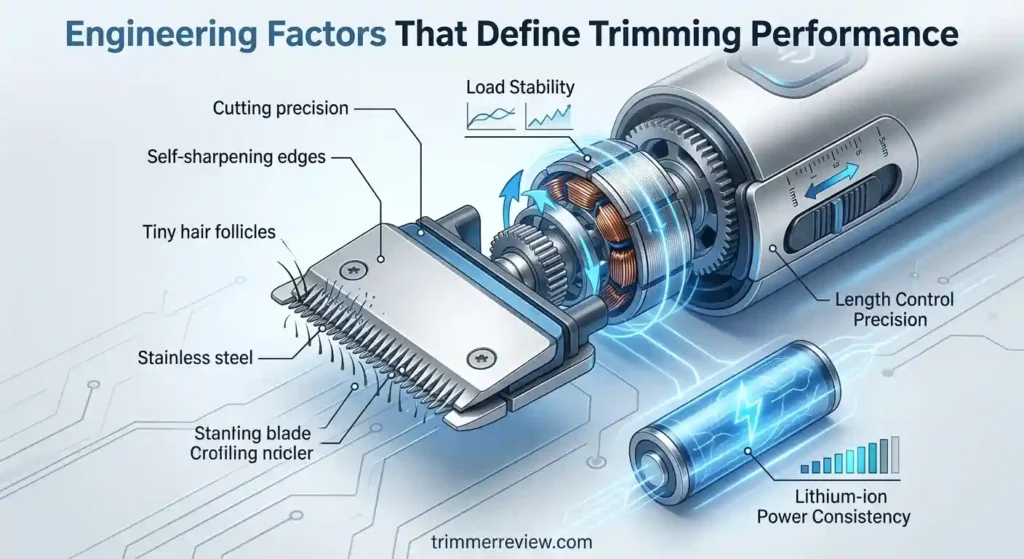
Engineering Factors That Define Trimming Performance
Blade Material and Edge Retention
- Self-sharpening stainless steel blades maintain cutting geometry through repeated contact alignment. This reduces edge degradation and supports consistent cutting force over time.
- Real-world relevance: Stable blade edges reduce hair pulling and uneven trimming lines.
Motor Torque and Load Stability
Motor systems that adjust to different hair thickness help the blades keep a steady speed, even when trimming dense or coarse hair. This means smoother results without uneven cutting.
Length Control Precision
Adjustable comb systems regulate the distance between blade and skin. Precision wheels or locking steps ensure consistent trimming length across the beard surface.
Power System Consistency
Lithium-ion battery systems provide stable voltage output, which directly supports consistent motor performance during longer trimming sessions.
Top 5 Philips Beard Trimmers
Philips Multigroom Series 7000 (MG7920 / MG7707)
Engineering Overview
Multi-attachment grooming system with high-torque motor architecture and reinforced blade assembly.
Technical Specifications
| Parameter | Details |
|---|---|
| Blade Type | Self-sharpening stainless steel |
| Attachments | 12–13 tools |
| Runtime | ~120 minutes |
| Cleaning | Fully washable |
Use Case
Multi-zone grooming including beard shaping, detailing, and hair trimming.
Limitations
Not designed for skin-level clean shaving.
Philips OneBlade Hybrid Trimmer
Engineering Overview
High-frequency cutter system combined with a protective layer to reduce direct skin-blade contact.
Technical Specifications
| Parameter | Details |
|---|---|
| Cutter Speed | ~200 cuts per second |
| Blade System | Replaceable blade |
| Runtime | ~60 minutes |
| Wet/Dry Operation | Supported |
Use Case
Edge detailing, line definition, and light beard trimming.
Limitations
Blade replacement required due to mechanical wear.
Philips Beard Trimmer Series 3000 (BT3441 / BT3415)
Engineering Overview
Integrated sensor system adjusts motor output based on beard density.
Technical Specifications
| Parameter | Details |
|---|---|
| Length Settings | 20+ increments |
| Sensor System | Adaptive power control |
| Runtime | ~90 minutes |
| Comb Type | Adjustable precision comb |
Use Case
Routine beard maintenance with controlled length consistency.
Limitations
Limited functionality outside beard trimming.
Philips Beard Trimmer Series 1000 (BT1232 / BT1233)
Engineering Overview
Simplified cutting system with basic motor configuration and fixed-length control.
Technical Specifications
| Parameter | Details |
|---|---|
| Length Options | 3–4 fixed settings |
| Battery Type | Basic rechargeable |
| Runtime | ~30 minutes |
| Blade Design | Rounded tips |
Use Case
Short beard maintenance and low-frequency trimming.
Limitations
Lower runtime stability and reduced precision.
Philips Multigroom Series 5000 (MG5930)
Engineering Overview
Mid-range modular system with balanced motor output and multi-purpose attachments.
Technical Specifications
| Parameter | Details |
|---|---|
| Attachments | 9–11 tools |
| Runtime | ~90–120 minutes |
| Blade System | Self-sharpening steel |
| Cleaning | Washable components |
Use Case
Combined beard grooming and general trimming tasks.
Limitations
Attachment changes may increase handling complexity.
Comparative Technical Overview
| Model | Runtime | Attachments | Core Engineering Feature | Primary Use Case |
|---|---|---|---|---|
| Multigroom 7000 | 120 min | 12–13 | High torque modular system | Multi-zone grooming |
| OneBlade Hybrid | 60 min | Limited | High-speed cutter | Edge detailing |
| Beard Trimmer 3000 | 90 min | Moderate | Adaptive power control | Regular trimming |
| Beard Trimmer 1000 | 30 min | Minimal | Basic cutting system | Light maintenance |
| Multigroom 5000 | 90–120 min | 9–11 | Balanced motor system | Multi-purpose grooming |
Practical Selection Guidance
• Dense or thick beard growth: Models with adaptive motor systems maintain consistent cutting speed.
• Precision styling and edge definition: High-speed cutter systems provide controlled line shaping.
• Multi-purpose grooming needs: Modular attachment systems support multiple trimming zones.
• Basic trimming requirements: Simplified models are sufficient for low-frequency use.
This classification aligns device capability with real grooming conditions rather than ranking hierarchy.
Hygiene and Maintenance Considerations
- Regular cleaning prevents accumulation of hair fragments and skin particles that can affect blade efficiency. Washable components allow water-based cleaning, supporting hygiene maintenance.
- Drying after cleaning reduces corrosion risk and maintains mechanical durability over time.
Safety and Usage Boundaries
- These devices are designed for external facial hair trimming only. Internal nasal or ear trimming requires dedicated attachments specifically engineered for those areas.
- Controlled pressure during use reduces the risk of minor skin irritation, particularly in sensitive regions.
Real-World Application Context
Beard trimmers are used in home grooming setups, professional barber environments, and styling workflows where consistent length and shape control are required. Performance stability becomes relevant when maintaining uniform beard structure.
Suitability by User Type
- Sensitive skin: Rounded blade tips and reduced friction systems
- Coarse beard structure: Adaptive motor load systems
- Multi-grooming requirements: Multi-attachment configurations
- Occasional use: Entry-level devices with basic controls
Outcome-Based Observations
Engineering improvements such as torque stability and blade alignment contribute to smoother trimming motion, reduced hair resistance, and consistent length output across different beard densities.
Related Guides & Expert Resources
A deeper understanding of grooming device performance across different use cases can be developed through the following resources available on trimmerreview.com:
- A detailed comparison of Philips and Wahl nose trimmers, focusing on safety mechanisms and blade design
- A practical guide outlining proper cleaning and maintenance techniques for long-term performance
- An analytical comparison of budget and premium trimmers, highlighting key performance differences
These resources expand on blade systems, motor efficiency, and real-world application scenarios, supporting informed decision-making based on functional requirements.
Note: Even the highest quality stainless steel blades eventually lose their precision. To maintain peak performance and hygiene, it is recommended to know where to find genuine [Philips nose trimmer replacement blades in India.] before your current set becomes dull.
Conclusion: 5 Best Philips Beard Trimmers 2026
- The 5 Best Philips Beard Trimmers (2026) demonstrate that varying grooming needs require different types of devices. Certain models emphasize precision and detailing, while others prioritize power, versatility, or routine usability.
- Under practical conditions, elements such as motor stability, blade quality, and attachment flexibility have a greater impact on performance than brand positioning or price alone. Selection is therefore influenced by usage frequency, beard density, and the level of trimming control required.
- For further technical comparisons and grooming insights, additional resources are available on trimmerreview.com, where devices are evaluated based on measurable performance factors rather than promotional specifications.
Frequently Asked Questions (FAQs)
The following section addresses common technical and practical questions related to the 5 Best Philips Beard Trimmers 2026, focusing on how different engineering features influence trimming performance and usability. These answers are structured to clarify real-world concerns such as blade efficiency, motor stability, and maintenance requirements, helping in understanding how these devices function under regular grooming conditions.
What factors define the 5 Best Philips Beard Trimmers in the Global Market (2026 Guide)?
The selection is based on measurable engineering parameters such as motor torque stability, blade material composition, cutting frequency, runtime efficiency, and attachment modularity. These factors directly influence trimming consistency and long-term device reliability.
How do motor systems affect beard trimming performance?
Motor systems with adaptive load handling maintain consistent blade speed when encountering dense or coarse hair. This reduces uneven cutting patterns and minimizes the need for repeated strokes across the same area.
Are self-sharpening blades technically different from standard blades?
Self-sharpening blades are engineered with friction-based edge alignment, where blade surfaces maintain sharpness through controlled contact during operation. This reduces long-term wear compared to conventional fixed-edge designs.
Which type of Philips trimmer is suitable for sensitive skin?
Trimmers equipped with rounded blade tips and controlled cutting speeds are more suitable for sensitive skin. These design features reduce direct skin contact pressure and lower the probability of micro-irritation during trimming.
Can these beard trimmers be used for full-body grooming?
Certain models, particularly multi-groom systems, include attachments designed for different body zones. However, precision and safety vary depending on the attachment type, and devices are not engineered for deep or internal trimming.
Transparency & Fact-Checking Disclaimer
For full transparency and product information verification details, refer to the Disclaimer & Fact-Checking Policy.
Technical specifications are based on manufacturer documentation available at the time of publication, including data referenced from the Philips official website.
