
Introduction
- This guide explains how to use a trimmer for beard in a structured and controlled manner. Beard trimming is a regulated grooming process that uses guarded cutting systems to manage hair length. Modern trimmers are engineered to maintain consistent blade distance, reduce friction, and handle different hair densities efficiently.
- In practical use, applying the correct beard trimming technique helps maintain an even shape while reducing irritation and uneven patches. This makes it suitable for beginners learning how to trim beard at home with consistent results.

🔍 Quick Summary: How to Use a Trimmer for Beard
The following table provides a simplified overview of how to use a trimmer for beard, helping beginners understand the correct sequence and purpose of each step.
| Step | Action | Purpose | Key Benefit |
|---|---|---|---|
| 1 | Start with higher guard | Prevents cutting too much hair | Safer trimming for beginners |
| 2 | Trim against hair growth | Lifts hair for even cutting | Uniform beard length |
| 3 | Use light pressure | Reduces blade friction on skin | Less irritation and redness |
| 4 | Define edges | Shape neckline and cheek line | Cleaner and sharper look |
| 5 | Check symmetry | Balance both sides of beard | Professional finish |
Understanding Beard Trimmer Mechanics
Cutting System Design
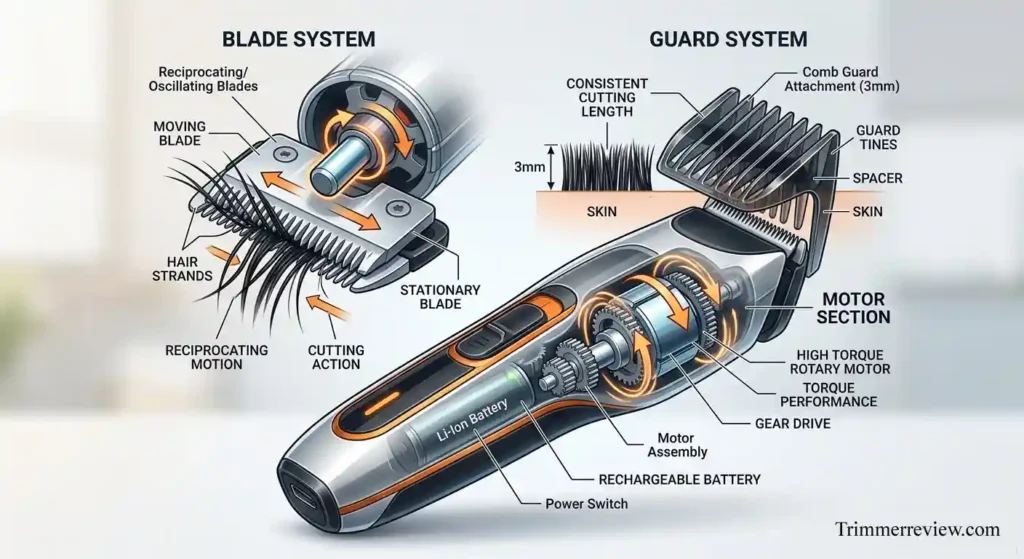
Beard trimmers use reciprocating or oscillating blades. A stationary blade aligns hair strands while a moving blade performs the cutting action, reducing pulling forces. This mechanism is fundamental when learning how to trim beard with trimmer efficiently.
Guard System Function
Comb guards act as calibrated spacers. These maintain a fixed blade distance, ensuring consistent hair length across the face and supporting even beard trimming.
Motor Performance
- Motor torque determines cutting stability. Low torque may cause hair pulling, especially in dense beard areas. Hair pulling and repeated friction can increase the likelihood of skin irritation, as discussed in general skin care and irritation prevention guidelines.
- Real-world relevance: Stable cutting reduces repeated passes, which helps limit skin irritation during beard trimming.
Tools and Preparation
Required Equipment
| Component | Function |
|---|---|
| Beard Trimmer | Cutting mechanism |
| Adjustable Guards | Length control |
| Mirror (Well-lit) | Visual accuracy |
| Cleaning Brush | Hygiene maintenance |
| Optional Oil | Blade friction reduction |
Beard Condition
Dry hair provides more predictable trimming results. Wet hair expands and may lead to uneven length after drying, which can affect those attempting to trim beard evenly at home.
Pre-Trimming Preparation
- Clean beard to remove oil and dirt
- Comb to align longer strands
- Select a higher guard setting initially
Step-by-Step Beard Trimming Process
Step 1 — Start with a Higher Guard
Using a longer guard reduces the risk of accidental over-trimming. This is a standard approach in any beard trimming guide for beginners.
Step 2 — Trim Against Hair Growth
This lifts hair strands and improves cutting consistency, which is essential for even trimming.
Step 3 — Use Light Pressure
Excess pressure increases blade contact and may irritate the skin.
Step 4 — Define Edges
Guard removal allows edge detailing:
• Neckline
• Cheek line
• Jawline
This step is important when learning how to shape beard with trimmer.
Step 5 — Check Symmetry
Even minor imbalance becomes noticeable after trimming. Adjust gradually to maintain uniform results.

Common Trimming Errors and Causes
| Error | Cause | Result |
|---|---|---|
| Uneven beard | Inconsistent guard angle | Patchy look |
| Hair pulling | Dull blade / weak motor | Discomfort |
| Skin irritation | Excess pressure | Redness |
| Over-trimming | Starting too short | Permanent length loss |
Use-Case Applications
• Daily maintenance: Keeps short beards uniform
• Style shaping: Defines edges and contours
• Hygiene control: Reduces dirt and oil buildup
These applications highlight practical scenarios for those learning how to use a beard trimmer step by step.
Suitability and User Context
Suitable for:
• Short to medium beard maintenance
• Hygiene-focused grooming routines
• Beginners learning how to trim beard at home
Not suitable for:
• Long beard sculpting
• High-detail barber styling
Safety and Biological Considerations
- Neck skin is more sensitive and prone to irritation
- Only external trimming is supported
- Unclean blades may increase bacterial exposure, which can contribute to skin irritation and hygiene-related issues as outlined in dermatological skin care guidelines.
Maintenance and Hygiene Practices
Cleaning
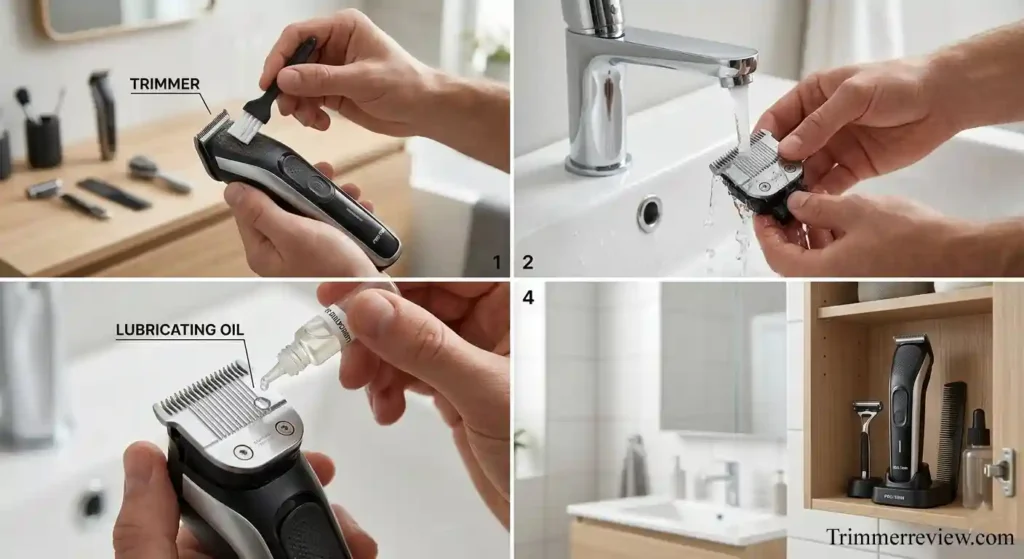
- Remove hair after each use
- Rinse washable heads if supported
- Dry before storage
Lubrication
Reduces friction and maintains blade efficiency
Storage
- Keep in dry conditions to prevent corrosion
- Real-world relevance: Proper maintenance ensures consistent performance and supports long-term hygiene.
Engineering Limitations
- Does not provide a clean shave like razors
- Guard systems limit ultra-precise designs
- Performance depends on blade sharpness and motor quality
Related Guides & Expert Resources
This section provides additional resources related to how to use a trimmer for beard, covering broader grooming techniques, maintenance practices, and specialized use-cases. These guides support deeper understanding of trimming mechanics and help maintain consistent grooming results across different scenarios.
- For a broader understanding of different grooming applications, refer to this detailed trimmer uses guide, which explains how trimmers are used across beard, body, and hygiene routines.
- For users looking to improve cutting precision, this detailed guide on how to calibrate trimmer blades (zero gap) explains how blade alignment affects trimming accuracy and performance.
Conclusion
- Understanding how to use a trimmer for beard involves proper guard selection, controlled handling, and awareness of mechanical limitations. Beard trimming functions as a precision-based grooming method focused on length regulation rather than complete shaving.
- Consistent technique improves uniformity, reduces irritation, and supports predictable grooming outcomes. Suitability depends on beard length, maintenance habits, and user expectations rather than device capability alone.
Frequently Asked Questions (FAQs)
This section addresses common queries related to how to use a trimmer for beard, focusing on practical usage, maintenance considerations, and typical issues encountered during trimming. The answers are structured to clarify basic concepts and support consistent grooming results for beginners and regular users.
Can a trimmer replace a razor?
No. Trimmers are designed for length control, not clean shaving.
How often should beard trimming be done?
Frequency depends on growth rate, typically every 2–5 days for short beards.
Why does hair pulling occur?
Usually caused by dull blades or insufficient motor power.
Transparency & Fact-Checking
For full transparency and product information verification details, refer to the Disclaimer & Fact-Checking Policy.
